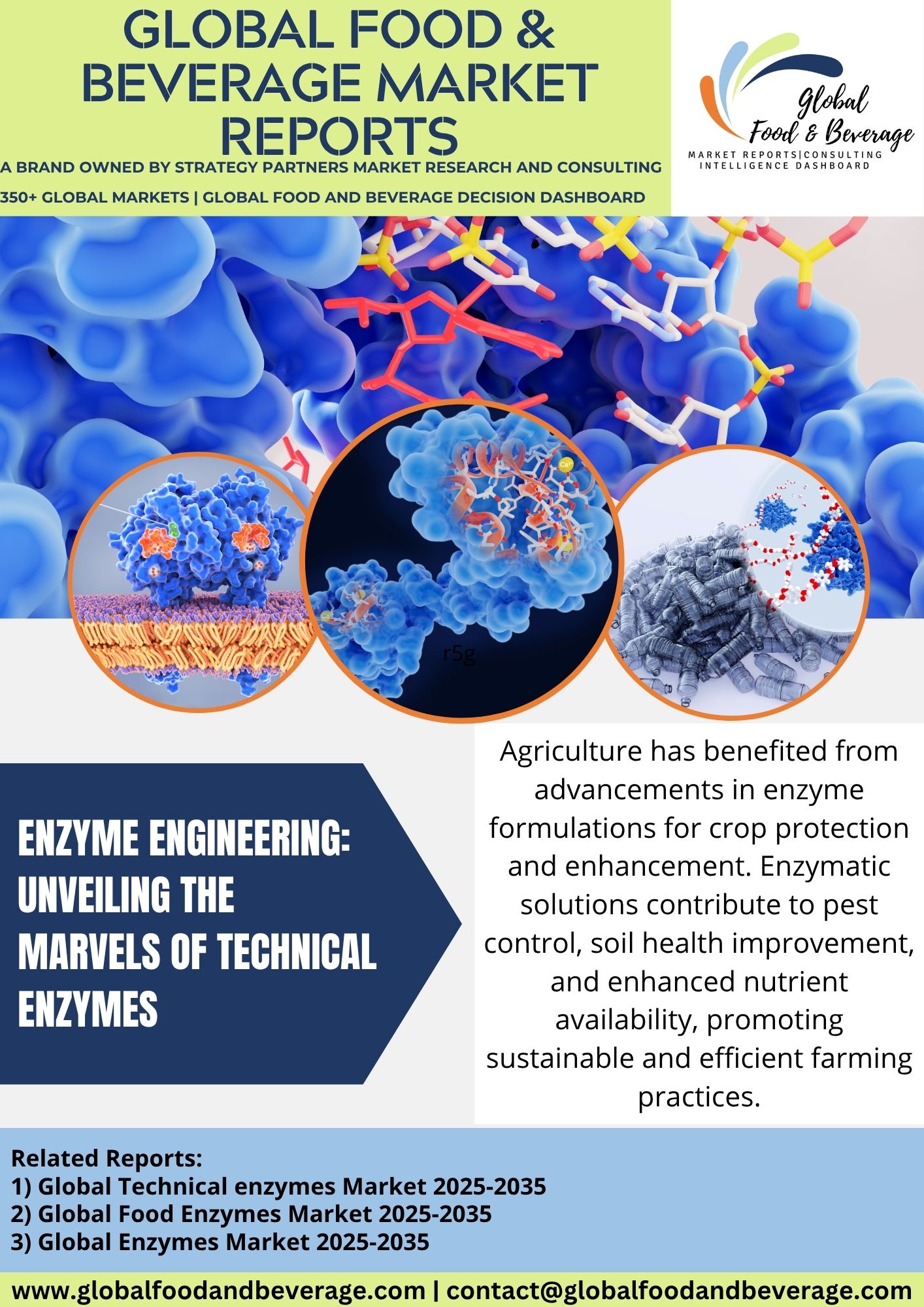
Technical enzymes, also known as industrial enzymes, play a vital role in various industrial processes, contributing to the efficiency and sustainability of manufacturing across diverse sectors. These enzymes are biocatalysts that facilitate biochemical reactions, often under milder conditions compared to traditional chemical processes.
One of the prominent applications of technical enzymes is in the field of food and beverage production. Enzymes such as amylases, proteases, and lipases are used to enhance the processing of raw materials, improve product quality, and optimize production efficiency. For example, amylases aid in starch hydrolysis, proteases assist in protein degradation, and lipases contribute to lipid modification.
In the textile industry, enzymes play a crucial role in processes like desizing, scouring, and bio-polishing. Amylases and cellulases are employed to remove starch and impurities from fabrics, enhancing the quality of textiles. Bio-polishing enzymes contribute to the softening and finishing of textiles, reducing the need for harsh chemicals and energy-intensive mechanical processes.
Technical enzymes find extensive use in the biofuel and bioenergy sectors. Enzymes such as cellulases and hemicellulases are employed in the conversion of lignocellulosic biomass into biofuels like ethanol. This bioconversion process is more environmentally friendly and sustainable compared to traditional methods.
The paper and pulp industry utilizes enzymes for bleaching and deinking processes. Xylanases and cellulases are employed to break down complex polysaccharides, facilitating the separation of fibers and improving the overall efficiency of paper production.
In the detergent industry, enzymes such as proteases and lipases contribute to the formulation of effective laundry detergents. They aid in the removal of stains and soils, enabling lower washing temperatures and reducing the environmental impact of laundry processes.
The use of technical enzymes continues to expand as industries seek more sustainable and eco-friendly alternatives to traditional chemical processes. As research and development in biotechnology advance, new and improved enzymes are likely to emerge, further enhancing the role of technical enzymes in various industrial applications.
Advancement:
The advancement of technical enzymes represents a transformative journey at the intersection of biotechnology and industry, offering solutions to diverse challenges in sectors such as manufacturing, agriculture, and environmental management. Technical enzymes are proteins that catalyze biochemical reactions, and their evolution has been marked by innovations in enzyme engineering, substrate specificity, and industrial applications.
One key advancement lies in the optimization of enzyme performance through genetic modification and protein engineering. Tailoring enzymes to specific industrial processes has enhanced their stability, efficiency, and tolerance to varying conditions, expanding their applicability across a range of sectors.
In manufacturing, technical enzymes play a vital role in processes such as textiles, detergents, and biofuels. Enzymes contribute to sustainable and eco-friendly production practices by replacing traditional chemical processes, reducing energy consumption, and minimizing waste.
Agriculture has benefited from advancements in enzyme formulations for crop protection and enhancement. Enzymatic solutions contribute to pest control, soil health improvement, and enhanced nutrient availability, promoting sustainable and efficient farming practices.
In environmental management, technical enzymes play a role in waste treatment, bioremediation, and pollution control. Their ability to break down complex organic compounds aids in the treatment of industrial effluents and the remediation of contaminated sites, aligning with global efforts towards environmental sustainability.
Challenge:
The technical enzymes industry, which involves the production and application of enzymes for various industrial processes, encounters several challenges that impact its growth and efficiency. One significant challenge is the need for continuous research and development to expand the range of applications for technical enzymes. As industries evolve, there is a constant demand for enzymes with improved functionalities, stability, and specificity, necessitating ongoing innovation to meet diverse industrial needs.
Regulatory compliance is a substantial concern for the technical enzymes sector. Enzymes used in industrial processes often need to adhere to strict regulatory standards, and obtaining approvals for new enzyme products or applications can be a time-consuming and resource-intensive process. Navigating the complex landscape of international regulations poses a challenge for companies operating in multiple regions.
The cost of enzyme production and the scalability of manufacturing processes present economic challenges. Developing efficient and cost-effective production methods, sourcing raw materials, and optimizing fermentation processes are critical for maintaining competitiveness in the market. The industry must balance the demand for high-quality enzymes with the need for cost-effective solutions.
Enzyme stability and performance under diverse industrial conditions represent a technical challenge. Industrial processes may involve harsh environments, high temperatures, or extreme pH levels, requiring enzymes to maintain their effectiveness under such conditions. Research and development efforts are essential to engineer enzymes that can withstand these challenges and deliver consistent performance in various applications.
Environmental sustainability is an emerging concern in the technical enzymes industry. Striking a balance between high performance and environmental responsibility is crucial, as industries seek enzymatic solutions that reduce the environmental impact of their processes.
Conclusion:
In conclusion, technical enzymes play a transformative role across industries, driving efficiency, sustainability, and innovation. From food processing to biofuel production, these specialized catalysts enable precise and eco-friendly processes, enhancing product quality and reducing environmental impact. As technology advances, the application of technical enzymes continues to expand, addressing complex challenges in biotechnology, textiles, and beyond. The versatility of these enzymes not only improves industrial processes but also aligns with the global shift towards green technologies. Ongoing research and development in enzyme engineering underscore their pivotal role in shaping a more sustainable and technologically advanced future across diverse sectors of the global economy.