Taste modulators, a category of food ingredients, have emerged as key players in the food and beverage industry, shaping the sensory experiences of consumers globally. These modulators are designed to influence and enhance the perception of taste, primarily by modifying the intensity or quality of sweet, salty, bitter, sour, or umami flavors in a wide range of products.
In the pursuit of healthier eating habits and the reduction of added sugars, taste modulators have gained prominence as valuable tools for food and beverage manufacturers. One of the notable applications is in the development of reduced-sugar or sugar-free products, where sweet taste modulators mimic the sweetness of sugar without the associated caloric content.
Prominence:
Another significant area of focus is the reduction of sodium in food products. Salt taste modulators are employed to maintain the savory taste associated with salt while allowing for a reduction in the overall salt content. This addresses consumer concerns about excessive sodium intake and its potential impact on health.
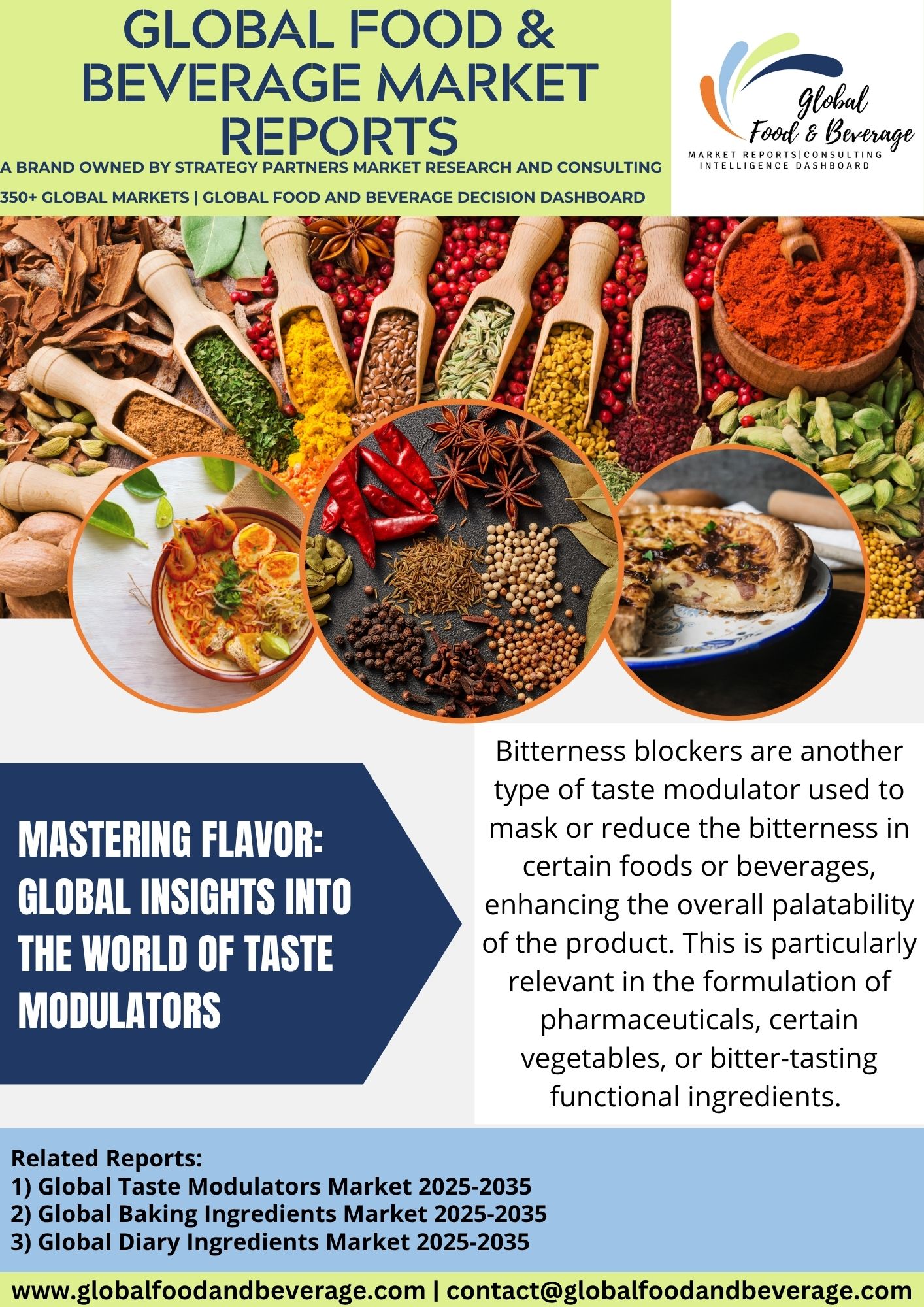
Bitterness blockers are another type of taste modulator used to mask or reduce the bitterness in certain foods or beverages, enhancing the overall palatability of the product. This is particularly relevant in the formulation of pharmaceuticals, certain vegetables, or bitter-tasting functional ingredients.
Umami, the savory taste often associated with ingredients like monosodium glutamate (MSG), can also be modulated to optimize flavor profiles in a variety of culinary applications. By enhancing or suppressing umami taste, food developers have the flexibility to create products with balanced and nuanced flavor profiles.
The global market for taste modulators continues to expand as consumers seek healthier options without compromising on taste. The versatility of taste modulators allows for the development of products that cater to diverse dietary preferences and health-conscious lifestyles. As the food industry strives to meet evolving consumer demands, taste modulators play a crucial role in achieving the delicate balance between taste satisfaction and nutritional goals.
Advancement:
The global advancement of taste modulators has marked a significant stride in the food and beverage industry, revolutionizing flavor profiles and addressing the growing demand for healthier alternatives. Taste modulators are compounds that modify or enhance the perception of taste, allowing manufacturers to reduce or replace certain ingredients, such as sugar and salt, without compromising flavor.
One notable area of advancement is the development of natural taste modulators, derived from plant sources or fermentation processes. These alternatives provide clean-label solutions, aligning with consumer preferences for natural and transparent ingredient lists.
In response to the global health and wellness movement, taste modulators have played a crucial role in creating low-sugar and low-sodium products. Innovations in taste modulation technology have allowed for the reduction of sugar and salt content while maintaining the desired taste intensity, contributing to efforts to combat obesity and related health issues.
Advancements in sensory science and flavor technology have led to more precise and targeted taste modulation. Manufacturers can tailor taste modulators to specific product formulations, enhancing the overall taste experience for consumers without compromising on nutritional goals.
Challenge:
The taste modulators industry, which includes substances that modify or enhance the taste of food and beverages, faces several challenges on a global scale. One significant obstacle is regulatory scrutiny and approval processes. Ensuring that taste modulators comply with diverse and often stringent regulations across different countries and regions can be a complex and time-consuming task. Harmonizing these regulatory requirements is crucial for the global acceptance and trade of taste modulators.
Consumer acceptance and perception represent another challenge. Despite advancements in taste modulation technology, achieving a taste profile that resonates with diverse cultural preferences remains a significant hurdle. Consumer expectations and taste preferences vary widely, necessitating extensive research and development efforts to create taste modulators that cater to different markets.
The cost of taste modulators, including the expenses associated with research, development, and production, poses a financial challenge. Striking a balance between producing cost-effective taste modulators and maintaining high quality can be demanding. Economic factors such as fluctuations in raw material prices and the availability of skilled labor further contribute to the financial challenges faced by the industry.
Technological advancements and innovation in taste modulation are crucial for staying competitive. Continuous research is necessary to discover new and improved taste modulators that not only enhance flavor but also meet evolving consumer demands for healthier and more natural ingredients. Developing sustainable taste modulation processes is also gaining importance as environmental concerns influence consumer choices and industry practices.
Lastly, market competition and the emergence of alternative technologies and ingredients present ongoing challenges. Staying ahead in a rapidly evolving landscape requires taste modulator manufacturers to remain agile, responsive to market trends, and proactive in addressing emerging competition.
Conclusion:
In conclusion, the global market for taste modulators is at the forefront of revolutionizing the food and beverage industry by offering innovative solutions to enhance and manipulate flavor perceptions. As consumers increasingly prioritize health-conscious choices, the demand for these modulators, which can reduce sugar, salt, and fat content while maintaining taste satisfaction, is on the rise. From natural compounds to cutting-edge technologies, taste modulators play a pivotal role in addressing the challenges of creating healthier products without compromising on sensory experiences. As the industry embraces these advancements, taste modulators contribute to shaping a flavorful, yet health-focused, future for global culinary preferences.