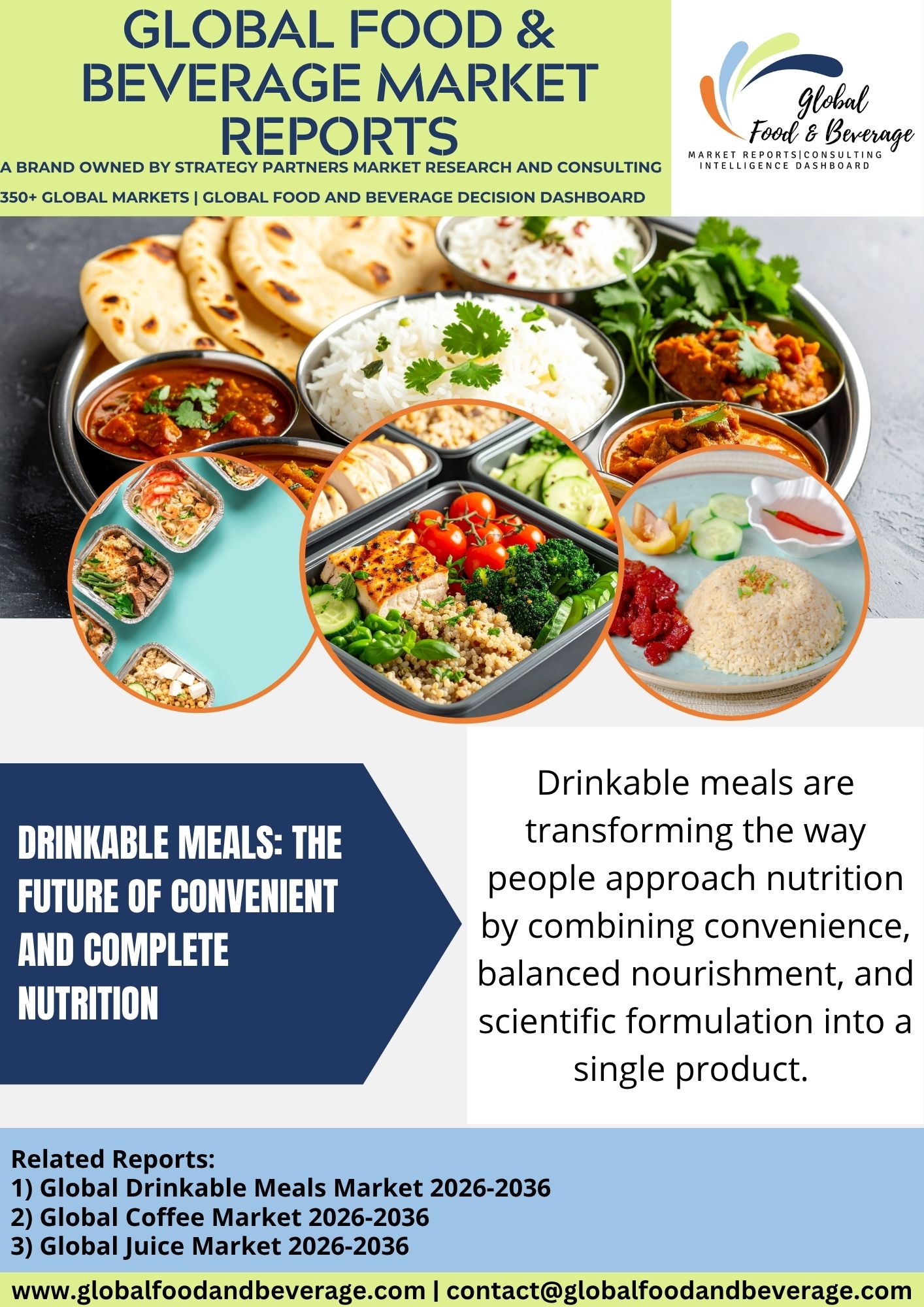
The Drinkable meals in the Modern lifestyles are becoming increasingly fast-paced, leaving many people with limited time to prepare and enjoy balanced meals. Busy professionals, students, athletes, travelers, and even older adults often struggle to meet their daily nutritional needs through traditional eating habits. As a result, drinkable meals have emerged as a practical solution that combines convenience with complete nutrition. Unlike ordinary protein shakes or fruit smoothies, drinkable meals are specifically designed to provide a balanced combination of carbohydrates, proteins, healthy fats, vitamins, minerals, and fiber in a single serving.
The growing demand for healthier convenience foods, coupled with advancements in food science, has transformed drinkable meals into a rapidly expanding segment within the global nutrition industry. Today, they are available in ready-to-drink bottles, powdered mixes, and plant-based formulations tailored for different dietary preferences and health goals.
What Are Drinkable Meals?
Drinkable meals are nutritionally complete beverages intended to replace or supplement traditional meals. They contain carefully measured amounts of macronutrients and micronutrients required to support the body’s daily functions. Unlike regular beverages that focus on hydration or energy, drinkable meals aim to provide sustained nourishment while delivering adequate calories and essential nutrients.
Manufacturers formulate these products using ingredients such as oats, soy protein, pea protein, milk protein, healthy vegetable oils, fiber, vitamins, minerals, fruits, and natural flavorings. Many products also include probiotics, omega-3 fatty acids, antioxidants, and functional ingredients that promote digestive health and immunity.
These beverages are suitable for individuals seeking quick nutrition without sacrificing dietary quality, making them increasingly popular among health-conscious consumers.
Why Drinkable Meals Are Gaining Popularity
Consumer lifestyles have undergone significant changes over the past decade. Long working hours, urban living, frequent travel, and increasing awareness of health and fitness have all contributed to the rising popularity of drinkable meals.
Many consumers skip breakfast or rely on unhealthy fast food because they lack time for meal preparation. Drinkable meals offer a quick alternative that can be consumed within minutes while providing balanced nutrition.
Fitness enthusiasts also appreciate these products because they simplify calorie tracking and nutrient intake. Whether the goal is muscle gain, weight management, or endurance training, drinkable meals provide predictable nutritional content that supports personalized health plans.
In addition, aging populations and patients recovering from illness often require convenient nutrition that is easy to digest. Healthcare professionals increasingly recommend nutritionally complete beverages to support recovery and maintain healthy body weight.
Key Ingredients in Drinkable Meals
The effectiveness of drinkable meals depends on their carefully selected ingredients. High-quality formulations provide balanced nutrition while maintaining taste and texture.
Proteins remain one of the most important components. Manufacturers commonly use whey protein, soy protein, pea protein, rice protein, or blends of plant proteins to supply essential amino acids that support muscle maintenance and tissue repair.
Complex carbohydrates such as oats, brown rice, quinoa, and maltodextrin provide sustained energy throughout the day without causing rapid blood sugar fluctuations.
Healthy fats sourced from sunflower oil, flaxseed oil, avocado oil, coconut oil, or medium-chain triglycerides contribute to brain function, hormone production, and long-lasting satiety.
Dietary fiber improves digestive health while helping consumers feel full for longer periods. Vitamins and minerals ensure nutritional completeness by supporting immune function, metabolism, and overall wellness.
Natural flavorings, cocoa, fruits, coffee extracts, vanilla, and spices improve taste without significantly increasing sugar content.
Technological Innovations Driving Market Growth
Food technology has played a major role in improving the quality and acceptance of drinkable meals. Modern manufacturing techniques have significantly enhanced product stability, taste, nutrient retention, and shelf life.
Microencapsulation technology protects sensitive nutrients such as omega-3 fatty acids, probiotics, and vitamins from degradation during storage. This ensures consumers receive the intended nutritional benefits throughout the product’s shelf life.
High-pressure processing and ultra-high-temperature processing help maintain food safety while preserving flavor and nutritional value without relying heavily on preservatives.
Precision nutrition is another emerging trend. Manufacturers are increasingly developing personalized drinkable meals designed for specific age groups, medical conditions, athletic performance, or dietary requirements. Artificial intelligence and nutritional analytics are helping companies recommend customized meal formulations based on individual health profiles.
Plant-based innovation has also expanded rapidly, allowing manufacturers to produce dairy-free, gluten-free, allergen-friendly, and vegan drinkable meals that appeal to a broader consumer base.
Health Benefits of Drinkable Meals
When consumed appropriately, drinkable meals offer numerous health benefits. They provide a reliable source of balanced nutrition for individuals with demanding schedules or limited access to healthy food options.
One significant advantage is portion control. Since calories and nutrients are precisely measured, consumers can better manage weight loss or weight maintenance goals.
Drinkable meals also improve nutritional consistency by reducing the likelihood of skipping meals or choosing highly processed fast food. This contributes to better energy levels, improved concentration, and overall metabolic health.
Athletes benefit from convenient recovery nutrition after exercise, while elderly individuals gain easier access to essential nutrients that may otherwise be difficult to consume through conventional meals.
Medical nutrition products formulated as drinkable meals support patients experiencing swallowing difficulties, poor appetite, or increased nutritional requirements during recovery from surgery or chronic illness.
Challenges Facing the Drinkable Meals Industry
Despite strong growth, the drinkable meal industry faces several challenges. Consumer perception remains one of the biggest obstacles. Many people continue to associate meal replacement beverages with restrictive dieting rather than balanced everyday nutrition.
Taste and texture also play a critical role in consumer acceptance. Manufacturers continuously invest in research to create products that resemble traditional beverages while delivering complete nutrition.
Ingredient transparency has become increasingly important. Consumers expect clean-label products with recognizable ingredients, minimal artificial additives, and reduced sugar content.
Regulatory compliance presents another challenge. Companies must meet strict food safety standards while ensuring nutritional claims are scientifically validated and accurately labeled.
Price sensitivity may also limit widespread adoption, particularly in developing markets where consumers often compare drinkable meals with conventional food options.
Emerging Trends Shaping the Future
Several trends are expected to drive the future growth of drinkable meals. Sustainability has become a major priority, encouraging manufacturers to adopt environmentally friendly packaging, responsibly sourced ingredients, and lower-carbon production methods.
Functional nutrition is expanding beyond basic meal replacement. New formulations increasingly include adaptogens, probiotics, collagen, cognitive support ingredients, immune-enhancing compounds, and botanical extracts that target specific wellness goals.
Personalized nutrition platforms are likely to become more common, enabling consumers to receive customized drinkable meal recommendations based on genetic testing, wearable health devices, and metabolic analysis.
Digital health integration may further strengthen consumer engagement by connecting meal plans with mobile applications that monitor nutrient intake, fitness progress, and overall wellness.
As consumers increasingly seek healthier convenience foods, demand for organic, minimally processed, and plant-based drinkable meals is expected to continue rising across global markets.
Conclusion
Drinkable meals are transforming the way people approach nutrition by combining convenience, balanced nourishment, and scientific formulation into a single product. They address the growing need for healthy, time-saving food solutions while supporting a wide range of lifestyles, from busy professionals and athletes to older adults and individuals recovering from illness.
Ongoing advancements in food technology, personalized nutrition, plant-based ingredients, and sustainable manufacturing continue to improve product quality and consumer acceptance. Although drinkable meals are not intended to replace every traditional meal, they serve as an effective nutritional option when convenience and balanced nutrition are equally important.
As health awareness continues to grow and consumers prioritize both wellness and efficiency, drinkable meals are expected to become an increasingly important part of the global nutrition landscape, offering practical solutions for modern dietary needs while shaping the future of convenient, complete nutrition.