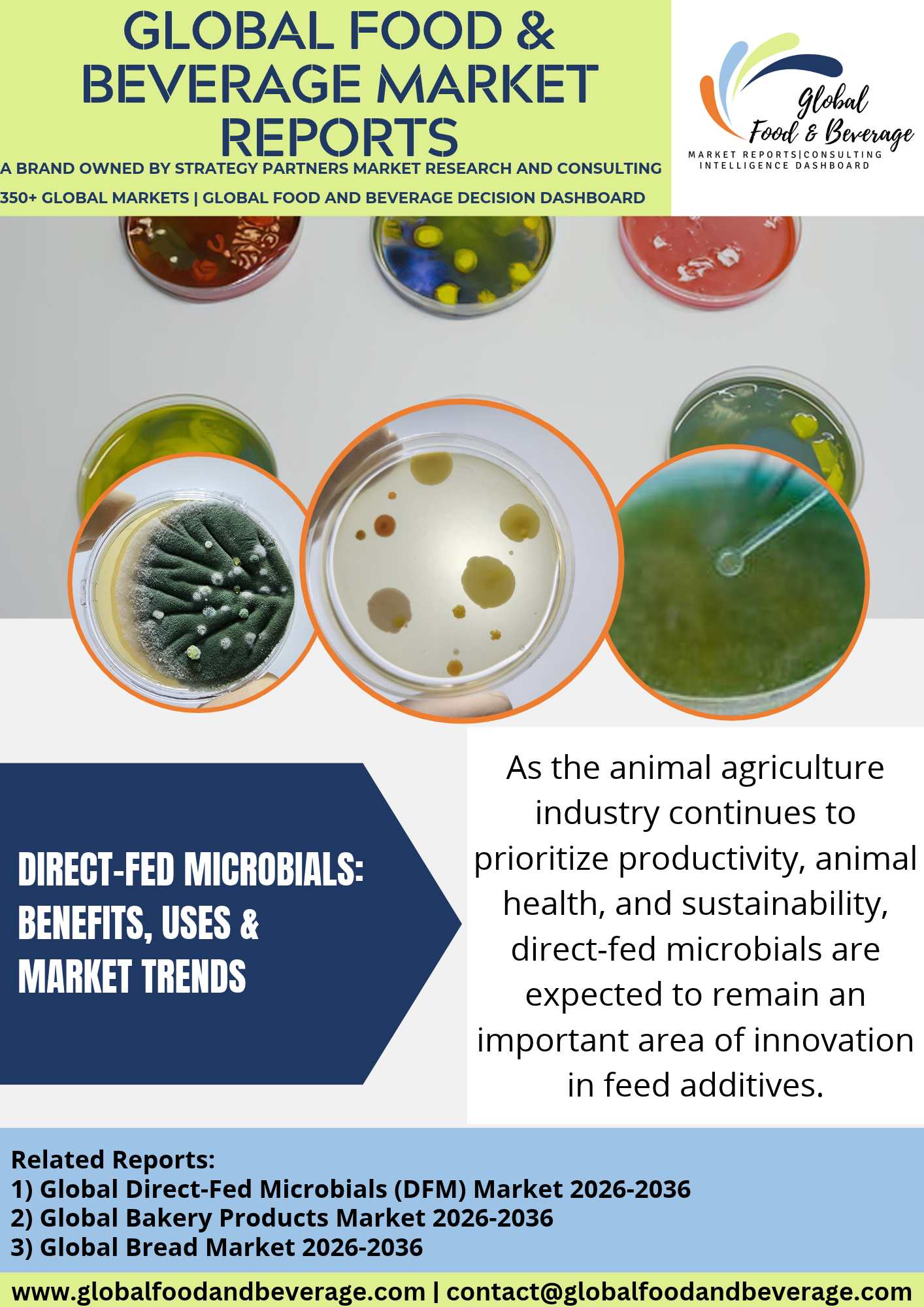
Direct-fed microbials (DFM) are beneficial microorganisms added to animal feed to support digestive health, improve nutrient utilization, and promote overall animal performance. Commonly known as probiotics in animal nutrition, DFMs typically contain selected strains of bacteria, yeasts, or other microorganisms that contribute to a balanced gastrointestinal environment. They are widely used in livestock, poultry, aquaculture, and other animal production systems as part of efforts to improve productivity and support sustainable farming practices.
The growing focus on animal health, feed efficiency, and responsible antibiotic use has increased interest in direct-fed microbials. Livestock producers are exploring nutritional solutions that help maintain gut function, support immune responses, and improve production outcomes without relying exclusively on conventional feed additives. As a result, DFMs have become an important component of modern animal nutrition strategies.
Types and Functions of Direct-Fed Microbials
Direct-fed microbials include several groups of microorganisms, each offering distinct characteristics depending on the animal species, formulation, and intended application. Common bacterial genera include Lactobacillus, Bacillus, Enterococcus, and Bifidobacterium. Yeast-based products, particularly those containing Saccharomyces cerevisiae, are also widely used in animal feed.
These microorganisms can support animal health through multiple mechanisms. Some compete with undesirable microorganisms for nutrients and attachment sites in the gastrointestinal tract, while others produce organic acids or antimicrobial compounds that influence the gut environment. Certain strains may contribute to digestive enzyme activity, support intestinal barrier function, and help maintain microbial balance during periods of stress.
The effectiveness of a DFM depends on the specific microbial strain, its viability, dosage, formulation, and compatibility with the animal’s diet and production conditions. Therefore, selecting products based on scientific evidence and species-specific requirements is essential.
Benefits and Applications in Animal Nutrition
Direct-fed microbials are used across different animal production systems to support digestive health and improve feed utilization. In poultry production, DFMs may help maintain intestinal microbial balance, support nutrient absorption, and contribute to growth performance. Their use is particularly relevant during periods of environmental stress, dietary changes, or other conditions that can affect gut health.
In cattle and other ruminants, selected microbial products can support rumen function and fermentation. Yeast-based DFMs, for example, are used in some feeding programs to help stabilize rumen conditions and support fiber digestion. Their application may be valuable in high-production dairy systems, where feed efficiency and digestive stability are important management priorities.
In swine production, DFMs are incorporated into feed to support intestinal health, particularly during weaning, when piglets experience dietary and environmental changes. In aquaculture, beneficial microorganisms may be used in feed or production environments to support digestion, water quality management, and animal health, depending on the product and application.
Although research has reported benefits in specific settings, results can vary according to microbial strain, animal age, diet, management practices, and environmental conditions. DFMs are therefore most effective when integrated into a broader animal nutrition and health program.
Technological Advancements Driving Market Growth
Innovation in microbial science and feed formulation is supporting the development of more targeted DFM products. Advances in strain selection, genomic analysis, fermentation technology, and microbial characterization are helping manufacturers identify microorganisms with desirable functional properties.
Microencapsulation and other protective formulation techniques are also improving product stability. These technologies can help microorganisms withstand processing conditions, storage, and passage through the digestive tract. This is particularly important for feed products exposed to heat during pelleting or other manufacturing processes.
Manufacturers are increasingly focusing on multi-strain formulations that combine microorganisms with complementary characteristics. However, the performance of such combinations depends on strain compatibility and supporting evidence. Improved quality-control methods, viability testing, and standardized manufacturing processes are also helping strengthen product consistency.
Digital livestock management and precision nutrition are creating additional opportunities. By combining animal performance data with feed formulation strategies, producers can better evaluate the role of DFMs in specific production systems and adjust supplementation according to nutritional needs.
Market Drivers and Growing Demand
The direct-fed microbials market is supported by rising demand for animal protein, increasing attention to livestock productivity, and the need for efficient feed utilization. As global consumption of meat, milk, eggs, and aquaculture products expands, producers are seeking nutritional solutions that support animal performance while managing production costs.
The movement toward reduced antibiotic use in animal agriculture is another important market driver. DFMs are among the nutritional tools being evaluated and adopted as part of broader strategies to support gut health and responsible antimicrobial stewardship. However, they are not direct substitutes for veterinary treatment or a replacement for appropriate disease-control measures.
Growing awareness of animal welfare and sustainable farming is also encouraging the adoption of functional feed additives. By supporting digestive health and nutrient utilization, DFMs may contribute to improved production efficiency and reduced resource intensity in certain systems. Their role in sustainability outcomes depends on measurable improvements in feed conversion, animal performance, and farm-level practices.
Competitive Landscape and Industry Developments
The direct-fed microbials industry includes animal nutrition companies, biotechnology firms, feed additive manufacturers, and specialized microbial producers. Key participants in the broader market include DSM-Firmenich, Novonesis, Cargill, ADM, Lallemand Animal Nutrition, Kemin Industries, and Chr. Hansen’s legacy microbial business, now part of Novonesis.
Competition is influenced by product efficacy, strain differentiation, manufacturing quality, stability, regulatory compliance, and technical support. Companies are investing in research and development to create products tailored to poultry, swine, ruminants, and aquaculture applications.
Strategic partnerships between feed manufacturers, research institutions, and biotechnology companies are supporting product innovation and market access. Technical services, feeding trials, and evidence-based product positioning are also important competitive factors, as producers increasingly seek solutions supported by reliable performance data.
Challenges Affecting Market Expansion
Despite strong interest, the DFM market faces several challenges. One key issue is variability in product performance. Microbial efficacy can differ according to strain, animal species, feed composition, farm management, and environmental conditions. This makes it difficult to generalize results across different production systems.
Maintaining microbial viability throughout manufacturing, transportation, and storage is another concern. Heat, moisture, and unsuitable storage conditions can reduce the number of viable microorganisms in a product, potentially affecting its performance.
Regulatory requirements also vary across countries and product categories. Manufacturers must meet applicable standards for safety, quality, labeling, and permitted claims. In addition, the cost of research, strain development, and specialized production processes can influence product pricing and adoption, particularly among smaller livestock producers.
Education remains important as well. Producers need clear guidance on strain selection, application rates, expected outcomes, and integration with existing feed and health programs.
Future Outlook
The future of direct-fed microbials will be shaped by advances in microbiome research, precision animal nutrition, and biotechnology. Improved understanding of the relationship between gut microorganisms and animal health is expected to support the development of more specialized products for different species and production stages.
Research into next-generation microbial strains, targeted combinations, and improved delivery systems may expand the range of applications. Greater emphasis on product standardization and transparent performance data could also strengthen confidence among feed manufacturers and livestock producers.
As the animal agriculture industry continues to prioritize productivity, animal health, and sustainability, direct-fed microbials are expected to remain an important area of innovation in feed additives. Their long-term market potential will depend on consistent product quality, scientific validation, regulatory alignment, and demonstrated value under commercial farming conditions.