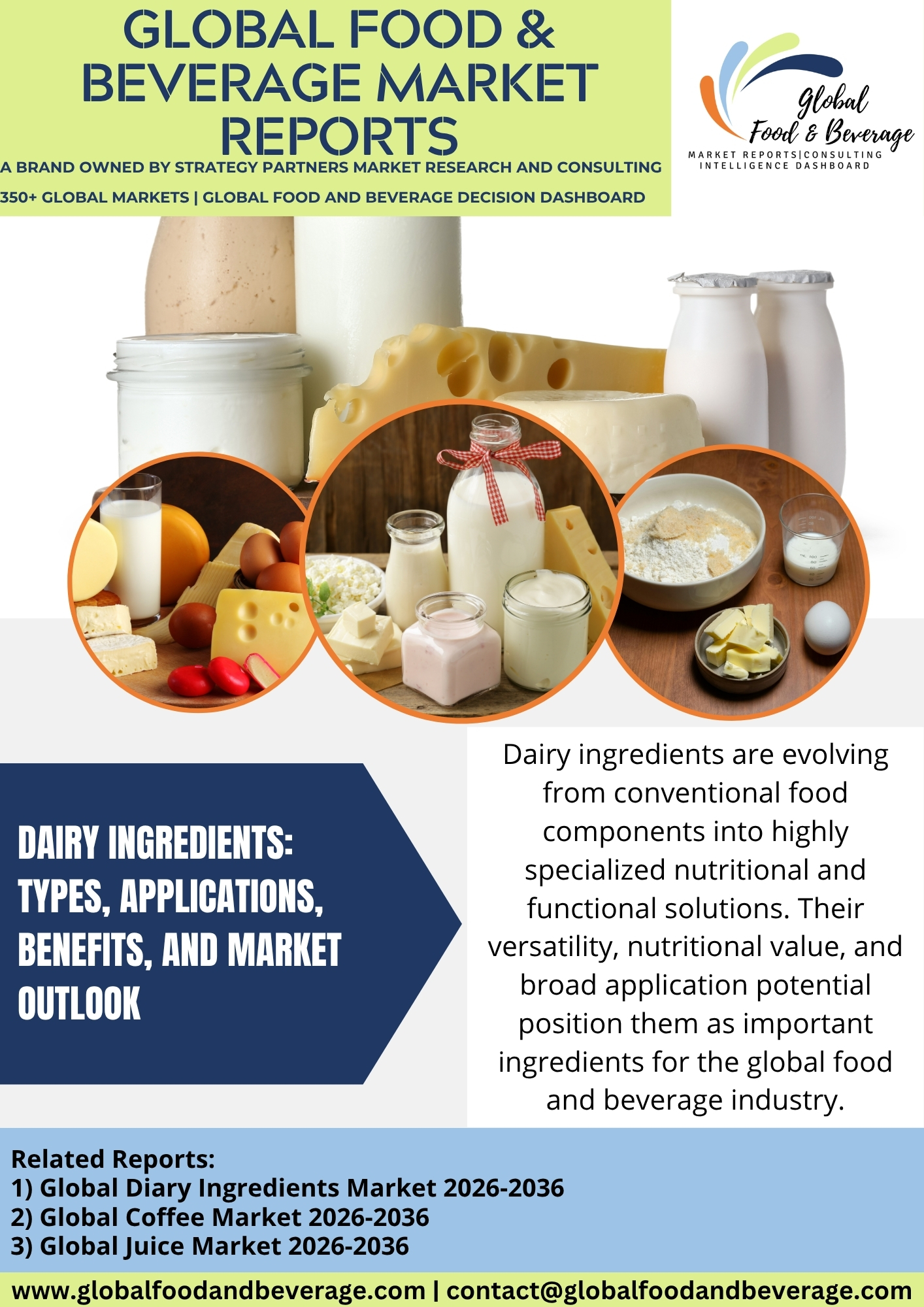
Dairy ingredients are essential components derived from milk and are widely used across the food and beverage industry. They provide nutrition, flavor, texture, functionality, and stability to a broad range of products. From infant nutrition and bakery products to dairy beverages, confectionery, sports nutrition, and processed foods, dairy ingredients play an important role in modern food manufacturing.
The growing demand for high-protein foods, functional nutrition, clean-label products, and convenient food products is increasing the importance of dairy-derived ingredients. Advances in processing technologies are also enabling manufacturers to develop ingredients with improved nutritional profiles, longer shelf life, and better functional characteristics.
Dairy ingredients can be produced from milk, cream, whey, and other components of milk. Depending on their composition and processing method, they can provide proteins, fats, carbohydrates, minerals, and other nutritional components.
Major Types of Dairy Ingredients
Dairy ingredients include a wide variety of products designed for different food and industrial applications. Milk powders are among the most commonly used ingredients. Skimmed milk powder and whole milk powder are valued for their nutritional content, extended shelf life, and ease of transportation.
Milk proteins are another important category. Milk protein concentrates and milk protein isolates contain high levels of protein and are increasingly used in nutritional beverages, protein products, and specialized food formulations.
Whey ingredients are produced from whey generated during cheese manufacturing. Whey protein concentrates, whey protein isolates, and whey powders are widely used because of their nutritional and functional properties.
Lactose is the naturally occurring carbohydrate in milk and is used in infant nutrition, confectionery, bakery products, pharmaceutical formulations, and other applications.
Milk fat and cream-based ingredients contribute flavor, richness, mouthfeel, and texture. They are used extensively in ice cream, bakery, confectionery, sauces, dairy products, and prepared foods.
Other dairy ingredients include casein and caseinates, butter, buttermilk powder, cheese powders, milk permeate, and specialized dairy protein blends.
Applications Across the Food Industry
Dairy ingredients have applications across multiple food and beverage categories. In bakery products, milk powders and dairy proteins can improve dough handling, browning, flavor, moisture retention, and nutritional value.
In confectionery, lactose, milk powders, butterfat, and other dairy components contribute to flavor, texture, creaminess, and processing characteristics. Chocolate, caramel, fillings, and dessert products frequently use dairy-derived ingredients.
The infant nutrition sector is another major application area. Carefully formulated dairy proteins, lactose, and other milk-derived components can be used in infant formula and specialized nutritional products, subject to strict regulatory and quality requirements.
In sports and performance nutrition, whey protein and milk proteins are widely incorporated into protein powders, ready-to-drink beverages, nutrition bars, and meal-replacement products. Their protein content makes them attractive for consumers seeking convenient sources of dietary protein.
Dairy ingredients are also used in soups, sauces, ready meals, beverages, ice cream, yogurt, and processed foods to improve taste, consistency, nutritional content, and product stability.
Nutritional Importance
One of the key advantages of dairy ingredients is their nutritional value. Dairy proteins provide essential amino acids and are widely recognized for their high-quality protein characteristics. This has contributed to growing interest in dairy proteins among consumers focused on fitness, healthy aging, and nutritional well-being.
Dairy ingredients can also provide calcium, phosphorus, potassium, vitamins, and other nutrients depending on their composition and processing. Milk powders and concentrated dairy ingredients offer manufacturers an efficient way to increase the nutritional value of food products.
At the same time, manufacturers are increasingly developing formulations for consumers with specific dietary requirements. Reduced-lactose and lactose-free dairy ingredients, for example, are gaining attention as manufacturers respond to demand for products suitable for people who have difficulty digesting lactose.
Processing and Production Technologies
The production of dairy ingredients involves several processing technologies designed to separate, concentrate, dry, and stabilize components of milk. Pasteurization is commonly used to improve microbiological safety, while separation technologies can isolate milk fat, proteins, lactose, and other components.
Membrane filtration is particularly important in modern dairy processing. Microfiltration, ultrafiltration, nanofiltration, and reverse osmosis can be used to separate milk components based on their size and properties. These technologies enable manufacturers to produce concentrated protein and lactose ingredients with specific compositions.
Spray drying is another widely used process for converting liquid dairy products into stable powders. The technology can extend shelf life, simplify transportation, and improve ingredient handling.
Advances in processing are also supporting the development of specialized dairy ingredients with targeted protein concentrations, improved solubility, controlled functionality, and better stability in different food formulations.
Factors Driving Market Growth
The dairy ingredients market is being supported by several important trends. Rising demand for protein-rich foods is one of the strongest growth drivers. Consumers are increasingly looking for products that provide convenient nutrition, creating opportunities for whey proteins, milk proteins, and other concentrated dairy ingredients.
The growth of functional and fortified foods is another important factor. Food manufacturers are adding proteins and nutritional components to beverages, snacks, bakery products, and meal replacements to differentiate their products.
Urbanization and changing lifestyles are also increasing demand for convenient foods with longer shelf lives. Dairy powders and concentrated ingredients allow manufacturers to formulate products without relying exclusively on fresh milk.
Growing interest in sports nutrition, healthy aging, weight management, and high-protein diets is further expanding the application base for dairy proteins.
Sustainability and Industry Challenges
Sustainability is becoming increasingly important for dairy ingredient producers. Dairy farming and processing require significant amounts of water, energy, feed, and other resources. Manufacturers are therefore investing in energy efficiency, water conservation, renewable energy, waste reduction, and improved resource utilization.
The utilization of whey is an important example of value creation within the dairy industry. Rather than treating whey solely as a by-product of cheese production, manufacturers can process it into valuable proteins, lactose, and other ingredients.
However, the industry faces challenges including fluctuations in milk prices, supply variability, energy costs, environmental regulations, and changing consumer preferences. Quality control is also critical because dairy ingredients must meet stringent food safety and microbiological standards.
Allergen management represents another important consideration. Milk is a recognized allergen, requiring manufacturers to maintain appropriate segregation, labeling, and processing controls.
Future Outlook
The future of the dairy ingredients industry is likely to be shaped by innovation in protein concentration, specialized nutrition, processing efficiency, and sustainability. Demand for high-protein foods is expected to continue creating opportunities for whey and milk protein ingredients.
Manufacturers are likely to focus on ingredients with improved functionality, better solubility, neutral taste, and greater compatibility with a wider range of food and beverage formulations. Advances in membrane filtration and drying technologies can further improve production efficiency and ingredient quality.
The development of ingredients for healthy aging, clinical nutrition, infant nutrition, sports nutrition, and fortified foods could provide additional growth opportunities. At the same time, sustainability initiatives will increasingly influence how dairy ingredients are produced, processed, packaged, and transported.
Overall, dairy ingredients are evolving from conventional food components into highly specialized nutritional and functional solutions. Their versatility, nutritional value, and broad application potential position them as important ingredients for the global food and beverage industry. As manufacturers respond to changing consumer expectations, innovation in dairy proteins, powders, lactose, and specialized formulations is expected to remain a major focus of the industry.