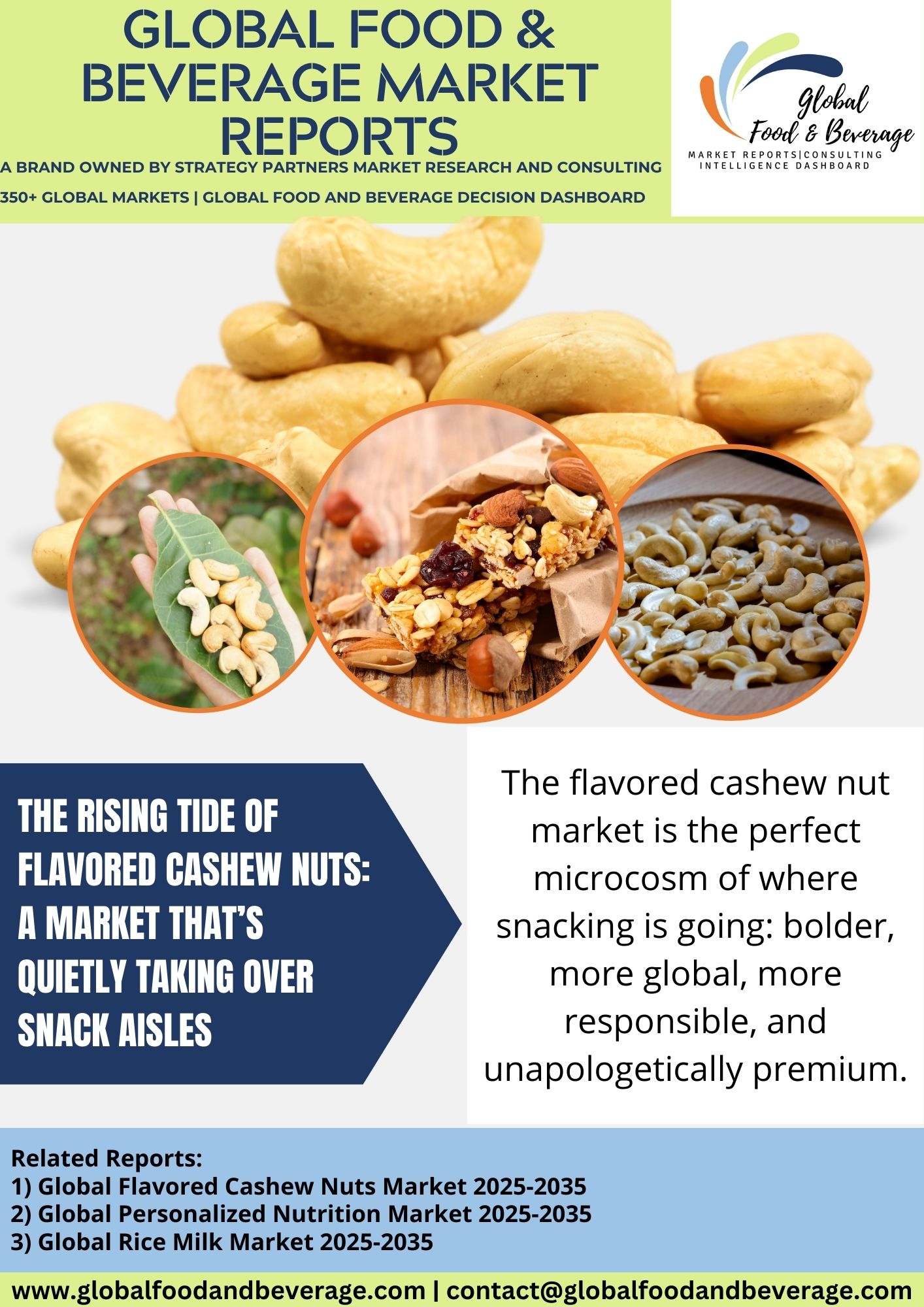
Flavored Cashew Nuts, Walk into any supermarket, airport kiosk, or upscale gourmet store today, and one thing is almost guaranteed: an explosion of flavored cashew nuts. Chili-lime, truffle, wasabi, honey-roasted, peri-peri, black pepper, rosemary-garlic, even masala chai; the humble cashew, once content with being roasted and lightly salted, has become the canvas for some of the boldest flavor experiments in the snack world. What started as a niche offering from a handful of artisanal brands fifteen years ago has quietly morphed into a multi-billion-dollar category that is growing faster than most traditional nuts. The flavored cashew market is no longer a side act; it is becoming the main event.
Why Cashews Became the Perfect Flavor Vehicle
Cashews have natural advantages that almonds, peanuts, and even pistachios struggle to match. Their soft, buttery texture absorbs seasonings deeply without becoming leathery. The high natural fat content (about forty-six percent) acts like a flavor sponge, carrying spices, herbs, and sweet coatings far more effectively than crunchier nuts. Bite into a chili-lime cashew and you don’t just taste the surface dusting; the heat and citrus penetrate almost to the center. That depth of flavor is catnip for consumers who have grown bored with one-note salted peanuts.
Additionally, cashews sit in a sweet marketing spot. They are perceived as premium (they’re more expensive to grow and process than most nuts), yet they’re still familiar enough that people don’t feel they’re buying something exotic and risky. Marketers love to call them “nature’s butter,” a phrase that simultaneously justifies the higher price and makes indulgence feel almost virtuous.
From Street-Side Masala Kaju to Global Shelves
In India, where roughly seventy percent of the world’s cashews are processed, flavoring cashews is practically cultural heritage. Walk past any roadside vendor in Mumbai or Goa and you’ll see freshly roasted cashews being tossed in giant kadais with black pepper, red chili, curry leaves, and sometimes even sugar and fennel. These masala kaju packs were the original flavored cashews, sold in newspaper cones long before any corporate brand thought of vacuum-sealed pouches.
What changed everything was globalization and packaging innovation. Indian processors realized that if they could take those same street flavors, standardize them, and pack them in nitrogen-flushed, resealable foil pouches with glossy labeling, they had a product that could travel across oceans without losing aroma or crunch. Brands like Haldiram’s, Bikanervala, and later international players like Wonderful Pistachios (with their cashew lines) and emerging artisanal names such as The Nuttery, Nuts Over Mutts, and Karma Nuts, rode this wave.
Suddenly, masala cashews were appearing in Whole Foods next to truffle-marinated Italian almonds and gochujang-spiced Korean peanuts. The fusion era had arrived.
The Numbers Tell an Undeniable Story
While exact figures for the flavored segment alone are still bundled inside broader “processed cashew” or “flavored nut” reports, analysts consistently point to double-digit annual growth. Some estimates suggest the global flavored cashew category has been expanding at fourteen to eighteen percent per year since twenty-nineteen, easily outpacing plain roasted cashews (around five to seven percent) and even the overall snack nut market.
The drivers are familiar to anyone tracking food trends: premiumization, demand for bolder flavors, plant-based snacking, and the endless search for “permissible indulgence.” Cashews check every box. A thirty-gram serving delivers six grams of protein, healthy monounsaturated fats, and enough crunch to feel satisfying, yet the flavor coatings turn it into something closer to a bar snack than rabbit food.
Regional Flavor Preferences Paint a Vivid Map
Asia-Pacific remains both the largest producer and the most adventurous consumer. India, Vietnam, and Sri Lanka dominate in spicy variants: black pepper, schezwan, peri-peri, and hing-jeera. Sweet-and-spicy Thai chili or Tamil-style curry-leaf cashews are perennial bestsellers.
North America leans heavily into sweet-heat combinations: honey-sriracha, bourbon-barrel-smoked, maple-bacon (yes, vegan versions exist), and the unstoppable chili-lime made famous by Tajín seasoning. The West Coast has embraced everything from matcha-dusted to turmeric-golden-milk cashews as part of the wellness-meets-indulgence movement.
Europe surprises with savory-herb profiles. Rosemary-sea-salt, truffle, and smoked paprika reign supreme, often positioned next to charcuterie boards rather than in the impulse-buy checkout lane. Germany and the Netherlands have fallen hard for licorice-salted cashews, a polarizing love-it-or-hate-it flavor that somehow keeps growing.
The Middle East and North Africa push sweetness: saffron-rose, date-honey, and cardamom-pistachio combinations that feel almost confectionery.
Health, Sustainability, and the Next Battlegrounds
No modern food trend escapes the health-and-sustainability microscope, and flavored cashews are no exception. The best-selling lines now loudly proclaim “no artificial colors,” “baked not fried,” “non-GMO,” and “lightly seasoned to keep sodium under control.” Brands that can hit the sweet spot of bold flavor with less than one hundred fifty milligrams of sodium per serving are winning shelf space.
Sustainability is the newer pressure point. Cashew farming has a controversial history: labor issues in West Africa, water-intensive processing in India and Vietnam, and deforestation concerns in Ivory Coast. Consumers, especially younger ones, are starting to ask questions. Brands that can tell transparent farm-to-pack stories (direct trade, women-owned cooperatives, rainwater harvesting in processing units) are seeing loyalty rewards that translate directly to higher willingness to pay.
The Artisanal Insurgency and Private Label Surge
While big players like Planters, Wonderful, and Indian giants dominate volume, the most exciting innovation is coming from micro-roasters. Small-batch brands using single-origin Kollam cashews, cold-smoking them over mango wood, or coating them in craft hot sauces are building cult followings on Instagram and at farmers’ markets. Many of these eventually get acquired or inspire copycat lines from the giants.
Simultaneously, retailer private labels (Trader Joe’s, Costco’s Kirkland, Marks & Spencer, Aldi) have become flavor laboratories. Because they control the shelf and the margin, they can take bigger risks: ghost-pepper lime, everything-bagel, or Thai sweet chili cashews appear for a season, fly off shelves, and either become permanent or make room for the next experiment.
Where Is This Market Heading?
Three big waves seem inevitable.
First, functional cashews: adaptogens, probiotics, collagen, or mushroom-blend coatings marketed for energy, gut health, or beauty-from-within.
Second, extreme personalization: subscription boxes where consumers dial their exact heat level, sweetness, and herb profile, not unlike the build-your-own spice blends already popular online.
Third, sustainability-driven format innovation: compostable packaging, cashew “seconds” (slightly broken nuts) sold at lower price points with creative flavors to reduce food waste, and carbon-neutral certified lines.
Final Bite
The flavored cashew nut market is the perfect microcosm of where snacking is going: bolder, more global, more responsible, and unapologetically premium. It took a tropical nut that most of the world once barely noticed and turned it into a passport to every corner of the flavor map. Next time you tear open a pouch of sriracha-honey or masala cashews on a flight, at your desk, or with a cold beer, remember you’re not just eating a snack. You’re participating in one of the quietest, tastiest revolutions in the food world. And it shows no signs of slowing down.