In the hush of dawn-lit wetlands, lotus pods sway above mirrored water, cradling seeds that have nourished cultures for millennia. These unassuming kernels—crisp, nutty, and quietly resilient—form the heart of a market that marries ancient ritual with modern craving. From sacred offerings to snack-aisle staples, lotus root seeds weave a story of flavor, wellness, and sustainable grace, blooming steadily in a world that rediscovers slow-grown treasures.
Tradition’s Lasting Flavor
Across Asia, lotus seeds are more than food—they are memory. In China, they sweeten tong sui soups served at weddings, symbolizing fruitful unions. Indian households puff makhana over open flames during Navratri fasts, seasoning it with black salt and cumin. Vietnamese lunar cakes enfold ground seeds in glutinous embrace. Japanese tea ceremonies pair roasted lianzi with delicate matcha. Each preparation honors the seed’s mild earthiness, a canvas for cultural expression that keeps ancestral kitchens alive.
Harvesting remains a dance with water. Farmers wade into thigh-deep ponds, twisting ripe pods free from tangled stems. Sun-drying on bamboo mats follows, the seeds rattling like tiny maracas as moisture escapes. In Bihar’s misty fields, entire villages time their calendars to the lotus cycle—planting, guarding against birds, gathering before monsoons swell. This hands-on rhythm resists mechanization, preserving authenticity while anchoring rural economies in seasonal certainty.
Wellness in Every Crunch
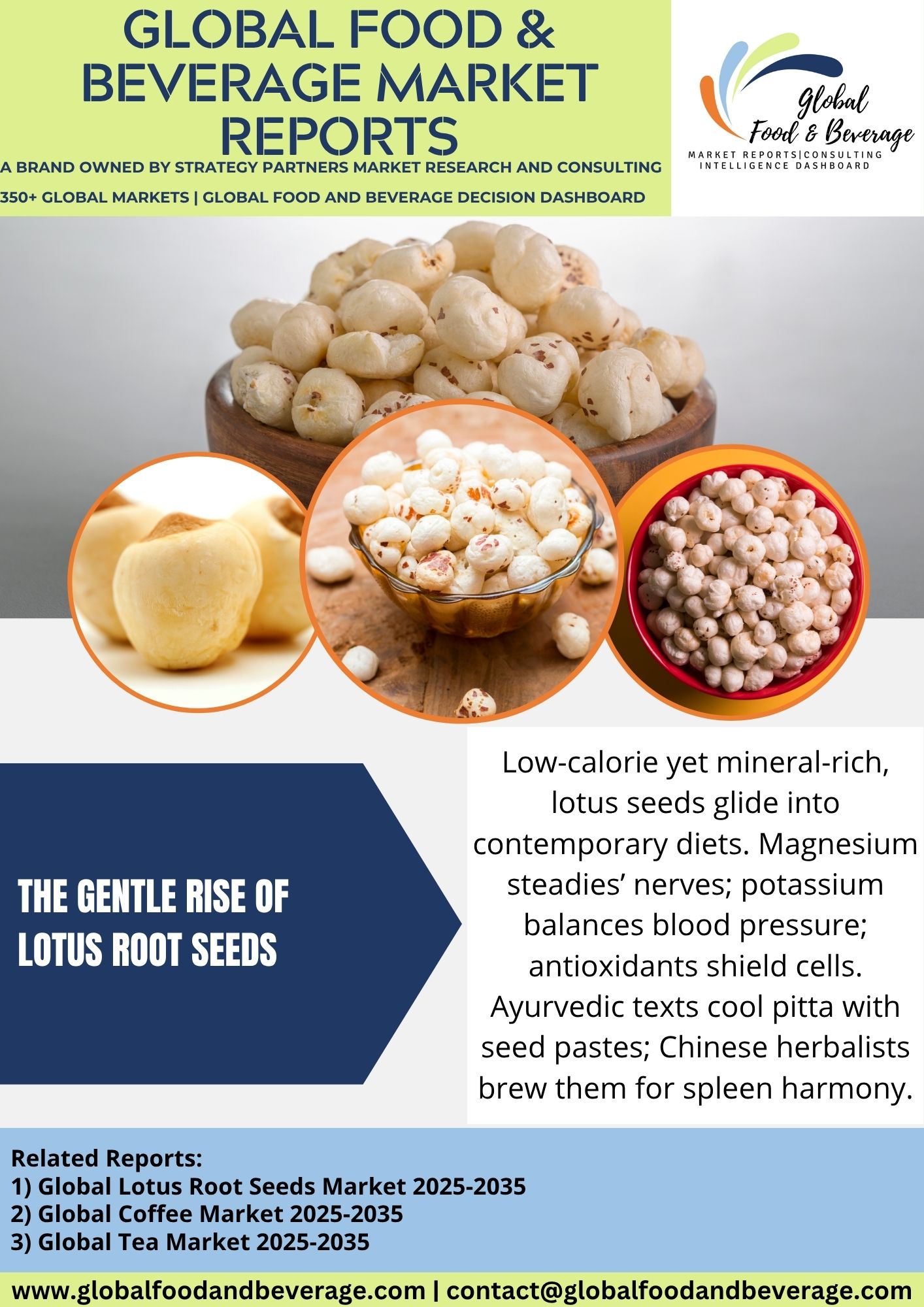
Low-calorie yet mineral-rich, lotus seeds glide into contemporary diets. Magnesium steadies nerves; potassium balances blood pressure; antioxidants shield cells. Ayurvedic texts cool pitta with seed pastes; Chinese herbalists brew them for spleen harmony. Fitness trackers log puffed makhana as “clean” protein—gluten-free, vegan, guilt-free. Morning smoothies swirl seed powder with almond milk and berries; bedtime rituals stir warm seed milk with cardamom. The seed’s gentle nutrition, once whispered in apothecaries, now trends in wellness podcasts.
Processing bridges old and new. Artisanal roasters yield caramelized puffs; vacuum tunnels lock freshness for export. Flavored lines—truffle, wasabi, rosemary—court adventurous palates. Instant dessert mixes dissolve into silky puddings; latte powders froth into café menus. Packaging evolves too: compostable pouches replace plastic, resealable tins travel well. Each innovation honors the seed’s integrity while inviting it to urban lunchboxes and airport kiosks.
Sustainable Ripples
Lotus fields purify the water they grow in, roots filtering silt and excess nutrients. Fish swim beneath leaves, feeding on fallen debris in symbiotic balance. No chemical inputs touch the crop; dragonflies patrol for pests. Cooperatives reinvest earnings into wetland restoration, countering drainage for farmland. Consumers savor the story—each bag a vote for marshes over monoculture, for biodiversity over depletion. The market’s growth feels like stewardship, not conquest.
Retail channels mirror this duality. Morning wet markets brim with dew-kissed pods; evening supermarkets glow with neon-lit makhana displays. E-commerce ships direct from grower to doorstep, complete with scannable codes tracing harvest ponds. Subscription services curate monthly “superseed” boxes; influencer unboxings spark midnight orders. Airport duty-free shelves stock chili-lime pouches for globetrotters. The seed travels light, its cultural weight tucked inside every crunch.
Challenges Beneath the Surface
Monsoon failures shrink yields; labor migrates to cities. Grading inconsistencies frustrate exporters—one bitter seed can sour a shipment. Branding battles generic labels; “fox nuts” confuse, “lotus seeds” blend into noise. Education lags—many mistake the seed for water lily or grain. Premium pricing daunts casual buyers, though bulk co-ops narrow the gap. Marketing tiptoes between mystique and clarity, ensuring the seed’s whisper is heard above superfood clamor.
Global palates stretch the canvas. Seoul cafés crown lattes with seed-dusted foam; Melbourne bakeries fold powder into sourdough. Plant-milk startups churn creamy lianzi blends; cosmetic labs bottle seed oil for serums. Pet brands test digestibility in premium kibble. Regional twists emerge—masala makhana in Dubai, yuzu-sprinkled seeds in Tokyo. The market absorbs influences without losing essence, like the lotus itself—rooted, yet reaching.
Community’s Quiet Flame
Recipe swaps light up forums: mooncake fillings, overnight oats, spiced trail mixes. Grandmothers livestream pod-cracking from Hunan porches; teenagers remix makhana into protein bars. Village festivals crown lotus queens; urban pop-ups host blind tastings. Cooperatives fund schools with seed profits, turning snack sales into scholarships. The market thrives on connection—bowls passed across tables, stories shared between bites.
The horizon shimmers with possibility. Hybrid ponds may stabilize harvests; drone mapping could optimize water levels. Functional powders—collagen-laced, mushroom-blended—court supplement aisles. Edible packaging might dissolve into tea. Yet the seed’s soul remains unchanged: born of mud, kissed by sun, offered in open hands. In an era of flash diets, lotus seeds endure as quiet wisdom—a bite of patience, a kernel of peace. The market blooms petal by petal, inviting the world to taste what rises clean from still waters.