Description
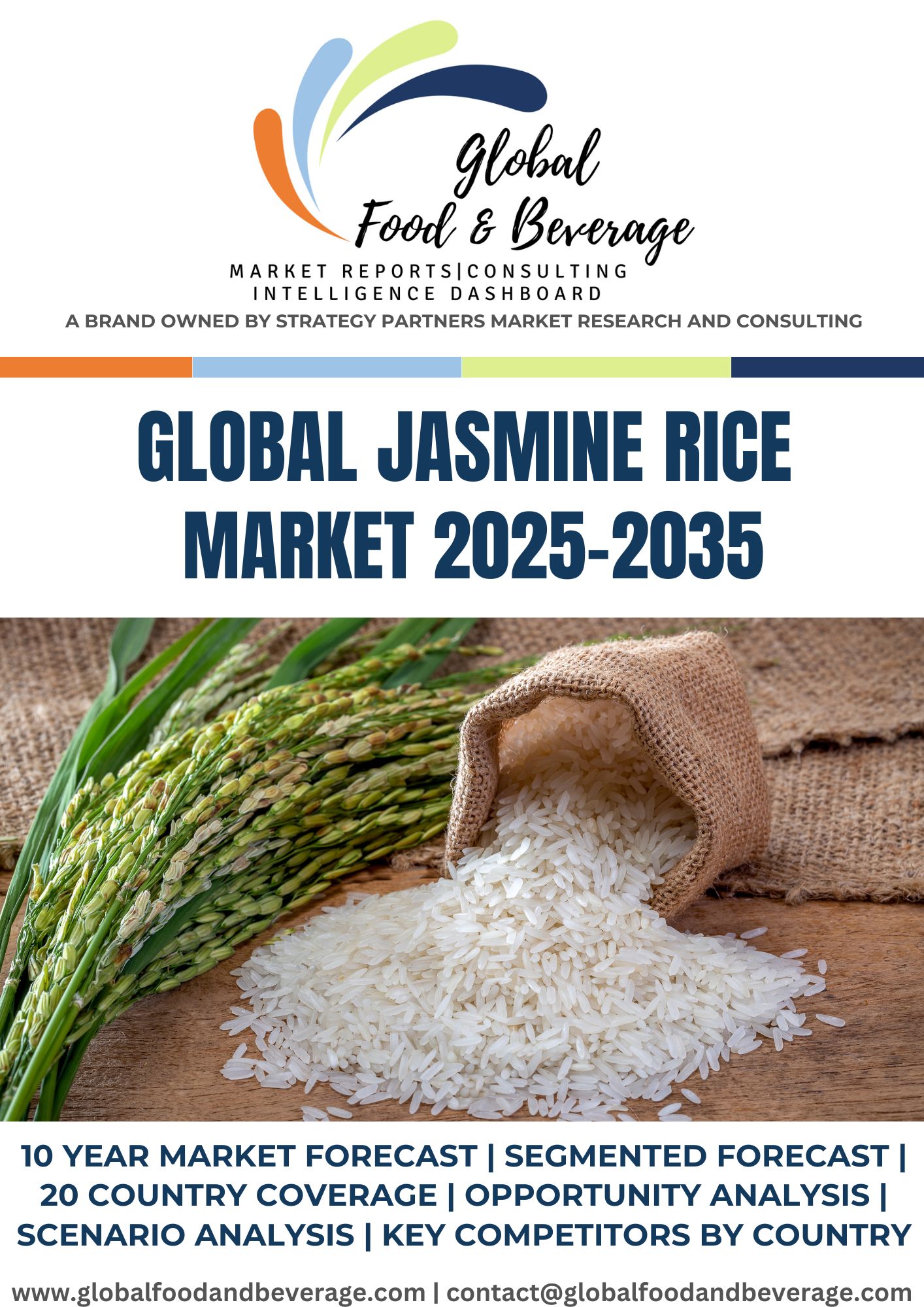
Jasmine rice is a highly prized variety of long-grain aromatic rice known for its distinctive fragrance, delicate texture, and subtle sweetness. It is primarily grown in Southeast Asia, with Thailand being the leading producer and exporter, followed by countries like Cambodia, Vietnam, and Laos. Jasmine rice holds significant cultural, economic, and culinary importance in the region and has gained global popularity due to its unique characteristics and versatility in cooking. The global market for jasmine rice has expanded steadily, driven by rising consumer demand, increasing international trade, and the growth of Asian cuisines worldwide.
Jasmine rice is botanically classified as Oryza sativa, belonging to the Indica subspecies. Its grain is long and slender, and when cooked, jasmine rice exhibits a soft, slightly sticky texture that makes it ideal for a wide range of dishes. What distinguishes jasmine rice from other long-grain varieties is its natural aromatic compound, 2-acetyl-1-pyrroline, which gives it a distinctive popcorn-like or pandan-like fragrance. This aroma enhances the sensory appeal of jasmine rice and contributes to its premium status in both domestic and international markets.
The cultivation of jasmine rice requires specific agro-climatic conditions, including fertile soil, adequate rainfall or irrigation, and warm temperatures typical of tropical and subtropical regions. Thailand’s central plains, particularly in provinces like Surin, Sisaket, and Roi Et, offer the ideal environment for producing high-quality jasmine rice. The traditional farming methods often combine modern agricultural techniques with local knowledge to ensure optimal yield and grain quality. Sustainable farming practices are increasingly emphasized to maintain soil health, reduce chemical inputs, and minimize environmental impact.
Economically, jasmine rice is a vital commodity for producing countries. Thailand, often referred to as the “Land of Jasmine Rice,” dominates the global export market, accounting for a substantial share of international jasmine rice trade. The rice sector supports millions of farmers and contributes significantly to rural livelihoods and national economies. Jasmine rice’s premium price compared to non-aromatic rice varieties reflects its higher production costs, stringent quality control, and strong consumer demand.
The global distribution of jasmine rice has expanded with growing awareness of Asian culinary traditions and the increasing multicultural composition of many societies. Markets in North America, Europe, the Middle East, and Oceania have shown sustained growth in jasmine rice imports, driven by immigrant communities, foodservice industries, and health-conscious consumers. Asian restaurants worldwide, including Thai, Vietnamese, and Cambodian establishments, often highlight jasmine rice as an essential ingredient that enhances authenticity and dining experience.
Consumers appreciate jasmine rice not only for its flavor and texture but also for its nutritional profile. It is primarily a source of carbohydrates and provides moderate amounts of protein, vitamins, and minerals. Although jasmine rice is a white rice variety and therefore lower in fiber compared to whole grain or brown rice, it is often fortified or paired with other nutrient-rich foods in balanced diets. Brown jasmine rice, which retains the bran layer, has gained popularity as a healthier alternative, offering increased fiber, antioxidants, and micronutrients while preserving the characteristic aroma.
Culinary versatility is a hallmark of jasmine rice. It is traditionally served steamed alongside a wide range of dishes, from stir-fries and curries to grilled meats and seafood. Its slightly sticky texture allows it to be picked up easily with chopsticks or eaten with hands, aligning well with Southeast Asian dining customs. Jasmine rice is also used in desserts such as mango sticky rice, highlighting its ability to complement sweet flavors. Additionally, it serves as a base for pilafs, fried rice, rice salads, and even rice puddings, demonstrating its adaptability across global cuisines.
The processing and packaging of jasmine rice are critical to maintaining its quality and aroma. Post-harvest handling involves careful drying, milling, and polishing to remove husks and bran while preserving the grain’s integrity. The milling process is optimized to avoid breaking the fragile grains, as broken rice commands lower prices and is generally less desirable. Packaging often includes vacuum-sealed bags or multi-layered pouches that protect the rice from moisture, pests, and contamination, ensuring freshness during storage and transport.
The jasmine rice market faces several challenges and opportunities linked to global trade dynamics, environmental concerns, and consumer preferences. Trade policies, tariffs, and quality standards affect the flow of jasmine rice between countries, sometimes leading to competition and price fluctuations. For example, the rise of other aromatic rice varieties, such as Cambodian jasmine rice or Vietnamese fragrant rice, introduces alternatives that influence consumer choice and market shares.
Climate change poses a significant risk to jasmine rice production due to altered rainfall patterns, temperature increases, and extreme weather events. These factors can affect crop yields, grain quality, and farming practices, prompting research into climate-resilient rice strains and sustainable agriculture methods. Governments, international organizations, and private sector stakeholders invest in agricultural innovation, extension services, and infrastructure to support jasmine rice farmers in adapting to these challenges.
In response to evolving consumer trends, the jasmine rice industry has explored product diversification and value addition. Organic jasmine rice production has grown, catering to consumers seeking pesticide-free, environmentally friendly options. Similarly, pre-cooked or instant jasmine rice varieties have emerged to meet the demand for convenience without sacrificing flavor. Brands emphasize traceability, certification (such as geographic indication or organic labels), and storytelling that connects consumers to the rice’s origin and traditional cultivation methods.
Marketing strategies for jasmine rice leverage its premium positioning and cultural heritage. Packaging designs often incorporate imagery and narratives that evoke the rice’s Thai roots, purity, and artisanal qualities. Promotional campaigns highlight the sensory attributes of jasmine rice, culinary applications, and health benefits, targeting both ethnic and mainstream consumers. Collaborations with chefs, food bloggers, and culinary schools help raise awareness and inspire new ways to enjoy jasmine rice.
Technological advances in logistics and supply chain management have improved the accessibility and affordability of jasmine rice globally. Efficient transportation, cold storage facilities, and modern retailing formats enable fresh jasmine rice to reach distant markets while retaining quality. E-commerce platforms and online grocery services have further expanded consumer reach, especially during the COVID-19 pandemic, when online food purchases surged.
Sustainability is a growing focus within the jasmine rice sector. Efforts include reducing water usage through alternate wetting and drying irrigation methods, minimizing greenhouse gas emissions, promoting biodiversity, and supporting fair trade principles. Consumer demand for sustainable products encourages certification schemes and encourages producers to adopt environmentally responsible practices.
Cultural significance of jasmine rice transcends its economic and culinary roles. In Thailand and neighboring countries, jasmine rice is more than food—it is a symbol of prosperity, hospitality, and national identity. Festivals and rituals often feature jasmine rice, underscoring its integration into social and spiritual life. This cultural reverence reinforces consumer attachment and loyalty, particularly among diasporic communities.
In conclusion, jasmine rice is a distinctive and highly valued variety that commands a prominent place in global rice markets. Its unique aroma, texture, and culinary versatility have won it widespread acclaim, making it a staple in many households and restaurants worldwide. The industry supporting jasmine rice production and trade continues to evolve, balancing tradition with innovation, market demands with sustainability, and local heritage with global reach. As consumer interest in authentic, flavorful, and responsibly produced foods grows, jasmine rice is well-positioned to maintain and expand its role as a premium aromatic rice variety in the years ahead.
Table of Content
1 Market Introduction- Global Jasmine rice Market
1.1 Market Segmentation- Global Jasmine rice Market
1.2 Key Trends- Global Jasmine rice Market
1.2.1 Drivers
1.2.2 Restraints
1.2.3 Challenges
2 Global Market Forecast- Global Jasmine rice Market
1. By Region
2. By Consumer
3. By Application
4. By Product
3 Country Wise Forecast- Global Jasmine rice Market
3.1 US
3.1.1 Key Trends
3.1.2 Consumer Spending
o Population
o GDP
o CPI
o Spend per Capita
o Spend as a proportion of GDP
3.1.3 Market Forecast- US Jasmine rice Market
1. By Consumer
2. By Application
3. By Product
3.1.4 Key Competitors- US Jasmine rice Market
3.1.5 EXIM
3.1.6 Patents
3.1.7 Scenario Analysis- US Jasmine rice Market
3.1.8 Opportunity Analysis- US Jasmine rice Market
3.2 Canada
3.2.1 Key Trends
3.2.2 Consumer Spending
o Population
o GDP
o CPI
o Spend per Capita
o Spend as a proportion of GDP
3.2.3 Market Forecast- Canada Jasmine rice Market
1.By Consumer
2.By Application
3.By Product
3.2.4 Key Competitors- Canada Jasmine rice Market
3.2.5 EXIM
3.2.6 Patents
3.2.7 Scenario Analysis- Canada Jasmine rice Market
3.2.8 Opportunity Analysis- Canada Jasmine rice Market
3.3 UK
3.3.1 Key Trends
3.3.2 Consumer Spending
o Population
o GDP
o CPI
o Spend per Capita
o Spend as a proportion of GDP
3.3.3 Market Forecast- UK Jasmine rice Market
1.By Consumer
2.By Application
3.By Product
3.3.4 Key Competitors- UK Jasmine rice Market
3.3.5 EXIM
3.3.6 Patents
3.3.7 Scenario Analysis- UK Jasmine rice Market
3.3.8 Opportunity Analysis- UK Jasmine rice Market
3.4 Germany
3.4.1 Key Trends
3.4.2 Consumer Spending
o Population
o GDP
o CPI
o Spend per Capita
o Spend as a proportion of GDP
3.4.3 Market Forecast- Germany Jasmine rice Market
1.By Consumer
2.By Application
3.By Product
3.4.4 Key Competitors- Germany Jasmine rice Market
3.4.5 EXIM
3.4.6 Patents
3.4.7 Scenario Analysis- Germany Jasmine rice Market
3.4.8 Opportunity Analysis- Germany Jasmine rice Market
3.5 France
3.5.1 Key Trends
3.5.2 Consumer Spending
o Population
o GDP
o CPI
o Spend per Capita
o Spend as a proportion of GDP
3.5.3 Market Forecast- France Jasmine rice Market
1.By Consumer
2.By Application
3.By Product
3.5.4 Key Competitors- France Jasmine rice Market
3.5.5 EXIM
3.5.6 Patents
3.5.7 Scenario Analysis- France Jasmine rice Market
3.5.8 Opportunity Analysis- France Jasmine rice Market
3.6 Italy
3.6.1 Key Trends
3.6.2 Consumer Spending
o Population
o GDP
o CPI
o Spend per Capita
o Spend as a proportion of GDP
3.6.3 Market Forecast- Italy Jasmine rice Market
1.By Consumer
2.By Application
3.By Product
3.6.4 Key Competitors- Italy Jasmine rice Market
3.6.5 EXIM
3.6.6 Patents
3.6.7 Scenario Analysis- Italy Jasmine rice Market
3.6.8 Opportunity Analysis- Italy Jasmine rice Market
3.7 Ireland
3.7.1 Key Trends
3.7.2 Consumer Spending
o Population
o GDP
o CPI
o Spend per Capita
o Spend as a proportion of GDP
3.7.3 Market Forecast- Ireland Jasmine rice Market
1.By Consumer
2.By Application
3.By Product
3.7.4 Key Competitors- Ireland Jasmine rice Market
3.7.5 EXIM
3.7.6 Patents
3.7.7 Scenario Analysis- Ireland Jasmine rice Market
3.7.8 Opportunity Analysis- Ireland Jasmine rice Market
3.8 Spain
3.8.1 Key Trends
3.8.2 Consumer Spending
o Population
o GDP
o CPI
o Spend per Capita
o Spend as a proportion of GDP
3.8.3 Market Forecast- Spain Jasmine rice Market
1.By Consumer
2.By Application
3.By Product
3.8.4 Key Competitors- Spain Jasmine rice Market
3.8.5 EXIM
3.8.6 Patents
3.8.7 Scenario Analysis- Spain Jasmine rice Market
3.8.8 Opportunity Analysis- Spain Jasmine rice Market
3.9 Belgium
3.9.1 Key Trends
3.9.2 Consumer Spending
o Population
o GDP
o CPI
o Spend per Capita
o Spend as a proportion of GDP
3.9.3 Market Forecast- Belgium Jasmine rice Market
1.By Consumer
2.By Application
3.By Product
3.9.4 Key Competitors- Belgium Jasmine rice Market
3.9.5 EXIM
3.9.6 Patents
3.9.7 Scenario Analysis- Belgium Jasmine rice Market
3.9.8 Opportunity Analysis- Belgium Jasmine rice Market
3.10 Switzerland
3.10.1 Key Trends
3.10.2 Consumer Spending
o Population
o GDP
o CPI
o Spend per Capita
o Spend as a proportion of GDP
3.10.3 Market Forecast- Switzerland Jasmine rice Market
1.By Consumer
2.By Application
3.By Product
3.10.4 Key Competitors- Switzerland Jasmine rice Market
3.10.5 EXIM
3.10.6 Patents
3.10.7 Scenario Analysis- Switzerland Jasmine rice Market
3.10.8 Opportunity Analysis- Switzerland Jasmine rice Market
3.11 Sweden
3.11.1 Key Trends
3.11.2 Consumer Spending
o Population
o GDP
o CPI
o Spend per Capita
o Spend as a proportion of GDP
3.11.3 Market Forecast- Sweden Jasmine rice Market
1.By Consumer
2.By Application
3.By Product
3.11.4 Key Competitors- Sweden Jasmine rice Market
3.11.5 EXIM
3.11.6 Patents
3.11.7 Scenario Analysis- Sweden Jasmine rice Market
3.11.8 Opportunity Analysis- Sweden Jasmine rice Market
3.12 Portugal
3.12.1 Key Trends
3.12.2 Consumer Spending
o Population
o GDP
o CPI
o Spend per Capita
o Spend as a proportion of GDP
3.12.3 Market Forecast- Portugal Jasmine rice Market
1.By Consumer
2.By Application
3.By Product
3.12.4 Key Competitors- Portugal Jasmine rice Market
3.12.5 EXIM
3.12.6 Patents
3.12.7 Scenario Analysis- Portugal Jasmine rice Market
3.12.8 Opportunity Analysis- Portugal Jasmine rice Market
3.13 The Netherlands
3.13.1 Key Trends
3.13.2 Consumer Spending
o Population
o GDP
o CPI
o Spend per Capita
o Spend as a proportion of GDP
3.13.3 Market Forecast- Netherlands Jasmine rice Market
1.By Consumer
2.By Application
3.By Product
3.13.4 Key Competitors- Netherlands Jasmine rice Market
3.13.5 EXIM
3.13.6 Patents
3.13.7 Scenario Analysis- Netherlands Jasmine rice Market
3.13.8 Opportunity Analysis- Netherlands Jasmine rice Market
3.14 Brazil
3.14.1 Key Trends
3.14.2 Consumer Spending
o Population
o GDP
o CPI
o Spend per Capita
o Spend as a proportion of GDP
3.14.3 Market Forecast- Brazil Jasmine rice Market
1.By Consumer
2.By Application
3.By Product
3.14.4 Key Competitors- Brazil Jasmine rice Market
3.14.5 EXIM
3.14.6 Patents
3.14.7 Scenario Analysis- Brazil Jasmine rice Market
3.14.8 Opportunity Analysis- Brazil Jasmine rice Market
3.15 Mexico
3.15.1 Key Trends
3.15.2 Consumer Spending
o Population
o GDP
o CPI
o Spend per Capita
o Spend as a proportion of GDP
3.15.3 Market Forecast- Mexico Jasmine rice Market
1.By Consumer
2.By Application
3.By Product
3.15.4 Key Competitors- Mexico Jasmine rice Market
3.15.5 EXIM
3.15.6 Patents
3.15.7 Scenario Analysis- Mexico Jasmine rice Market
3.15.8 Opportunity Analysis- Mexico Jasmine rice Market
3.16 Australia
3.16.1 Key Trends
3.16.2 Consumer Spending
o Population
o GDP
o CPI
o Spend per Capita
o Spend as a proportion of GDP
3.16.3 Market Forecast- Australia Jasmine rice Market
1.By Consumer
2.By Application
3.By Product
3.16.4 Key Competitors- Australia Jasmine rice Market
3.16.5 EXIM
3.16.6 Patents
3.16.7 Scenario Analysis- Australia Jasmine rice Market
3.16.8 Opportunity Analysis- Australia Jasmine rice Market
3.17 China
3.17.1 Key Trends
3.17.2 Consumer Spending
o Population
o GDP
o CPI
o Spend per Capita
o Spend as a proportion of GDP
3.17.3 Market Forecast- China Jasmine rice Market
1.By Consumer
2.By Application
3.By Product
3.17.4 Key Competitors- China Jasmine rice Market
3.17.5 EXIM
3.17.6 Patents
3.17.7 Scenario Analysis- China Jasmine rice Market
3.17.8 Opportunity Analysis- China Jasmine rice Market
3.18 Indonesia
3.18.1 Key Trends
3.18.2 Consumer Spending
o Population
o GDP
o CPI
o Spend per Capita
o Spend as a proportion of GDP
3.18.3 Market Forecast- Indonesia Jasmine rice Market
1.By Consumer
2.By Application
3.By Product
3.18.4 Key Competitors- Indonesia Jasmine rice Market
3.18.5 EXIM
3.18.6 Patents
3.18.7 Scenario Analysis- Indonesia Jasmine rice Market
3.18.8 Opportunity Analysis- Indonesia Jasmine rice Market
3.19 India
3.19.1 Key Trends
3.19.2 Consumer Spending
o Population
o GDP
o CPI
o Spend per Capita
o Spend as a proportion of GDP
3.19.3 Market Forecast- India Jasmine rice Market
1.By Consumer
2.By Application
3.By Product
3.19.4 Key Competitors- India Jasmine rice Market
3.19.5 EXIM
3.19.6 Patents
3.19.7 Scenario Analysis- India Jasmine rice Market
3.19.8 Opportunity Analysis- India Jasmine rice Market
3.20 Japan
3.20.1 Key Trends
3.20.2 Consumer Spending
o Population
o GDP
o CPI
o Spend per Capita
o Spend as a proportion of GDP
3.20.3 Market Forecast- Japan Jasmine rice Market
1.By Consumer
2.By Application
3.By Product
3.20.4 Key Competitors- Japan Jasmine rice Market
3.20.5 EXIM
3.20.6 Patents
3.20.7 Scenario Analysis- Japan Jasmine rice Market
3.20.8 Opportunity Analysis- Japan Jasmine rice Market
3.21 South Korea
3.21.1 Key Trends
3.21.2 Consumer Spending
o Population
o GDP
o CPI
o Spend per Capita
o Spend as a proportion of GDP
3.21.3 Market Forecast- South Korea Jasmine rice Market
1.By Consumer
2.By Application
3.By Product
3.21.4 Key Competitors- South Korea Jasmine rice Market
3.21.5 EXIM
3.21.6 Patents
3.21.7 Scenario Analysis- South Korea Jasmine rice Market
3.21.8 Opportunity Analysis- South Korea Jasmine rice Market
3.22 Thailand
3.22.1 Key Trends
3.22.2 Consumer Spending
o Population
o GDP
o CPI
o Spend per Capita
o Spend as a proportion of GDP
3.22.3 Market Forecast- Thailand Jasmine rice Market
1.By Consumer
2.By Application
3.By Product
3.22.4 Key Competitors- Thailand Jasmine rice Market
3.22.5 EXIM
3.22.6 Patents
3.22.7 Scenario Analysis- Thailand Jasmine rice Market
3.22.8 Opportunity Analysis- Thailand Jasmine rice Market
3.23 Malaysia
3.23.1 Key Trends
3.23.2 Consumer Spending
o Population
o GDP
o CPI
o Spend per Capita
o Spend as a proportion of GDP
3.23.3 Market Forecast- Malaysia Jasmine rice Market
1.By Consumer
2.By Application
3.By Product
3.23.4 Key Competitors- Malaysia Jasmine rice Market
3.23.5 EXIM
3.23.6 Patents
3.23.7 Scenario Analysis- Malaysia Jasmine rice Market
3.23.8 Opportunity Analysis- Malaysia Jasmine rice Market
3.24 Singapore
3.24.1 Key Trends
3.24.2 Consumer Spending
o Population
o GDP
o CPI
o Spend per Capita
o Spend as a proportion of GDP
3.24.3 Market Forecast- Singapore Jasmine rice Market
1.By Consumer
2.By Application
3.By Product
3.24.4 Key Competitors- Singapore Jasmine rice Market
3.24.5 EXIM
3.24.6 Patents
3.24.7 Scenario Analysis- Singapore Jasmine rice Market
3.24.8 Opportunity Analysis- Singapore Jasmine rice Market
4 Opportunity Matrix- Global Jasmine rice Market
5 Conclusions and Recommendations- Global Jasmine rice Market
6 About Global Food & Beverages