Description
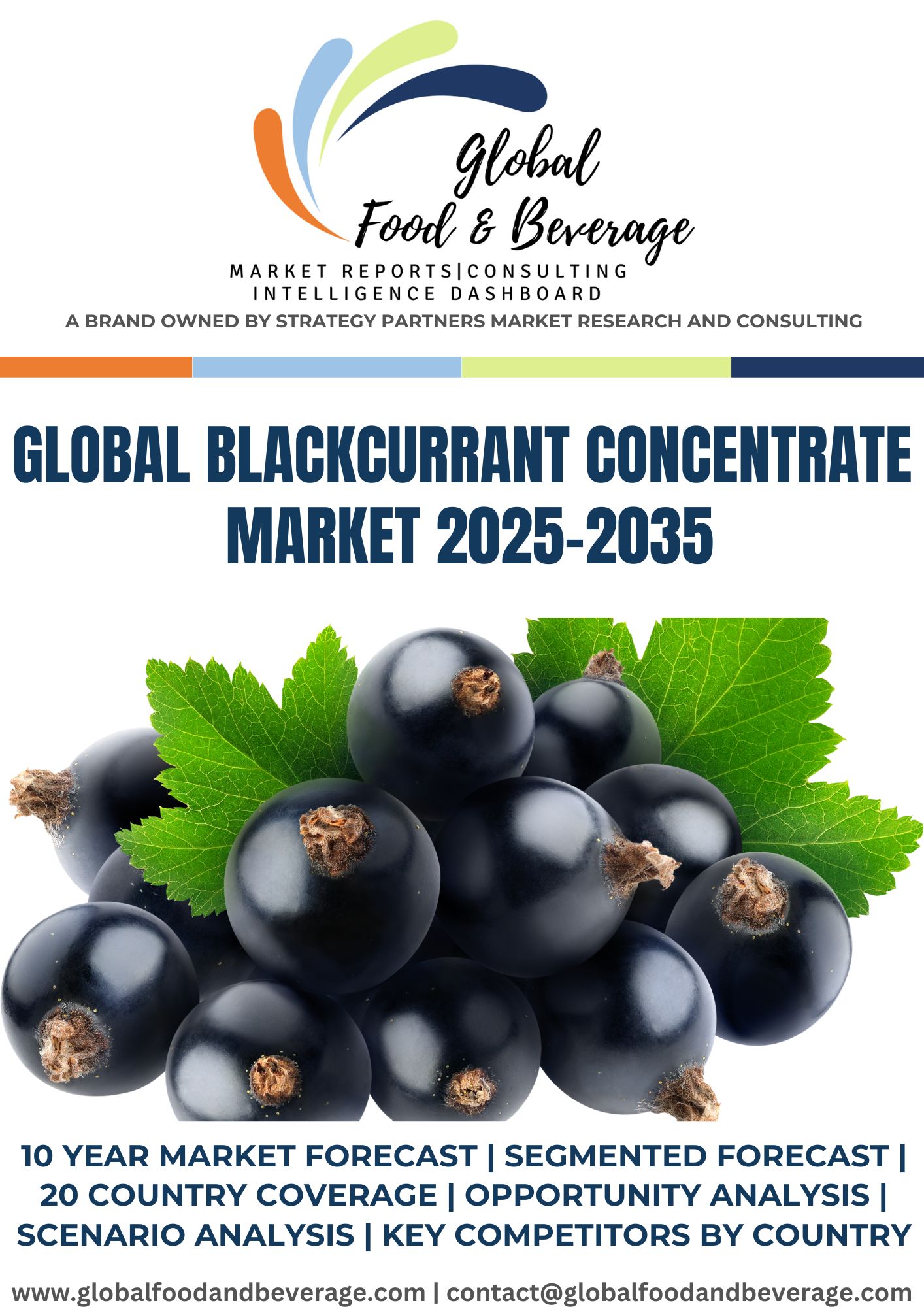
Blackcurrant concentrate is a richly pigmented, nutrient-dense product derived from the blackcurrant berry, Ribes nigrum, which is native to parts of Europe and northern Asia. Known for its deep purple-black color and tart flavor, the blackcurrant has been cultivated for centuries for both culinary and medicinal uses. The concentrate, produced by reducing blackcurrant juice to a thicker, more potent form, has become widely used across the food and beverage industry, as well as in nutraceuticals, cosmetics, and health supplements. Its growing global popularity stems not only from its intense flavor but also from its impressive nutritional profile, particularly its high content of vitamin C, polyphenols, and anthocyanins.
The process of making blackcurrant concentrate typically begins with harvesting the ripe berries, which are known for their high juice yield and vibrant flavor. Harvesting usually takes place in mid to late summer, depending on the region and variety. The berries are then cleaned and pressed to extract the juice. This juice undergoes a concentration process, often through vacuum evaporation, in which water is removed under low heat to preserve flavor and nutrients. The resulting concentrate can range from 4:1 to 7:1 strength, depending on how much water is removed. It is then stored under refrigerated conditions or frozen to maintain quality before use or export.
Blackcurrant concentrate is used in a wide array of products, from fruit juices, smoothies, and soft drinks to jams, confectionery, yogurts, and ice creams. Its strong color and flavor allow manufacturers to use it in small quantities, making it a cost-effective natural coloring and flavoring agent. In beverages, it is often diluted and blended with other fruit juices to balance its tartness and add depth. In the culinary world, chefs and food technologists value its ability to impart a unique, slightly astringent flavor to sauces, glazes, and desserts. In alcoholic beverages, blackcurrant concentrate is a key ingredient in drinks like the French “kir,” which combines crème de cassis with white wine or champagne.
From a nutritional standpoint, blackcurrant concentrate stands out due to its high levels of vitamin C—often five times higher than that of oranges by weight. This antioxidant vitamin is essential for immune function, skin health, and the absorption of iron from plant sources. Blackcurrants are also rich in anthocyanins, a class of flavonoid pigments responsible for their dark purple color. These compounds have been studied for their potential anti-inflammatory, antiviral, and cardioprotective properties. Research has suggested that anthocyanins may support eye health, reduce oxidative stress, and improve blood flow, which has made blackcurrant concentrate particularly appealing in the wellness and supplement markets.
The use of blackcurrant concentrate in dietary supplements has expanded significantly in recent years. Encapsulated or powdered forms of the concentrate are marketed for immune support, vision improvement, and athletic recovery. Some studies have indicated that blackcurrant extract may help reduce muscle soreness after exercise and enhance endurance, potentially due to improved blood circulation and reduced oxidative damage. These claims, while promising, are still under investigation, and health authorities in various countries require cautious marketing to avoid overstated benefits. Nonetheless, the functional food industry continues to incorporate blackcurrant concentrate in performance-oriented and age-related health products.
Geographically, the production and consumption of blackcurrant concentrate are most prominent in Europe and New Zealand. Countries like Poland, the UK, and Germany are leading producers in Europe, while New Zealand has gained recognition for its premium-quality blackcurrants grown under high UV light conditions, which some studies suggest may enhance anthocyanin content. The climate, soil type, and agricultural practices all influence the nutritional profile and flavor of the berries, and different cultivars are used depending on the intended application. For instance, certain varieties are bred for higher sugar content for jams and syrups, while others are cultivated specifically for juice production.
The global blackcurrant concentrate market is shaped by both seasonal factors and long-term trends. Annual production is dependent on weather patterns, pest pressures, and farming inputs. In years with adverse growing conditions, concentrate prices can rise significantly due to reduced yields. At the same time, market demand fluctuates with consumer trends around health, natural ingredients, and clean-label products. As synthetic additives fall out of favor, manufacturers increasingly turn to concentrates like blackcurrant for natural color and flavor enhancement. This has increased interest from food developers in North America, Asia, and parts of the Middle East, where blackcurrant is less common but gaining traction.
Sustainability is an increasingly important factor in the blackcurrant industry. Cultivation methods are being refined to reduce pesticide use and improve soil health, often through integrated pest management and organic farming practices. Additionally, waste from juice extraction—such as seeds and pulp—can be repurposed into fiber-rich ingredients or used for animal feed and compost, minimizing environmental impact. Some producers are investing in closed-loop systems that reuse water and energy during processing, reflecting a broader commitment to sustainable production. As demand for ethical and environmentally conscious products grows, blackcurrant concentrate producers are under pressure to meet certification standards for organic, fair trade, or low-carbon operations.
In terms of trade and logistics, blackcurrant concentrate is typically sold in bulk to food and beverage companies, packaged in large drums or aseptic containers for transport. The concentrate’s stability makes it a viable export commodity, allowing producers in Europe or New Zealand to supply global markets year-round. Shelf life is extended through pasteurization and proper storage, but careful temperature control is required to prevent degradation of color and nutrients. For smaller producers and specialty food brands, concentrate can be packaged in smaller quantities and sold to consumers directly for home use in beverages, baking, and wellness applications.
Despite its many benefits, there are challenges facing the blackcurrant concentrate industry. One is limited consumer awareness in some regions, particularly outside Europe and the Commonwealth countries, where blackcurrant flavor is not as culturally entrenched. In the United States, for example, blackcurrant was banned for many decades due to its role in spreading white pine blister rust, a tree disease. Although the ban has since been lifted in most states, the berry remains underrecognized. Marketing efforts now focus on educating consumers about the flavor, nutritional benefits, and culinary versatility of blackcurrant concentrate. Taste familiarity and cultural acceptance will be key to expanding its use in new markets.
Another challenge is the variability in quality and consistency across different producers. Concentrate made from lower-quality or under-ripe fruit may have less desirable flavor profiles or reduced nutritional value. Standardizing processing methods and establishing international quality benchmarks are ongoing efforts within the industry. Additionally, regulatory frameworks differ across countries regarding permissible health claims, food safety standards, and labeling, which complicates international marketing and product formulation. Harmonization of standards would facilitate smoother global trade and clearer communication to end consumers.
As consumer demand for natural, nutrient-rich, and multifunctional ingredients continues to rise, blackcurrant concentrate is well-positioned for growth. Its potential applications stretch from conventional food and drink to innovative products in health and wellness, sports nutrition, and even skincare. Researchers are exploring new extraction techniques to enhance bioavailability and retain more of the berry’s beneficial compounds. Entrepreneurs are developing products that combine blackcurrant with other superfoods, adaptogens, and probiotics to appeal to health-conscious consumers. As science and market innovation converge, blackcurrant concentrate is poised to move from a traditional European ingredient to a globally recognized nutritional powerhouse.
Table of Content
1 Market Introduction- Global Blackcurrant Concentrate Market
1.1 Market Segmentation- Global Blackcurrant Concentrate Market
1.2 Key Trends- Global Blackcurrant Concentrate Market
1.2.1 Drivers
1.2.2 Restraints
1.2.3 Type
2 Global Market Forecast- Global Blackcurrant Concentrate Market
1. By Region
2. By Type
3. By Application
3 Country Wise Forecast- Global Blackcurrant Concentrate Market
3.1 US
3.1.1 Key Trends
3.1.2 Consumer Spending
o Population
o GDP
o CPI
o Spend per Capita
o Spend as a proportion of GDP
3.1.3 Market Forecast- US Blackcurrant Concentrate Market
1.By Type
2.By Application
3.1.4 Key Competitors- US Blackcurrant Concentrate Market
3.1.5 EXIM
3.1.6 Patents
3.1.7 Scenario Analysis- US Blackcurrant Concentrate Market
3.1.8 Opportunity Analysis- US Blackcurrant Concentrate Market
3.2 Canada
3.2.1 Key Trends
3.2.2 Consumer Spending
o Population
o GDP
o CPI
o Spend per Capita
o Spend as a proportion of GDP
3.2.3 Market Forecast- Canada Blackcurrant Concentrate Market
1.By Type
2.By Application
3.2.4 Key Competitors- Canada Blackcurrant Concentrate Market
3.2.5 EXIM
3.2.6 Patents
3.2.7 Scenario Analysis- Canada Blackcurrant Concentrate Market
3.2.8 Opportunity Analysis- Canada Blackcurrant Concentrate Market
3.3 UK
3.3.1 Key Trends
3.3.2 Consumer Spending
o Population
o GDP
o CPI
o Spend per Capita
o Spend as a proportion of GDP
3.3.3 Market Forecast- UK Blackcurrant Concentrate Market
1.By Type
2.By Application
3.3.4 Key Competitors- UK Blackcurrant Concentrate Market
3.3.5 EXIM
3.3.6 Patents
3.3.7 Scenario Analysis- UK Blackcurrant Concentrate Market
3.3.8 Opportunity Analysis- UK Blackcurrant Concentrate Market
3.4 Germany
3.4.1 Key Trends
3.4.2 Consumer Spending
o Population
o GDP
o CPI
o Spend per Capita
o Spend as a proportion of GDP
3.4.3 Market Forecast- Germany Blackcurrant Concentrate Market
1.By Type
2.By Application
3.4.4 Key Competitors- Germany Blackcurrant Concentrate Market
3.4.5 EXIM
3.4.6 Patents
3.4.7 Scenario Analysis- Germany Blackcurrant Concentrate Market
3.4.8 Opportunity Analysis- Germany Blackcurrant Concentrate Market
3.5 France
3.5.1 Key Trends
3.5.2 Consumer Spending
o Population
o GDP
o CPI
o Spend per Capita
o Spend as a proportion of GDP
3.5.3 Market Forecast- France Blackcurrant Concentrate Market
1.By Type
2.By Application
3.5.4 Key Competitors- France Blackcurrant Concentrate Market
3.5.5 EXIM
3.5.6 Patents
3.5.7 Scenario Analysis- France Blackcurrant Concentrate Market
3.5.8 Opportunity Analysis- France Blackcurrant Concentrate Market
3.6 Italy
3.6.1 Key Trends
3.6.2 Consumer Spending
o Population
o GDP
o CPI
o Spend per Capita
o Spend as a proportion of GDP
3.6.3 Market Forecast- Italy Blackcurrant Concentrate Market
1.By Type
2.By Application
3.6.4 Key Competitors- Italy Blackcurrant Concentrate Market
3.6.5 EXIM
3.6.6 Patents
3.6.7 Scenario Analysis- Italy Blackcurrant Concentrate Market
3.6.8 Opportunity Analysis- Italy Blackcurrant Concentrate Market
3.7 Ireland
3.7.1 Key Trends
3.7.2 Consumer Spending
o Population
o GDP
o CPI
o Spend per Capita
o Spend as a proportion of GDP
3.7.3 Market Forecast- Ireland Blackcurrant Concentrate Market
1.By Type
2.By Application
3.7.4 Key Competitors- Ireland Blackcurrant Concentrate Market
3.7.5 EXIM
3.7.6 Patents
3.7.7 Scenario Analysis- Ireland Blackcurrant Concentrate Market
3.7.8 Opportunity Analysis- Ireland Blackcurrant Concentrate Market
3.8 Spain
3.8.1 Key Trends
3.8.2 Consumer Spending
o Population
o GDP
o CPI
o Spend per Capita
o Spend as a proportion of GDP
3.8.3 Market Forecast- Spain Blackcurrant Concentrate Market
1.By Type
2.By Application
3.8.4 Key Competitors- Spain Blackcurrant Concentrate Market
3.8.5 EXIM
3.8.6 Patents
3.8.7 Scenario Analysis- Spain Blackcurrant Concentrate Market
3.8.8 Opportunity Analysis- Spain Blackcurrant Concentrate Market
3.9 Belgium
3.9.1 Key Trends
3.9.2 Consumer Spending
o Population
o GDP
o CPI
o Spend per Capita
o Spend as a proportion of GDP
3.9.3 Market Forecast- Belgium Blackcurrant Concentrate Market
1.By Type
2.By Application
3.9.4 Key Competitors- Belgium Blackcurrant Concentrate Market
3.9.5 EXIM
3.9.6 Patents
3.9.7 Scenario Analysis- Belgium Blackcurrant Concentrate Market
3.9.8 Opportunity Analysis- Belgium Blackcurrant Concentrate Market
3.10 Switzerland
3.10.1 Key Trends
3.10.2 Consumer Spending
o Population
o GDP
o CPI
o Spend per Capita
o Spend as a proportion of GDP
3.10.3 Market Forecast- Switzerland Blackcurrant Concentrate Market
1.By Type
2.By Application
3.10.4 Key Competitors- Switzerland Blackcurrant Concentrate Market
3.10.5 EXIM
3.10.6 Patents
3.10.7 Scenario Analysis- Switzerland Blackcurrant Concentrate Market
3.10.8 Opportunity Analysis- Switzerland Blackcurrant Concentrate Market
3.11 Sweden
3.11.1 Key Trends
3.11.2 Consumer Spending
o Population
o GDP
o CPI
o Spend per Capita
o Spend as a proportion of GDP
3.11.3 Market Forecast- Sweden Blackcurrant Concentrate Market
1.By Type
2.By Application
3.11.4 Key Competitors- Sweden Blackcurrant Concentrate Market
3.11.5 EXIM
3.11.6 Patents
3.11.7 Scenario Analysis- Sweden Blackcurrant Concentrate Market
3.11.8 Opportunity Analysis- Sweden Blackcurrant Concentrate Market
3.12 Portugal
3.12.1 Key Trends
3.12.2 Consumer Spending
o Population
o GDP
o CPI
o Spend per Capita
o Spend as a proportion of GDP
3.12.3 Market Forecast- Portugal Blackcurrant Concentrate Market
1.By Type
2.By Application
3.12.4 Key Competitors- Portugal Blackcurrant Concentrate Market
3.12.5 EXIM
3.12.6 Patents
3.12.7 Scenario Analysis- Portugal Blackcurrant Concentrate Market
3.12.8 Opportunity Analysis- Portugal Blackcurrant Concentrate Market
3.13 The Netherlands
3.13.1 Key Trends
3.13.2 Consumer Spending
o Population
o GDP
o CPI
o Spend per Capita
o Spend as a proportion of GDP
3.13.3 Market Forecast- Netherlands Blackcurrant Concentrate Market
1.By Type
2.By Application
3.13.4 Key Competitors- Netherlands Blackcurrant Concentrate Market
3.13.5 EXIM
3.13.6 Patents
3.13.7 Scenario Analysis- Netherlands Blackcurrant Concentrate Market
3.13.8 Opportunity Analysis- Netherlands Blackcurrant Concentrate Market
3.14 Brazil
3.14.1 Key Trends
3.14.2 Consumer Spending
o Population
o GDP
o CPI
o Spend per Capita
o Spend as a proportion of GDP
3.14.3 Market Forecast- Brazil Blackcurrant Concentrate Market
1.By Type
2.By Application
3.14.4 Key Competitors- Brazil Blackcurrant Concentrate Market
3.14.5 EXIM
3.14.6 Patents
3.14.7 Scenario Analysis- Brazil Blackcurrant Concentrate Market
3.14.8 Opportunity Analysis- Brazil Blackcurrant Concentrate Market
3.15 Mexico
3.15.1 Key Trends
3.15.2 Consumer Spending
o Population
o GDP
o CPI
o Spend per Capita
o Spend as a proportion of GDP
3.15.3 Market Forecast- Mexico Blackcurrant Concentrate Market
1.By Type
2.By Application
3.15.4 Key Competitors- Mexico Blackcurrant Concentrate Market
3.15.5 EXIM
3.15.6 Patents
3.15.7 Scenario Analysis- Mexico Blackcurrant Concentrate Market
3.15.8 Opportunity Analysis- Mexico Blackcurrant Concentrate Market
3.16 Australia
3.16.1 Key Trends
3.16.2 Consumer Spending
o Population
o GDP
o CPI
o Spend per Capita
o Spend as a proportion of GDP
3.16.3 Market Forecast- Australia Blackcurrant Concentrate Market
1.By Type
2.By Application
3.16.4 Key Competitors- Australia Blackcurrant Concentrate Market
3.16.5 EXIM
3.16.6 Patents
3.16.7 Scenario Analysis- Australia Blackcurrant Concentrate Market
3.16.8 Opportunity Analysis- Australia Blackcurrant Concentrate Market
3.17 China
3.17.1 Key Trends
3.17.2 Consumer Spending
o Population
o GDP
o CPI
o Spend per Capita
o Spend as a proportion of GDP
3.17.3 Market Forecast- China Blackcurrant Concentrate Market
1.By Type
2.By Application
3.17.4 Key Competitors- China Blackcurrant Concentrate Market
3.17.5 EXIM
3.17.6 Patents
3.17.7 Scenario Analysis- China Blackcurrant Concentrate Market
3.17.8 Opportunity Analysis- China Blackcurrant Concentrate Market
3.18 Indonesia
3.18.1 Key Trends
3.18.2 Consumer Spending
o Population
o GDP
o CPI
o Spend per Capita
o Spend as a proportion of GDP
3.18.3 Market Forecast- Indonesia Blackcurrant Concentrate Market
1.By Type
2.By Application
3.18.4 Key Competitors- Indonesia Blackcurrant Concentrate Market
3.18.5 EXIM
3.18.6 Patents
3.18.7 Scenario Analysis- Indonesia Blackcurrant Concentrate Market
3.18.8 Opportunity Analysis- Indonesia Blackcurrant Concentrate Market
3.19 India
3.19.1 Key Trends
3.19.2 Consumer Spending
o Population
o GDP
o CPI
o Spend per Capita
o Spend as a proportion of GDP
3.19.3 Market Forecast- India Blackcurrant Concentrate Market
1.By Type
2.By Application
3.19.4 Key Competitors- India Blackcurrant Concentrate Market
3.19.5 EXIM
3.19.6 Patents
3.19.7 Scenario Analysis- India Blackcurrant Concentrate Market
3.19.8 Opportunity Analysis- India Blackcurrant Concentrate Market
3.20 Japan
3.20.1 Key Trends
3.20.2 Consumer Spending
o Population
o GDP
o CPI
o Spend per Capita
o Spend as a proportion of GDP
3.20.3 Market Forecast- Japan Blackcurrant Concentrate Market
1.By Type
2.By Application
3.20.4 Key Competitors- Japan Blackcurrant Concentrate Market
3.20.5 EXIM
3.20.6 Patents
3.20.7 Scenario Analysis- Japan Blackcurrant Concentrate Market
3.20.8 Opportunity Analysis- Japan Blackcurrant Concentrate Market
3.21 South Korea
3.21.1 Key Trends
3.21.2 Consumer Spending
o Population
o GDP
o CPI
o Spend per Capita
o Spend as a proportion of GDP
3.21.3 Market Forecast- South Korea Blackcurrant Concentrate Market
1.By Type
2.By Application
3.21.4 Key Competitors- South Korea Blackcurrant Concentrate Market
3.21.5 EXIM
3.21.6 Patents
3.21.7 Scenario Analysis- South Korea Blackcurrant Concentrate Market
3.21.8 Opportunity Analysis- South Korea Blackcurrant Concentrate Market
3.22 Thailand
3.22.1 Key Trends
3.22.2 Consumer Spending
o Population
o GDP
o CPI
o Spend per Capita
o Spend as a proportion of GDP
3.22.3 Market Forecast- Thailand Blackcurrant Concentrate Market
1.By Type
2.By Application
3.22.4 Key Competitors- Thailand Blackcurrant Concentrate Market
3.22.5 EXIM
3.22.6 Patents
3.22.7 Scenario Analysis- Thailand Blackcurrant Concentrate Market
3.22.8 Opportunity Analysis- Thailand Blackcurrant Concentrate Market
3.23 Malaysia
3.23.1 Key Trends
3.23.2 Consumer Spending
o Population
o GDP
o CPI
o Spend per Capita
o Spend as a proportion of GDP
3.23.3 Market Forecast- Malaysia Blackcurrant Concentrate Market
1.By Type
2.By Application
3.23.4 Key Competitors- Malaysia Blackcurrant Concentrate Market
3.23.5 EXIM
3.23.6 Patents
3.23.7 Scenario Analysis- Malaysia Blackcurrant Concentrate Market
3.23.8 Opportunity Analysis- Malaysia Blackcurrant Concentrate Market
3.24 Singapore
3.24.1 Key Trends
3.24.2 Consumer Spending
o Population
o GDP
o CPI
o Spend per Capita
o Spend as a proportion of GDP
3.24.3 Market Forecast- Singapore Blackcurrant Concentrate Market
1.By Type
2.By Application
3.24.4 Key Competitors- Singapore Blackcurrant Concentrate Market
3.24.5 EXIM
3.24.6 Patents
3.24.7 Scenario Analysis- Singapore Blackcurrant Concentrate Market
3.24.8 Opportunity Analysis- Singapore Blackcurrant Concentrate Market
4 Opportunity Matrix- Global Blackcurrant Concentrate Market
5 Conclusions and Recommendations- Global Blackcurrant Concentrate Market
6 About Global Food & Beverages