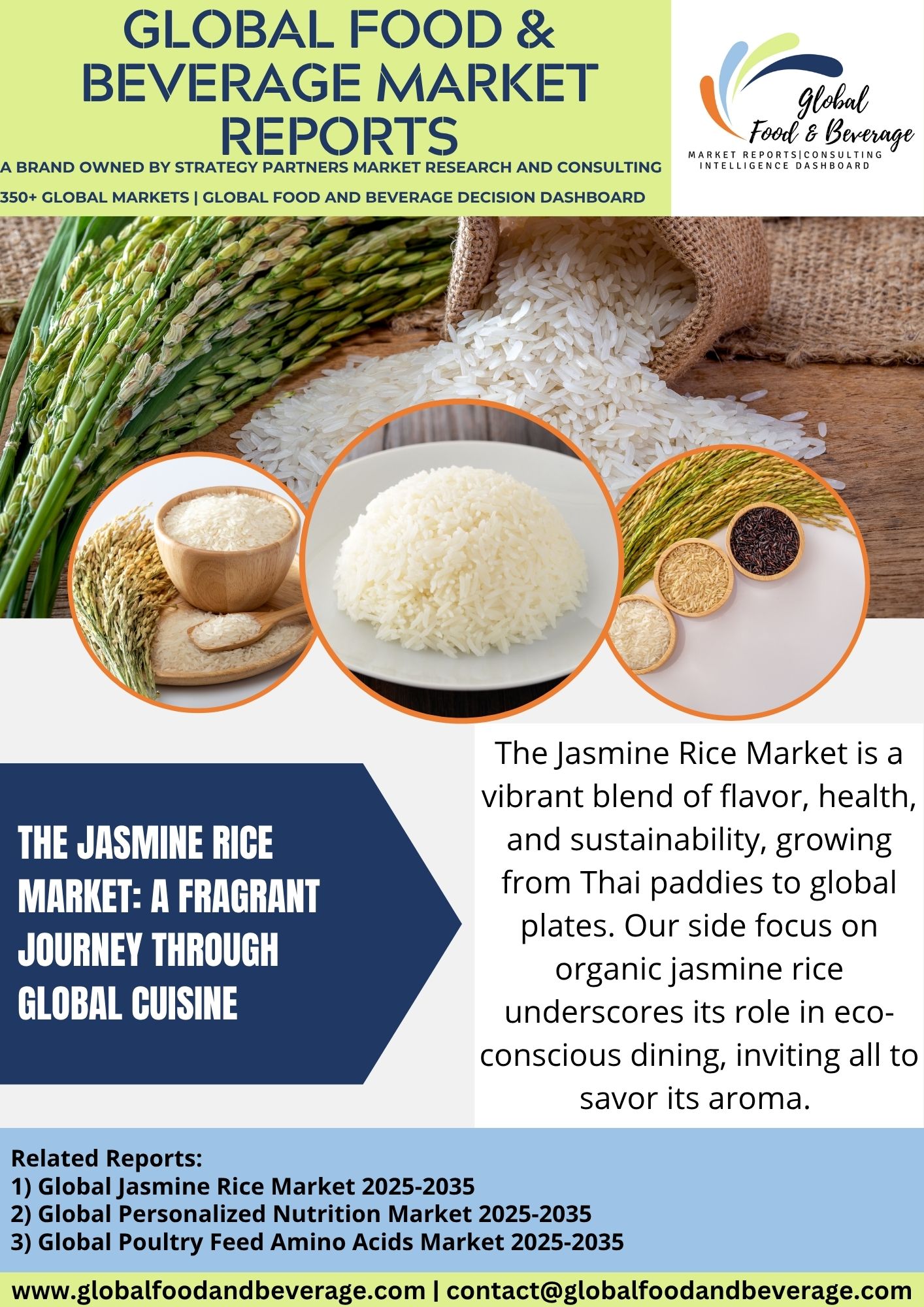
Jasmine rice, with its delicate floral aroma and soft, slightly sticky texture, has woven itself into the fabric of global cuisines, from Thai curries to fusion stir-fries. This long-grain variety, primarily grown in Southeast Asia, is celebrated for its subtle sweetness and versatility, making it a staple in households, restaurants, and food manufacturing. As consumer preferences shift toward premium, healthy, and culturally diverse foods, the jasmine rice market is flourishing, driven by culinary trends, sustainability demands, and growing appetites in both traditional and emerging markets. This blog explores the market’s segments, growth drivers, regional dynamics, challenges, and future prospects, with a side topic on the rise of organic jasmine rice as a beacon of sustainable agriculture.
Unpacking the Jasmine Rice Market
The jasmine rice market is a vibrant tapestry, segmented by type, form, application, and distribution. By type, it includes white jasmine rice, polished to a glossy finish for everyday meals, and brown jasmine rice, which retains its nutrient-rich bran layer for health-conscious eaters. Organic variants, grown without synthetic inputs, cater to clean-label enthusiasts, while specialty blends infused with herbs or spices target gourmet niches. Forms range from whole grain for cooking to pre-cooked or instant rice for convenience, alongside rice flour for baking and noodles.
Applications span culinary and industrial uses. In households and restaurants, jasmine rice stars in dishes like khao pad or pilaf, valued for its ability to absorb flavors. Food processing incorporates it into ready meals, frozen entrees, and snacks like rice crackers. Industrial uses include rice-based beverages or cosmetics leveraging rice starch. Distribution channels encompass supermarkets and hypermarkets for retail, e-commerce platforms for direct-to-consumer sales, and bulk supplies to food service and manufacturers. This diversity ensures jasmine rice graces tables from street vendors to fine dining.
Catalysts Fueling Market Growth
A blend of trends propels the jasmine rice market forward. Rising global demand for authentic ethnic cuisines, particularly Thai and Southeast Asian, elevates jasmine rice as a must-have for dishes like green curry or sticky mango desserts. Health awareness drives interest in brown and organic variants, rich in fiber and micronutrients, appealing to consumers seeking low-glycemic or gluten-free options. The clean-label movement further boosts organic jasmine rice, as buyers prioritize transparency and sustainability over conventional grains.
Urbanization and growing disposable incomes in emerging economies fuel demand for premium rice varieties, with jasmine’s fragrance positioning it as a luxury staple. Social media amplifies this, with influencers showcasing vibrant rice bowls, sparking trends in fusion recipes like jasmine rice sushi. E-commerce expands access, with online grocers offering organic and imported options, while delivery apps integrate rice-heavy dishes from Asian eateries. Sustainability trends push brands toward eco-friendly packaging and water-efficient farming, resonating with green consumers. These forces ensure jasmine rice remains a fragrant favorite in global kitchens.
A Global Grain: Regional Dynamics
The jasmine rice market thrives across a rich regional landscape. Asia-Pacific dominates, with Thailand as the epicenter, producing high-quality jasmine rice under brands like Hom Mali, exported globally for its authenticity. Countries like Vietnam and Cambodia contribute significant volumes, blending local consumption with exports to meet rising demand. North America follows, with the United States importing heavily for Asian restaurants and health food markets, where brown jasmine rice gains traction in vegan and gluten-free diets.
Europe embraces jasmine rice in fusion cuisines, with the UK and France favoring organic variants for eco-conscious diners. Latin America, particularly Brazil, incorporates jasmine rice into tropical dishes, while the Middle East and Africa see growth in urban hubs, where rice accompanies Middle Eastern pilafs or African jollof. Trade flows connect Thai exporters to Western and Asian markets, though local production rises in countries like the United States to reduce import costs. This global spread highlights jasmine rice’s ability to unite diverse palates through its aromatic allure.
Challenges in the Paddy
The market faces its share of hurdles. Price volatility in rice, driven by weather events like monsoons or droughts, disrupts supply chains, impacting affordability. Water-intensive rice farming draws environmental scrutiny, with methane emissions from paddies prompting calls for sustainable practices that raise costs. Competition from other premium grains, like basmati or quinoa, challenges market share, as each offers unique flavors or nutritional benefits.
Regulatory differences in organic certifications across countries complicate exports, requiring costly compliance. Consumer education lags in some regions, where jasmine rice’s distinct qualities remain unfamiliar compared to generic white rice. Scaling organic production while maintaining quality tests growers, as does ensuring consistent aroma and texture across batches. Addressing these demands innovation in farming and robust supply chains to keep the market thriving.
Side Topic: The Rise of Organic Jasmine Rice
A fragrant side story blooms with the rise of organic jasmine rice, a beacon of sustainable agriculture that’s reshaping the market. Grown without synthetic pesticides or fertilizers, organic jasmine rice appeals to health-conscious and eco-minded consumers, offering a clean, nutrient-rich grain. Sustainable farming practices, like crop rotation and rainwater harvesting, reduce environmental impact, while fair-trade certifications ensure ethical labor standards, resonating with socially conscious buyers.
Social media amplifies this trend, with influencers showcasing organic jasmine rice in colorful bowls or eco-friendly meal kits, driving demand in cafes and health stores. Brands innovate with heirloom varieties, preserving traditional flavors, or blend rice with superfoods like chia for added nutrition. Challenges include higher costs and limited yields, but premium pricing and growing demand for green products offset these. This organic surge not only boosts market growth but positions jasmine rice as a leader in sustainable food systems, inviting all to savor an ethical grain.
The Competitive Rice Field
The market thrives with a mix of global and regional players. Major agribusinesses dominate through scale, supplying organic and conventional jasmine rice to retailers and food processors, with robust export networks ensuring quality. Smaller artisanal brands focus on organic, single-origin seeds, thriving in e-commerce with storytelling about sustainable farms. Regional producers in Thailand and Vietnam blend local expertise with global reach, while Western firms innovate with instant rice blends. Strategies include eco-certifications, partnerships with vegan brands, and recyclable packaging to win consumer loyalty. This dynamic field ensures a rich harvest of options.
Future Grains: A Fragrant Horizon
The jasmine rice market’s future is as aromatic as its grains. Opportunities lie in functional rice blends, like fortified jasmine rice with vitamins for health-conscious markets. Emerging regions in Africa and South America promise growth via local cultivation, reducing reliance on imports. Sustainability will shape strategies, with low-water farming and carbon-neutral processing gaining traction. Innovations in instant rice and rice-based snacks will cater to busy lifestyles, while global cuisine trends ensure jasmine rice’s place in fusion dishes. As health and ethics drive diets, this rice will remain a fragrant staple.
Polishing the Grain
The jasmine rice market is a vibrant blend of flavor, health, and sustainability, growing from Thai paddies to global plates. Our side focus on organic jasmine rice underscores its role in eco-conscious dining, inviting all to savor its aroma. For farmers, brands, and food lovers, this market offers a fragrant promise—a grain that nourishes both body and planet in a flavorful future.