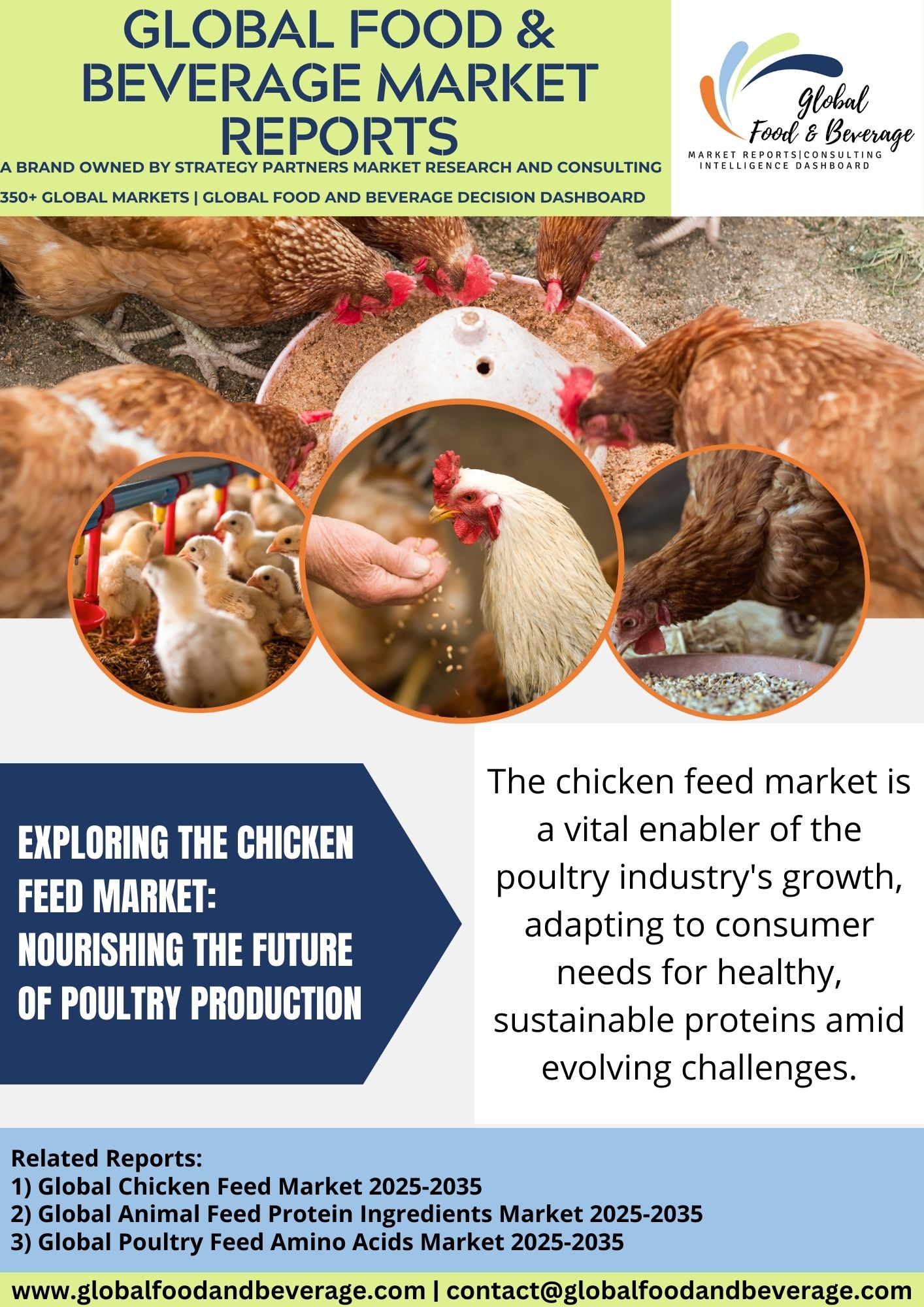
The chicken feed market forms the backbone of the global poultry industry, providing essential nutrition that drives the health, growth, and productivity of billions of birds worldwide. As a key component in raising chickens for meat and eggs, chicken feed encompasses a blend of grains, proteins, vitamins, and minerals tailored to meet the specific needs of broilers, layers, and other poultry types. With rising global demand for affordable, protein-rich foods, this market is experiencing steady expansion, fueled by innovations in formulations and a shift toward sustainable practices. This blog delves into the dynamics of the chicken feed market, covering its segments, growth drivers, regional insights, challenges, and competitive landscape, while featuring a side topic on the burgeoning trend of sustainable and organic chicken feed innovations that are reshaping the sector for environmental and health benefits.
Understanding the Chicken Feed Market Landscape
Chicken feed is categorized by various factors to suit different poultry needs and production goals. By type, it includes complete feeds for broilers and layers, concentrates that require mixing with grains, and premixes focused on additives like vitamins and minerals. Broiler feed, designed for rapid growth and meat production, dominates due to its high energy content from corn and soybean meal, while layer feed emphasizes calcium and proteins for optimal egg output. Forms vary from mash, which is ground and easy to digest for young chicks, to pellets and crumbles that reduce waste and improve feed efficiency for mature birds. Pellets, in particular, ensure uniform nutrient distribution, making them popular in commercial operations.
Additives play a crucial role, including amino acids for muscle development, enzymes for better digestion, probiotics for gut health, and antioxidants to preserve feed quality. Sources range from conventional grains and animal by-products to emerging plant-based alternatives. The market serves both small-scale farmers and large integrators, with distribution channels spanning direct sales from mills, cooperatives, and online platforms to retail outlets. Overall, the market reflects the poultry industry’s evolution, where feed quality directly impacts meat yield, egg production, and animal welfare.
Key Drivers Fueling Market Expansion
Several interconnected factors are propelling the chicken feed market forward. The surge in global poultry consumption, driven by population growth and a preference for lean proteins, necessitates higher feed volumes to support expanded farming. Urbanization and rising disposable incomes in developing regions have boosted demand for processed poultry products, indirectly increasing the need for efficient feeds that enhance productivity. Health trends favoring antibiotic-free and nutrient-enriched poultry have spurred innovations in feed formulations, such as those incorporating probiotics and essential amino acids to improve bird immunity and reduce disease risks.
Advancements in nutritional science are another major driver, enabling the creation of high-protein and precision feeds that optimize growth rates and feed conversion ratios. The expansion of quick-service restaurants and food delivery services worldwide further amplifies this, as consistent poultry supply relies on reliable feed sources. Additionally, government initiatives promoting poultry farming for food security, coupled with investments in agricultural infrastructure, are enhancing market accessibility in emerging economies. These elements collectively underscore the market’s resilience and potential for sustained growth.
Regional Insights and Global Dynamics
The chicken feed market exhibits distinct regional variations, with Asia-Pacific leading due to its vast poultry population and rapid urbanization. Countries like China and India, with their booming middle classes, drive massive demand for broiler and layer feeds, supported by local production of key ingredients like corn and soybeans. North America follows closely, benefiting from advanced farming technologies and a focus on high-quality, fortified feeds to meet stringent food safety standards. Europe emphasizes sustainable and organic variants, influenced by regulatory frameworks that limit additives and promote animal welfare.
Latin America, particularly Brazil, emerges as a key exporter of poultry, fueling feed demand through integrated supply chains. The Middle East and Africa show promising growth, with investments in poultry infrastructure to achieve self-sufficiency in protein sources. Trade dynamics, including imports of feed ingredients from major producers like the United States, play a vital role, though fluctuations in global commodity prices can impact regional affordability. Overall, these regions highlight a market poised for balanced expansion, with emerging areas catching up to established ones.
Challenges in the Chicken Feed Market
Despite its promising outlook, the market grapples with several hurdles. Volatility in raw material prices, especially for grains and proteins affected by weather events and geopolitical tensions, poses significant risks to profitability and supply stability. Disease outbreaks, such as avian influenza, disrupt poultry operations and indirectly strain feed demand, while stringent regulatory compliance on additives and contaminants adds operational complexities. Environmental concerns, including the carbon footprint of feed production and water usage in ingredient cultivation, are increasingly scrutinized, pushing producers toward costlier sustainable alternatives.
Competition is intense, with small farmers facing challenges from large integrators who control supply chains. Additionally, shifting consumer preferences toward plant-based proteins could temper long-term growth, though opportunities in diversified feeds mitigate this. Navigating these issues requires adaptive strategies, such as hedging against price swings and investing in resilient supply networks.
Side Topic: The Rise of Sustainable and Organic Chicken Feed Innovations
A transformative side trend in the chicken feed market is the shift toward sustainable and organic innovations, addressing environmental, health, and ethical concerns while meeting growing consumer demand for clean-label poultry products. Organic feeds, free from synthetic pesticides and GMOs, are gaining traction as consumers prioritize antibiotic-free and humane-raised chicken. These feeds rely on certified organic grains, soy, and supplements like algae or insect proteins, which reduce reliance on traditional fishmeal and lower the ecological impact of production.
Innovations include alternative protein sources such as single-cell proteins from microbes and upcycled food waste, which cut costs and minimize waste—potentially recycling up to a third of annual by-products from fruits and vegetables. Probiotics and enzymes enhance digestibility, supporting antibiotic-free farming and improving bird health without compromising yields. In regions like Europe and North America, blockchain traceability ensures transparency, building trust in organic claims. Solar-powered feed mills and precision nutrition via data analytics further boost efficiency and sustainability.
This trend aligns with global goals like zero hunger by making feeds more accessible and eco-friendly, particularly for smallholders. Challenges include higher costs and certification hurdles, but benefits like premium pricing for organic poultry and reduced environmental footprints make it a viable path forward. As innovations evolve, sustainable feeds could dominate, fostering a greener poultry industry.
Competitive Landscape and Key Players
The market is fragmented yet dominated by major players who innovate through research and strategic expansions. Companies like Cargill, ADM, and Charoen Pokphand Foods lead with integrated operations, offering customized feeds and additives. Alltech and Land O’Lakes focus on nutritional solutions, including probiotics and organic lines, while regional giants like Kent Nutrition Group and De Heus emphasize local adaptations. Mergers, such as those enhancing supply chains, and product launches for antibiotic-free options are common tactics. These firms invest in R&D for sustainable formulations, positioning themselves to capture emerging demands in Asia-Pacific and beyond.
Future Outlook and Opportunities
Looking ahead, the chicken feed market holds immense potential, particularly in organic and tech-driven segments. Opportunities lie in developing affordable, sustainable feeds for emerging markets and leveraging AI for precision formulation. As poultry demand rises with global population trends, innovations in alternative ingredients will ensure efficiency. Regulatory support for green practices and e-commerce growth in distribution will further propel advancement, promising a resilient sector.
Conclusion
The chicken feed market is a vital enabler of the poultry industry’s growth, adapting to consumer needs for healthy, sustainable proteins amid evolving challenges. From conventional formulations to cutting-edge organic innovations highlighted in our side topic, it reflects a commitment to efficiency and responsibility. As stakeholders embrace these trends, the market will continue to nourish not just chickens, but a healthier planet and populace. For farmers, manufacturers, and enthusiasts alike, this sector offers a flavorful blend of opportunity and innovation.