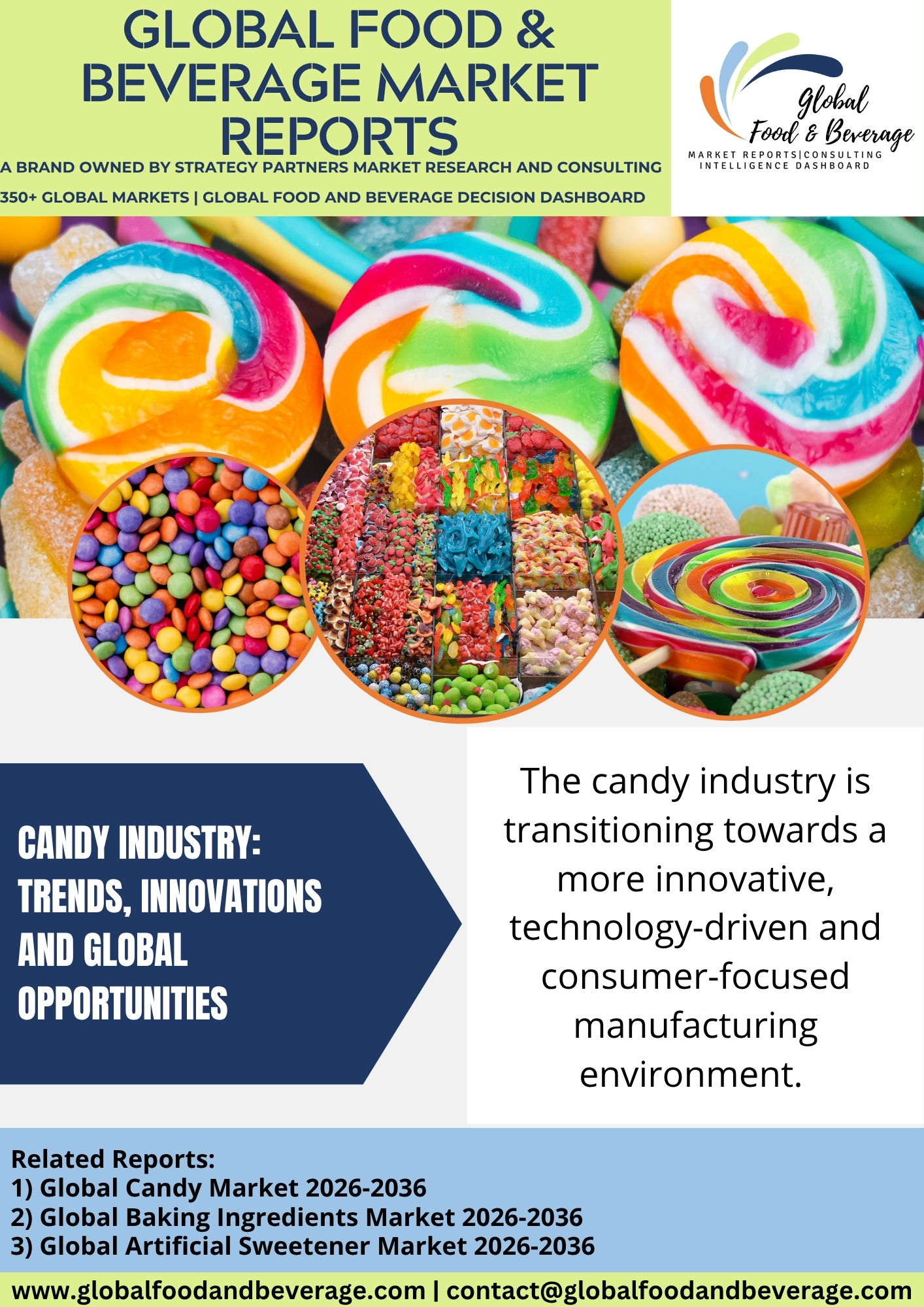
The global candy industry is an important segment of the food and beverage sector, driven by changing consumer preferences, product innovation and increasing demand for convenient indulgence. Candy products, including chocolates, gummies, hard candies, toffees, caramels, lollipops and sugar-free confectionery, have maintained strong consumer appeal across different age groups and geographical markets. From traditional confectionery products to premium and functional sweets, manufacturers are continuously expanding their product portfolios to meet evolving market expectations.
The industry is undergoing significant transformation as consumers increasingly seek new flavours, distinctive textures, premium ingredients and healthier alternatives. Growing urbanisation, rising disposable incomes, expanding retail networks and the popularity of online shopping are also supporting the development of the candy market. At the same time, advancements in food processing, packaging and ingredient technologies are enabling manufacturers to improve production efficiency, product quality and shelf life.
Evolution of the Candy Industry
The candy industry has evolved considerably from traditional handmade confectionery production to large-scale automated manufacturing. Historically, candy production relied on basic ingredients such as sugar, honey, fruits and natural flavouring agents. Early confectionery products were primarily prepared through manual processes and were often associated with festivals, celebrations and special occasions.
The introduction of industrial sugar processing and advanced manufacturing equipment transformed candy production during the nineteenth and twentieth centuries. Manufacturers began developing standardised products, improving production capacity and introducing innovative packaging formats. The expansion of international trade and modern retail channels further enabled confectionery brands to reach consumers across global markets.
Today, the industry incorporates sophisticated technologies such as automated mixing, precision temperature control, advanced moulding, extrusion, coating and packaging systems. Digital manufacturing technologies and artificial intelligence are also supporting product development, quality monitoring and supply chain optimisation. These developments are helping manufacturers respond to changing consumer preferences while maintaining consistent product quality.
Importance of the Candy Industry in the Global Food Sector
The candy industry contributes significantly to the global food and beverage economy through manufacturing, retail distribution, employment generation and international trade. It supports a broad supply chain involving sugar producers, cocoa suppliers, dairy manufacturers, flavour developers, packaging companies, equipment manufacturers and distribution networks.
Consumer demand for confectionery remains closely connected to celebrations, gifting, personal indulgence and everyday snacking. Seasonal occasions such as Christmas, Easter, Halloween, Valentine’s Day and regional festivals create additional opportunities for manufacturers to introduce limited-edition products and promotional packaging.
The industry also provides opportunities for small and medium-sized enterprises through specialised confectionery production, artisanal candy manufacturing and regional flavour development. Premium products, customised packaging and innovative product formats are helping businesses differentiate themselves in an increasingly competitive marketplace.
Key Manufacturing Processes and Technologies
Modern candy manufacturing involves several specialised processes designed to ensure consistent taste, texture, appearance and product safety. Ingredient preparation is one of the most important stages, involving the selection and processing of sugar, glucose syrup, cocoa, milk solids, gelatin, pectin, natural colours and flavouring ingredients.
Cooking and mixing processes determine the final characteristics of confectionery products. Hard candies require controlled heating and moisture reduction, whereas gummies depend on precise ingredient proportions, gel formation and temperature management. Chocolate-based products involve additional processes such as refining, conching, tempering, moulding and enrobing to achieve the desired texture and appearance.
Automation is increasingly transforming manufacturing operations. Advanced production lines integrate automated ingredient dosing, temperature monitoring, robotic handling, moulding and high-speed packaging equipment. These systems help reduce production errors, minimise material waste and improve manufacturing efficiency.
Food safety technologies, including automated inspection, metal detection, foreign-object identification and digital quality management systems, are also becoming essential components of modern confectionery facilities.
Technological Advancements and Emerging Market Trends
Innovation is one of the major factors shaping the future of the candy industry. Manufacturers are increasingly investing in research and development to introduce products that combine traditional indulgence with changing nutritional and lifestyle preferences.
One significant development is the growing demand for sugar-free and reduced-sugar confectionery. Consumers are showing greater interest in products containing alternative sweeteners and formulations designed to reduce sugar content without compromising taste. Manufacturers are exploring ingredients such as stevia, erythritol and other sugar substitutes to expand their product offerings.
Plant-based and vegan confectionery is another emerging segment. The use of pectin, agar and plant-derived ingredients is enabling manufacturers to develop alternatives to traditional gelatin-based gummies and other sweets. Dairy-free chocolate and allergen-conscious confectionery products are also gaining attention.
Premiumisation is creating additional opportunities across the industry. Consumers are increasingly attracted to gourmet chocolates, exotic flavours, innovative fillings and high-quality ingredients. Products combining caramel, nuts, fruit extracts, spices and contrasting textures are helping brands create differentiated consumer experiences.
Functional confectionery is also attracting investment, with manufacturers exploring gummies and candy formats incorporating vitamins, minerals, fibre and other functional ingredients. However, product formulations must comply with applicable food safety and nutritional regulations.
Sustainable packaging is another important development. Companies are investing in recyclable materials, paper-based packaging, lightweight wrappers and improved packaging designs to reduce environmental impact. Artificial intelligence is also supporting flavour development, consumer trend analysis, production planning and demand forecasting.
Growing Candy Production and Global Market Demand
Increasing demand for convenient snacks, affordable indulgence and innovative confectionery products is encouraging manufacturers to expand production capabilities. Emerging economies are creating new opportunities as urbanisation, changing lifestyles and modern retail infrastructure increase access to packaged confectionery.
The expansion of supermarkets, convenience stores, e-commerce platforms and specialty confectionery outlets is improving product availability across different consumer segments. Online retail is particularly important for premium gifting products, customised candy boxes and limited-edition confectionery collections.
Manufacturers are also investing in production capacity, automated processing facilities and regional distribution networks to strengthen their market presence. Product diversification is becoming an important strategy, allowing companies to serve different consumer preferences through affordable, premium, sugar-free and functional confectionery offerings.
Regional Developments and Competitive Landscape
North America and Europe represent established markets for candy and confectionery products, supported by strong brand recognition, developed retail infrastructure and consistent consumer demand. Manufacturers in these regions are focusing on premium products, innovative flavours, reduced-sugar formulations and sustainable manufacturing practices.
Asia-Pacific is emerging as an important growth region, driven by expanding middle-class populations, urbanisation, rising disposable incomes and increasing demand for packaged snacks. India, China, Japan and South Korea offer opportunities for manufacturers through regional flavour innovation, modern retail expansion and growing consumer interest in premium confectionery.
Latin America and the Middle East are also contributing to industry development through expanding retail networks, increasing confectionery consumption and demand for locally inspired products.
The competitive landscape includes major manufacturers such as Mars, Mondelez International, Nestlé, Ferrero, The Hershey Company and Haribo. These companies compete through brand development, product innovation, manufacturing efficiency, strategic acquisitions and international distribution networks. Smaller manufacturers are also gaining opportunities through artisanal products, speciality ingredients and customised confectionery offerings.
Challenges Affecting Industry Growth
Despite its growth opportunities, the candy industry faces several operational and commercial challenges. Volatility in the prices of essential raw materials, including cocoa, sugar, dairy ingredients and edible oils, can affect manufacturing costs and profit margins. Climate change, agricultural supply disruptions and geopolitical uncertainties can further complicate ingredient sourcing.
Increasing consumer awareness of sugar consumption and nutritional health is also influencing purchasing behaviour. Governments in several markets are introducing stricter food labelling requirements, advertising restrictions and nutritional regulations, encouraging manufacturers to reconsider product formulations and marketing strategies.
Packaging waste, energy consumption, transportation expenses and food safety compliance represent additional challenges. Manufacturers must continuously invest in sustainable production methods, quality control systems and supply chain management to remain competitive.
Future Outlook of the Candy Industry
The future of the candy industry will be shaped by technological innovation, evolving consumer preferences, sustainable manufacturing and product diversification. Demand for premium confectionery, plant-based sweets, sugar-reduced products and functional candy formats is expected to influence future product development strategies.
Artificial intelligence, automation and advanced food processing technologies will further improve manufacturing productivity, quality consistency and operational efficiency. Companies are also expected to explore alternative ingredients, innovative packaging solutions and more resilient sourcing strategies to address raw material volatility and environmental concerns.
Emerging markets will provide opportunities for manufacturers to expand their production facilities, distribution networks and consumer reach. Strategic partnerships, product launches and investments in research and development will remain important competitive strategies.
Overall, the candy industry is transitioning towards a more innovative, technology-driven and consumer-focused manufacturing environment. Companies that successfully balance taste, quality, affordability, sustainability and product differentiation will be better positioned to capture emerging opportunities and strengthen their presence in the global confectionery market.