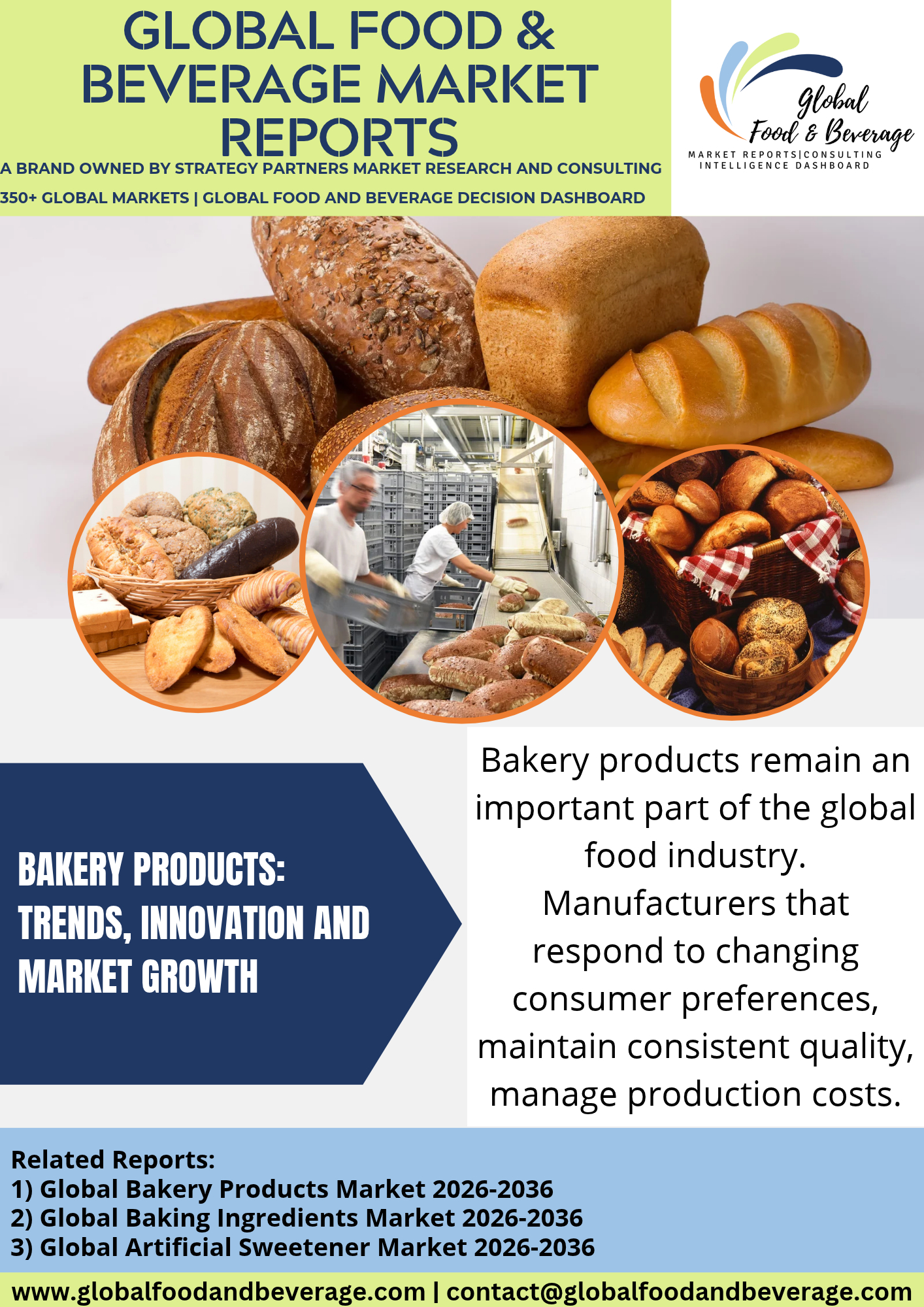
Bakery products have become an essential part of the global food industry, offering convenience, variety, and versatility to consumers across different age groups. From bread, cakes, biscuits, and pastries to cookies, muffins, and specialty baked goods, these products are widely consumed in households, restaurants, cafés, hotels, and food service establishments. Changing lifestyles, urbanization, and growing demand for convenient food options are supporting the expansion of the bakery products market.
The industry is also evolving through product innovation, healthier ingredients, premium offerings, and improvements in manufacturing technology. Consumers are increasingly exploring products that combine taste, nutritional value, freshness, and convenience. As a result, bakery manufacturers are diversifying their portfolios and investing in advanced production techniques to meet changing preferences and strengthen their market positions.
Evolution and Importance of Bakery Products
Bakery products have evolved from traditional, locally prepared foods into a diverse range of commercially manufactured products. Historically, bread and other baked goods were produced using simple ingredients and traditional baking methods. Industrialization introduced mechanized ovens, standardized recipes, automated production lines, and improved packaging technologies, enabling manufacturers to increase production volumes and distribute products across wider geographical areas.
Today, bakery products include traditional staples as well as innovative offerings designed for specific consumer preferences. Artisanal bread, premium cakes, gluten-free cookies, whole-grain biscuits, and plant-based baked goods demonstrate how the industry is adapting to evolving demand.
Bakery products also play an important role in the food supply chain by supporting agricultural producers, ingredient suppliers, packaging manufacturers, distributors, and retailers. The industry creates opportunities for businesses of different sizes, from independent bakeries and local brands to multinational food manufacturers. Its ability to combine traditional recipes with modern production methods continues to support its commercial importance.
Key Product Categories and Factors Driving Market Growth
The bakery products market includes several major categories, each serving different consumption occasions and customer requirements. Bread and rolls remain important staple products, while cakes and pastries are popular for celebrations, desserts, and food service applications. Biscuits and cookies offer convenient snacking options, and muffins, croissants, doughnuts, and other specialty products contribute to product diversification.
Growing demand for convenience is one of the major factors influencing the market. Busy lifestyles and changing work patterns are encouraging consumers to purchase ready-to-eat breakfast products, packaged snacks, and portable baked goods. Supermarkets, convenience stores, online grocery platforms, cafés, and quick-service restaurants are expanding access to these products.
Urbanization and rising disposable incomes are also contributing to demand for premium bakery offerings. Consumers are increasingly exploring specialty breads, customized cakes, gourmet pastries, and products made with distinctive ingredients. At the same time, traditional and affordable bakery products continue to serve a broad customer base.
The food service industry provides additional growth opportunities. Hotels, restaurants, cafés, catering businesses, and institutional food service providers use bakery products across breakfast menus, desserts, snacks, and prepared meals. Manufacturers that offer consistent quality, reliable supply, and flexible product formats can benefit from these commercial requirements.
Technological Advancements and Product Innovation
Technological innovation is transforming bakery production by improving manufacturing efficiency, product consistency, and quality control. Automated mixing, dough handling, baking, cooling, slicing, and packaging systems help manufacturers increase output while reducing manual intervention. Modern production lines also support standardized product quality and more efficient use of ingredients.
Food processing technologies are helping manufacturers improve shelf life, manage moisture levels, and maintain product freshness. Modified-atmosphere packaging, improved barrier materials, and optimized distribution practices can help reduce spoilage when appropriately matched to product requirements.
Product innovation is another important market driver. Manufacturers are developing whole-grain, high-fibre, reduced-sugar, and protein-enriched bakery products to address changing nutritional preferences. Gluten-free and plant-based alternatives are also attracting attention among consumers seeking specific dietary options. However, these products require careful formulation to maintain desirable texture, taste, and shelf stability.
Premiumization is creating opportunities for sourdough bread, artisanal pastries, filled croissants, specialty cookies, and customized celebration cakes. Regional flavours and traditional recipes are also being incorporated into contemporary product formats, enabling brands to differentiate themselves in competitive markets.
Digital technologies are improving demand forecasting, inventory management, and production planning. Data-driven systems can help manufacturers respond to seasonal demand, reduce overproduction, and improve supply chain efficiency.
Regional Market Developments and Competitive Landscape
The bakery products market has a broad global presence, with regional consumption patterns influenced by food culture, purchasing power, retail infrastructure, and dietary preferences.
North America represents an established market supported by packaged bakery products, convenience foods, and demand for premium and health-oriented alternatives. Europe has a strong bakery tradition, with considerable interest in artisan bread, pastries, specialty products, and product innovation. Asia-Pacific offers significant opportunities through urbanization, population growth, expanding retail networks, and increasing consumption of Western-style baked goods alongside traditional products.
In India, bread, biscuits, cakes, rusks, and other baked snacks are widely available through local bakeries, supermarkets, convenience stores, and online platforms. Demand is supported by urban lifestyles, expanding food service businesses, and the availability of products at different price points. Regional flavours and locally adapted recipes provide opportunities for manufacturers seeking to appeal to diverse consumer groups.
The competitive landscape includes multinational food companies, regional manufacturers, packaged bakery brands, and independent bakeries. Companies compete through product quality, pricing, distribution reach, brand recognition, packaging, and innovation. Manufacturers are also investing in production capacity, new product development, and partnerships with retailers and food service providers.
Businesses that balance large-scale operational efficiency with product differentiation can strengthen their market presence. Smaller bakeries can compete through freshness, customization, local preferences, and specialized product offerings.
Challenges and Future Outlook
Despite its growth potential, the bakery products industry faces several challenges. Fluctuations in the prices of wheat, sugar, edible oils, dairy ingredients, and other raw materials can affect production costs and profit margins. Energy expenses, transportation costs, and packaging requirements can also influence overall operating efficiency.
Maintaining product freshness and controlling food waste remain important concerns, particularly for products with shorter shelf lives. Manufacturers must also comply with applicable food safety, hygiene, allergen labelling, and nutritional disclosure requirements. Increasing consumer attention to sugar content, ingredient quality, and nutritional value is encouraging businesses to review product formulations without compromising taste and texture.
Sustainability is becoming another consideration. Manufacturers are exploring efficient energy use, responsible ingredient sourcing, recyclable packaging, and improved waste management. These initiatives can support operational efficiency while responding to environmental expectations.
Looking ahead, the bakery products market is expected to continue evolving through convenience-focused formats, premium products, healthier formulations, and advanced manufacturing technologies. E-commerce and direct-to-consumer channels may further expand product accessibility, while automation and data analytics can improve production planning and distribution.
Overall, bakery products remain an important part of the global food industry. Manufacturers that respond to changing consumer preferences, maintain consistent quality, manage production costs, and invest in innovation will be better positioned to capture emerging opportunities. The combination of traditional baking expertise and modern food technology will continue to shape the industry’s development.