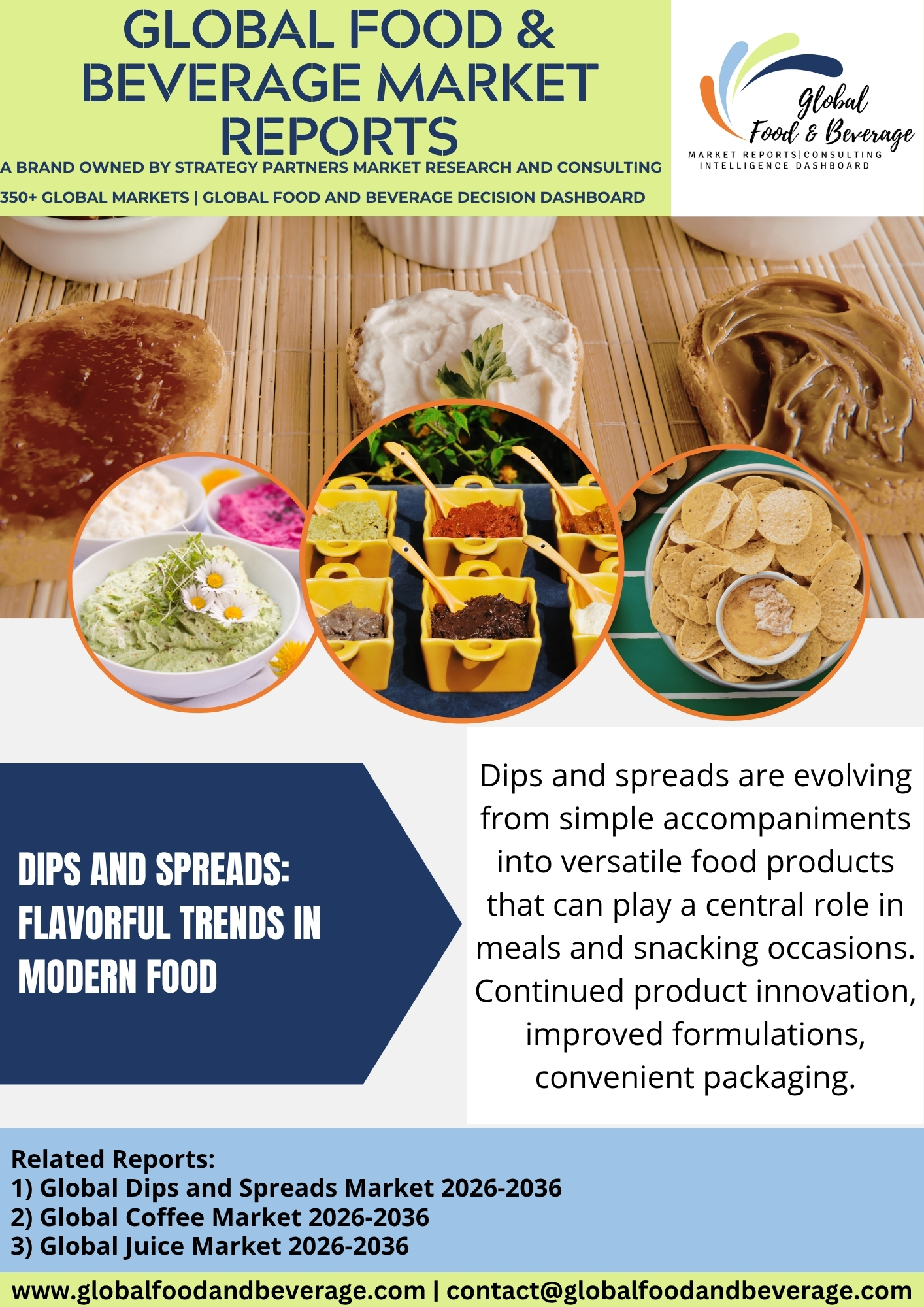
Dips and spreads have become an essential part of modern food culture, offering convenient ways to add flavor, texture, and variety to everyday meals. From traditional hummus and guacamole to innovative plant-based spreads and gourmet cheese dips, these products are increasingly found in homes, restaurants, cafés, catering services, and retail stores. Their versatility makes them suitable for snacks, appetizers, sandwiches, wraps, salads, breakfast items, and complete meals.
The growing interest in convenient food products, global cuisines, healthier eating, and premium snacking is creating new opportunities for the dips and spreads category. Consumers are looking for products that combine convenience with taste while increasingly paying attention to ingredients, nutritional value, and clean-label formulations.
Understanding Dips and Spreads
Dips and spreads are food preparations designed to complement other foods. Although the terms are often used interchangeably, dips are generally softer or more fluid and are intended for dipping foods such as vegetables, chips, crackers, and bread. Spreads tend to have a thicker consistency and are applied directly to foods such as bread, toast, sandwiches, burgers, and wraps.
The category includes a wide range of products made from vegetables, fruits, dairy ingredients, legumes, nuts, seeds, herbs, spices, and oils. Hummus, mayonnaise-based dips, salsa, guacamole, cream cheese spreads, nut butters, cheese dips, tapenade, pesto, and vegetable spreads represent some of the most recognizable products.
Different regions have developed their own distinctive dips and spreads. Hummus has strong roots in Middle Eastern cuisine, while guacamole is closely associated with Mexican food. Pesto represents Italian culinary traditions, whereas chutneys and various vegetable-based spreads are widely used across South Asian cuisine. This diversity has helped the category benefit from increasing consumer interest in international flavors.
Growing Consumer Demand
Convenience is one of the major factors supporting demand for dips and spreads. Modern consumers often have limited time for food preparation and prefer products that can be consumed immediately or incorporated into meals with minimal preparation. Ready-to-eat dips and spreads can transform simple ingredients into more flavorful meals without requiring extensive cooking.
The expansion of snacking culture is another important growth driver. Consumers increasingly replace traditional meals with smaller eating occasions throughout the day. Dips pair naturally with crackers, tortilla chips, breadsticks, vegetables, and other snack foods, making them particularly attractive in the expanding snack segment.
Health and wellness trends are also influencing product development. Consumers are increasingly seeking products containing recognizable ingredients, plant-based proteins, healthy fats, fiber, and reduced levels of sugar, sodium, or artificial additives. As a result, manufacturers are introducing formulations positioned around nutritional benefits without compromising taste.
Plant-based eating is creating another significant opportunity. Traditional hummus, tahini, guacamole, nut butters, and vegetable spreads already fit naturally into plant-based diets. Manufacturers are expanding this opportunity through products made from beans, peas, lentils, seeds, mushrooms, vegetables, and other plant ingredients.
Product Innovation and Premiumization
Innovation is becoming increasingly important as manufacturers compete for consumer attention. Traditional flavors continue to have strong demand, but consumers are also becoming more willing to experiment with unusual combinations and international flavor profiles.
Products featuring roasted vegetables, smoked ingredients, spicy peppers, herbs, fermented components, and exotic spices are gaining interest among consumers seeking distinctive experiences. Fusion flavors that combine culinary influences from different regions can also help brands differentiate their products.
Premiumization is another important trend. Consumers are willing to pay more for products perceived as higher quality, particularly when they feature specialty ingredients, artisanal production methods, distinctive flavors, or attractive packaging. Gourmet hummus, premium nut spreads, specialty cheese dips, and organic vegetable spreads can occupy higher-value segments of the market.
Texture is also an important area of innovation. Smooth, creamy, chunky, whipped, crunchy, and layered formats allow manufacturers to create different sensory experiences. Combining contrasting textures can make familiar products feel more innovative and appealing.
Importance of Ingredients and Nutrition
Ingredients play an increasingly important role in purchasing decisions. Consumers are becoming more interested in understanding what goes into their food and are increasingly attracted to short and recognizable ingredient lists.
Clean-label positioning can therefore provide an advantage for manufacturers. Products made without unnecessary artificial colors, preservatives, or flavoring agents may appeal to consumers who prioritize natural food choices. However, maintaining product stability and shelf life while using fewer additives can create technical challenges for manufacturers.
Protein and fiber are also gaining importance. Legume-based dips, seed spreads, nut butters, and dairy-based products can provide protein, while vegetable and pulse-based formulations may offer dietary fiber. These nutritional attributes can help manufacturers position dips and spreads as more than simple flavor enhancers.
At the same time, consumers are becoming more aware of sodium, saturated fat, and added sugar. Manufacturers are therefore exploring reformulation strategies that reduce these components while preserving taste, mouthfeel, and product stability.
Packaging and Convenience
Packaging has a major influence on the usability and commercial success of dips and spreads. Single-serve containers are particularly useful for lunchboxes, travel, foodservice applications, and on-the-go snacking. Larger family-sized packages are suitable for household consumption and social occasions.
Resealable packaging can improve convenience by helping consumers preserve unused products after opening. Packaging innovation can also support portion control and reduce product waste.
Sustainability is becoming another consideration. Consumers and retailers are increasingly interested in recyclable, lightweight, and resource-efficient packaging. Manufacturers are exploring different materials and formats that can reduce packaging waste while maintaining product protection and shelf life.
Packaging also serves an important marketing function. Attractive colors, clear product imagery, premium designs, and transparent communication of nutritional or ingredient benefits can influence consumer purchasing decisions.
Retail and Foodservice Opportunities
Dips and spreads are sold through supermarkets, hypermarkets, convenience stores, specialty food retailers, online grocery platforms, and foodservice outlets. E-commerce is creating additional opportunities by making niche and specialty products accessible to consumers beyond their traditional geographic markets.
Foodservice represents another important application area. Restaurants, cafés, hotels, catering companies, and quick-service restaurants use dips and spreads in sandwiches, burgers, wraps, appetizers, salads, and snack platters.
The growing popularity of casual dining and takeaway food can further support demand. Foodservice operators increasingly seek ready-to-use ingredients that provide consistent quality while reducing preparation time and labor requirements.
Private-label products are also becoming more prominent. Retailers can develop their own ranges of dips and spreads to offer competitive pricing or target specific consumer preferences such as organic, plant-based, premium, or regional flavors.
Future Outlook
The future of the dips and spreads industry is likely to be shaped by the combination of convenience, health, flavor innovation, and sustainability. Consumers are expected to continue looking for products that fit busy lifestyles while offering enjoyable and differentiated eating experiences.
Plant-based formulations, high-protein products, clean-label ingredients, reduced-sodium options, and globally inspired flavors are likely to remain important areas of development. Manufacturers that successfully balance nutritional positioning with taste and affordability can gain stronger consumer acceptance.
Digital retail and direct-to-consumer channels may also provide opportunities for smaller brands to reach specialized audiences. Social media can accelerate the popularity of visually appealing products and new serving ideas, encouraging consumers to experiment with different dips and spreads.
Overall, dips and spreads are evolving from simple accompaniments into versatile food products that can play a central role in meals and snacking occasions. Continued product innovation, improved formulations, convenient packaging, and changing consumer preferences are expected to create attractive opportunities across the category. As consumers seek food that is convenient, flavorful, nutritious, and adaptable, dips and spreads are well positioned to remain a growing part of the modern food industry.