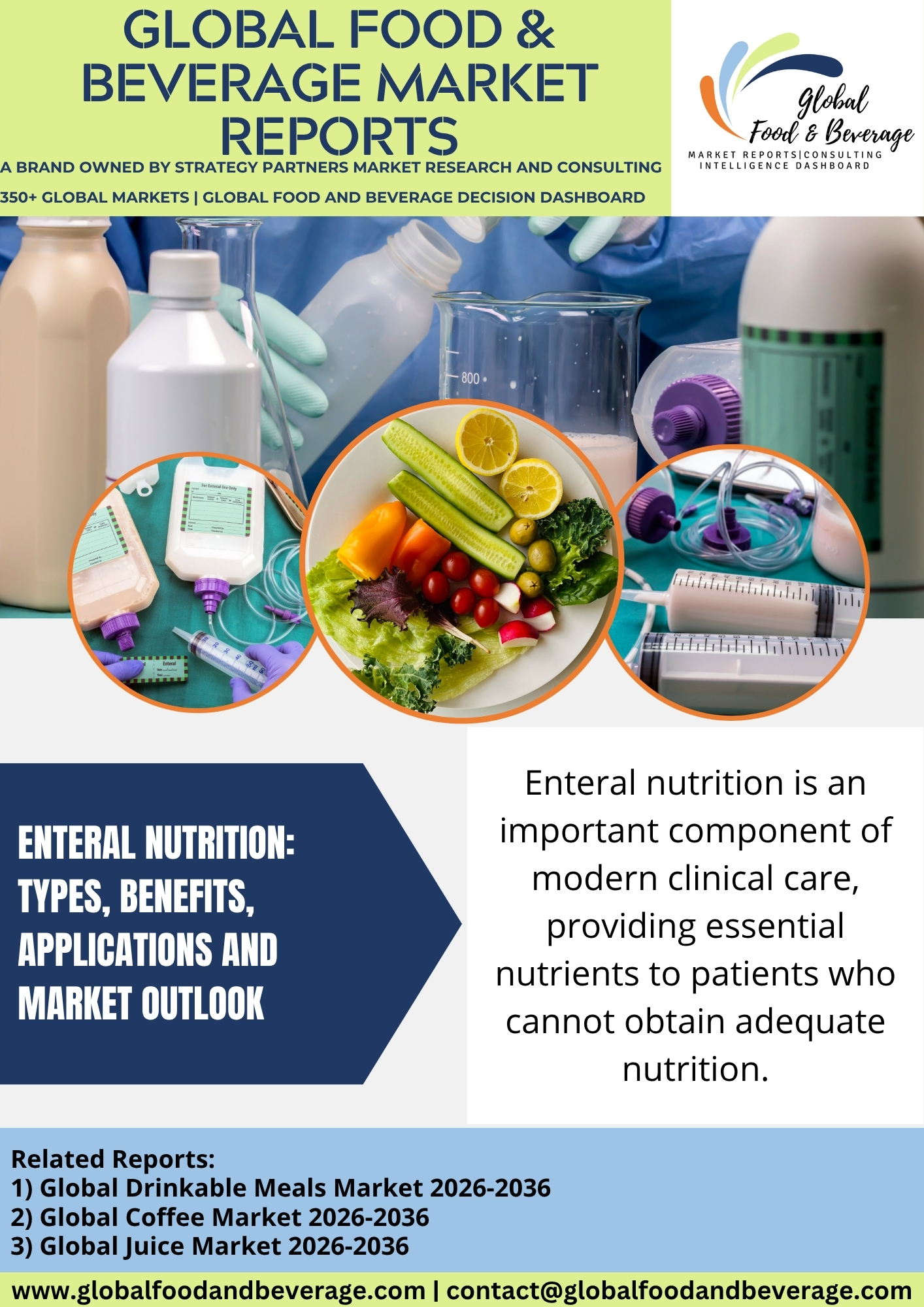
Enteral nutrition is a method of providing essential nutrients directly into the gastrointestinal (GI) tract when a person cannot consume enough food by mouth but still has a functioning digestive system. It delivers a controlled combination of carbohydrates, proteins, fats, vitamins, minerals, electrolytes and fluids through a feeding tube.
Unlike parenteral nutrition, which delivers nutrients directly into the bloodstream, enteral nutrition uses the natural digestive pathway. It is widely used in hospitals, long-term care facilities and home-care settings for patients who have difficulty eating because of illness, injury, surgery, neurological disorders or other medical conditions.
The growing emphasis on clinical nutrition and improved patient outcomes has increased the importance of enteral feeding in modern healthcare. Advances in tube-feeding equipment, nutritional formulations and monitoring technologies are also supporting its wider adoption.
Types of Enteral Nutrition
Enteral nutrition can be administered through different types of feeding tubes depending on the patient’s condition, expected duration of feeding and ability to tolerate nutrition.
Nasogastric (NG) tubes are inserted through the nose and extend into the stomach. They are commonly used when nutritional support is expected to be temporary. Nasoenteric tubes can extend beyond the stomach into the small intestine and may be selected when gastric feeding is unsuitable.
For patients requiring longer-term nutritional support, gastrostomy tubes provide direct access to the stomach through the abdominal wall. Percutaneous endoscopic gastrostomy (PEG) tubes are frequently used for long-term feeding. Jejunostomy tubes deliver nutrition directly into the jejunum and may be appropriate when the stomach cannot be used effectively.
Enteral formulas also vary according to nutritional requirements. Standard formulas may be suitable for many patients, while specialized formulas can be designed for conditions involving impaired digestion, malabsorption, diabetes, kidney disease or increased nutritional requirements.
Clinical Importance and Key Benefits
One of the major advantages of enteral nutrition is that it supports the use of the gastrointestinal tract. Maintaining nutrient delivery through the digestive system can help support intestinal function and overall nutritional status when oral intake is inadequate.
Adequate nutritional support can contribute to maintaining muscle mass, supporting immune function, assisting recovery and improving overall patient management. In critically ill or postoperative patients, appropriate nutritional intervention can be an important component of comprehensive clinical care.
Enteral nutrition can also offer practical advantages compared with intravenous nutritional support. When the gastrointestinal tract is functional, tube feeding is generally considered a preferred nutritional route because it follows the body’s normal digestive process.
However, enteral nutrition must be carefully planned. Healthcare professionals consider factors such as calorie requirements, protein needs, fluid balance, gastrointestinal tolerance, medical condition and the appropriate feeding route.
Applications Across Healthcare
Enteral nutrition has applications across a broad range of healthcare settings. It is frequently used for patients who experience swallowing difficulties, including some individuals recovering from stroke or neurological conditions. It can also support patients with certain cancers, severe injuries, burns, postoperative complications and other conditions that prevent adequate oral intake.
In intensive care units, enteral feeding may be incorporated into nutritional management for critically ill patients who cannot meet their nutritional requirements through normal eating. In long-term care, tube feeding can provide ongoing nutritional support for selected patients with persistent feeding difficulties.
Home enteral nutrition is another important application. Patients who require extended nutritional support may receive tube feeding outside hospitals under appropriate medical supervision. Improvements in portable feeding pumps, tube designs and monitoring systems have made home-based enteral nutrition increasingly practical.
Technological Advancements
Technology is playing an important role in improving the safety, convenience and precision of enteral nutrition. Modern feeding pumps can provide controlled delivery rates and help healthcare professionals manage continuous or intermittent feeding schedules.
Advances in tube materials have also contributed to improved patient comfort and device performance. Smaller, more flexible tubes and improved connectors can simplify feeding and reduce certain device-related difficulties.
Digital healthcare technologies are creating additional opportunities. Electronic monitoring systems can help clinicians track feeding schedules, nutritional intake and patient responses. In the future, greater integration of connected medical devices, clinical decision-support systems and patient monitoring platforms could further improve personalized enteral nutrition management.
Manufacturers are also developing specialized nutritional formulations designed to address specific clinical and metabolic requirements. These developments are contributing to a more individualized approach to nutritional therapy.
Market Growth and Future Outlook
The enteral nutrition market is supported by several long-term healthcare trends, including population aging, increasing prevalence of chronic diseases, rising awareness of clinical nutrition and growing demand for home healthcare services. The expansion of critical care and improvements in nutritional screening are also creating opportunities for enteral nutrition products and services.
Healthcare systems are increasingly recognizing nutrition as an important part of patient care rather than simply a supportive intervention. This is encouraging hospitals and care providers to adopt structured nutritional assessment and monitoring practices.
The future of enteral nutrition is likely to focus on personalization, convenience and improved clinical monitoring. Advanced formulas may increasingly target specific patient requirements, while smart feeding systems could improve the accuracy of nutritional delivery. Home-based care is also expected to remain an important area of development as healthcare providers seek cost-effective alternatives to prolonged hospitalization.
At the same time, manufacturers face challenges such as complications associated with feeding tubes, formula intolerance, infection risks, regulatory requirements and the need for proper caregiver training. Addressing these issues will be essential for sustainable market development.
Conclusion
Enteral nutrition is an important component of modern clinical care, providing essential nutrients to patients who cannot obtain adequate nutrition through normal oral intake but have a usable gastrointestinal system. From temporary nasogastric feeding to long-term gastrostomy and jejunostomy support, different approaches allow nutritional therapy to be adapted to individual patient requirements.
Continued innovation in nutritional formulas, feeding pumps, tube technologies and digital monitoring is expected to improve the effectiveness and convenience of enteral nutrition. As healthcare moves toward personalized treatment and greater use of home-based care, enteral nutrition is likely to remain an important and expanding area within the global healthcare and medical nutrition industry.