Introduction
As consumers seek healthier, more convenient, and longer-lasting food options, dehydrated vegetables have become an essential part of the global food industry. By removing most of the moisture from fresh vegetables while preserving their nutritional value, dehydrated vegetables offer an efficient solution for reducing food waste, extending shelf life, and simplifying storage and transportation. They are widely used in packaged foods, soups, snacks, ready-to-eat meals, seasonings, military rations, and emergency food supplies.
With increasing urbanization, changing lifestyles, and growing demand for processed foods, dehydrated vegetables have gained popularity among households, restaurants, and food manufacturers alike. Advances in dehydration technology have also improved product quality, allowing vegetables to retain their flavor, color, texture, and nutritional content more effectively than ever before.
What Are Dehydrated Vegetables?
Dehydrated vegetables are fresh vegetables that have undergone a controlled drying process to remove approximately 90–95% of their water content. Since microorganisms require moisture to grow, reducing water significantly extends the product’s shelf life without relying heavily on chemical preservatives.
Common vegetables used for dehydration include onions, garlic, carrots, potatoes, tomatoes, peas, spinach, cabbage, mushrooms, bell peppers, corn, beetroot, broccoli, and green beans. Once dried, these vegetables become lightweight, compact, and easy to transport while maintaining much of their original nutritional value.
Before consumption, many dehydrated vegetables can simply be rehydrated by soaking them in water or cooking them directly in soups, curries, stews, and sauces.
Common Dehydration Methods
Several dehydration techniques are used depending on the vegetable type, desired quality, and production scale.
Hot air drying remains the most widely used commercial method. Heated air circulates around the vegetables, gradually removing moisture while preserving the product’s overall quality. This process is cost-effective and suitable for large-scale manufacturing.
Freeze drying is considered one of the highest-quality preservation methods. Vegetables are frozen before moisture is removed through sublimation under vacuum conditions. This technique preserves color, flavor, aroma, and nutritional value exceptionally well, making it ideal for premium food products.
Vacuum drying removes moisture under reduced atmospheric pressure, allowing drying at lower temperatures. This minimizes heat damage and preserves sensitive nutrients.
Spray drying is mainly used for vegetable juices and purees, converting them into fine powders commonly used in soups, beverages, seasonings, and nutritional supplements.
Solar drying is another environmentally friendly option, especially in developing regions. While economical, it depends heavily on weather conditions and generally offers less control over product quality.
Nutritional Benefits of Dehydrated Vegetables
One of the major advantages of dehydrated vegetables is their ability to retain many essential nutrients despite moisture removal. Dietary fiber, minerals, antioxidants, and several vitamins remain relatively stable during the drying process.
Although certain heat-sensitive nutrients, particularly vitamin C, may decrease depending on the drying method, many dehydration technologies have significantly improved nutrient retention. Freeze-dried vegetables, in particular, preserve a substantial proportion of their original nutritional profile.
Since dehydrated vegetables are highly concentrated after moisture removal, they often provide greater nutrient density by weight compared to fresh vegetables. This makes them particularly valuable in packaged foods, outdoor activities, disaster relief, and nutritional supplementation programs.
Applications Across Industries
Dehydrated vegetables serve numerous industries due to their convenience, stability, and versatility.
The food processing industry represents the largest consumer, incorporating dehydrated vegetables into instant noodles, soups, sauces, spice blends, frozen meals, pasta products, snack foods, and ready-to-cook meal kits. Manufacturers appreciate their consistent quality and long storage life.
Restaurants and catering services use dehydrated vegetables to simplify inventory management while reducing preparation time and food waste. Ingredients can be stored for extended periods without refrigeration and rehydrated as needed.
Outdoor enthusiasts, military organizations, and emergency response agencies rely on dehydrated vegetables because of their lightweight nature and extended shelf life. Camping meals, survival food kits, and humanitarian aid packages frequently include dehydrated vegetable ingredients.
The pet food industry also incorporates dehydrated vegetables into premium pet nutrition products, providing natural sources of fiber, vitamins, and minerals.
Additionally, nutraceutical companies use vegetable powders derived from dehydrated vegetables in dietary supplements, functional foods, and health beverages.
Advantages of Dehydrated Vegetables
Dehydrated vegetables provide several practical and economic advantages throughout the food supply chain.
Their extended shelf life significantly reduces spoilage and food waste, allowing products to remain usable for months or even years when stored properly.
The reduced weight and volume lower transportation and storage costs, making international trade more economical while reducing logistics-related carbon emissions.
Since refrigeration is generally unnecessary during storage and transportation, businesses can reduce energy consumption and operational expenses.
Year-round availability is another significant benefit. Seasonal vegetables can be harvested during peak production and dehydrated for continuous market supply throughout the year.
Consumers also appreciate the convenience offered by dehydrated vegetables, as they require minimal preparation and are easy to incorporate into daily cooking.
Challenges and Limitations
Despite their many advantages, dehydrated vegetables face certain limitations.
Some dehydration methods may alter the texture of vegetables after rehydration. Certain products may not fully regain the crispness or firmness of fresh vegetables.
Flavor intensity may change during processing, particularly when high drying temperatures are used. Proper processing conditions are therefore essential for maintaining product quality.
Although many nutrients remain stable, prolonged exposure to heat can reduce levels of certain vitamins. Manufacturers continue investing in advanced drying technologies to minimize nutrient losses.
Packaging also plays a critical role in preserving product quality. Exposure to moisture, oxygen, and sunlight can reduce shelf life, making high-quality moisture-resistant packaging essential.
Consumer perception presents another challenge, as some individuals still associate dehydrated foods with lower freshness despite significant improvements in processing technology.
Sustainability and Food Security
Dehydrated vegetables contribute meaningfully to global sustainability efforts by reducing post-harvest losses and improving food security.
Large quantities of fresh vegetables are often lost due to spoilage during transportation and storage. Dehydration extends product usability, allowing farmers and processors to maximize the value of harvested crops.
Lower transportation weight translates into reduced fuel consumption and lower greenhouse gas emissions across supply chains. Furthermore, the reduced need for refrigerated storage decreases energy demand and associated environmental impacts.
In regions facing climate variability, natural disasters, or limited access to fresh produce, dehydrated vegetables provide a reliable source of essential nutrients throughout the year. They also support emergency food distribution by offering lightweight, shelf-stable nutrition that can be transported efficiently over long distances.
Future Market Trends
The global market for dehydrated vegetables continues to expand as consumers increasingly demand convenient, healthy, and minimally processed foods. Advances in drying technologies are enabling manufacturers to preserve more nutrients while improving flavor, appearance, and rehydration characteristics.
Organic dehydrated vegetables are gaining popularity as health-conscious consumers seek products free from synthetic pesticides and additives. Clean-label formulations with minimal ingredients are also becoming an important purchasing factor.
Growing adoption of plant-based diets is creating additional opportunities for dehydrated vegetable ingredients in meat alternatives, vegan ready meals, and functional food products.
Digital food retail, expanding international trade, and innovations in sustainable packaging are expected to further accelerate market growth in the coming years.
Conclusion
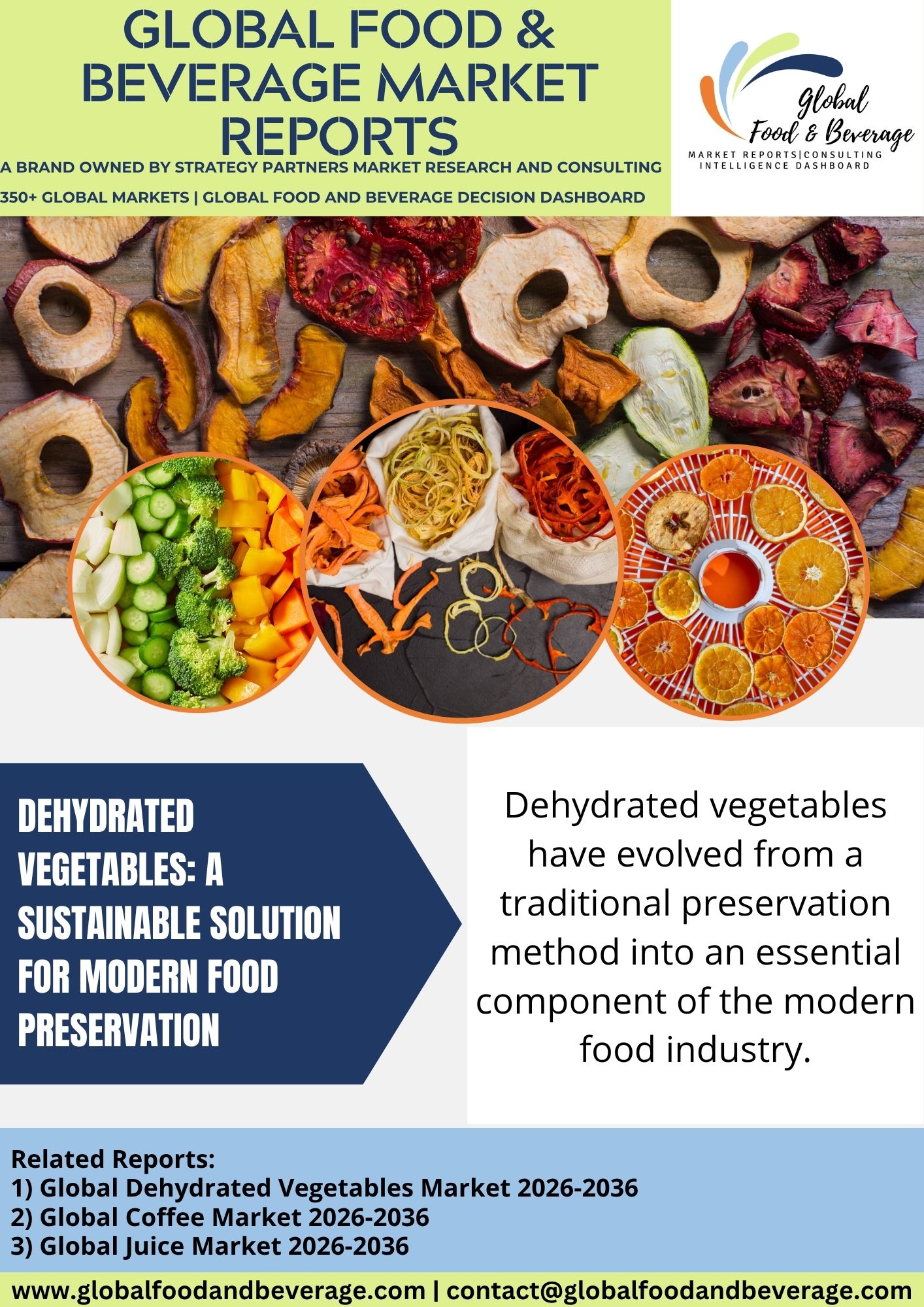
Dehydrated vegetables have evolved from a traditional preservation method into an essential component of the modern food industry. Their long shelf life, nutritional benefits, convenience, and cost-effectiveness make them valuable for consumers, food manufacturers, restaurants, and emergency food programs alike. As technology continues to improve product quality while supporting sustainability goals, dehydrated vegetables are expected to play an increasingly important role in global food systems. By reducing food waste, improving supply chain efficiency, and ensuring year-round access to nutritious produce, dehydrated vegetables represent a practical and sustainable solution for meeting the growing demands of a rapidly changing world.