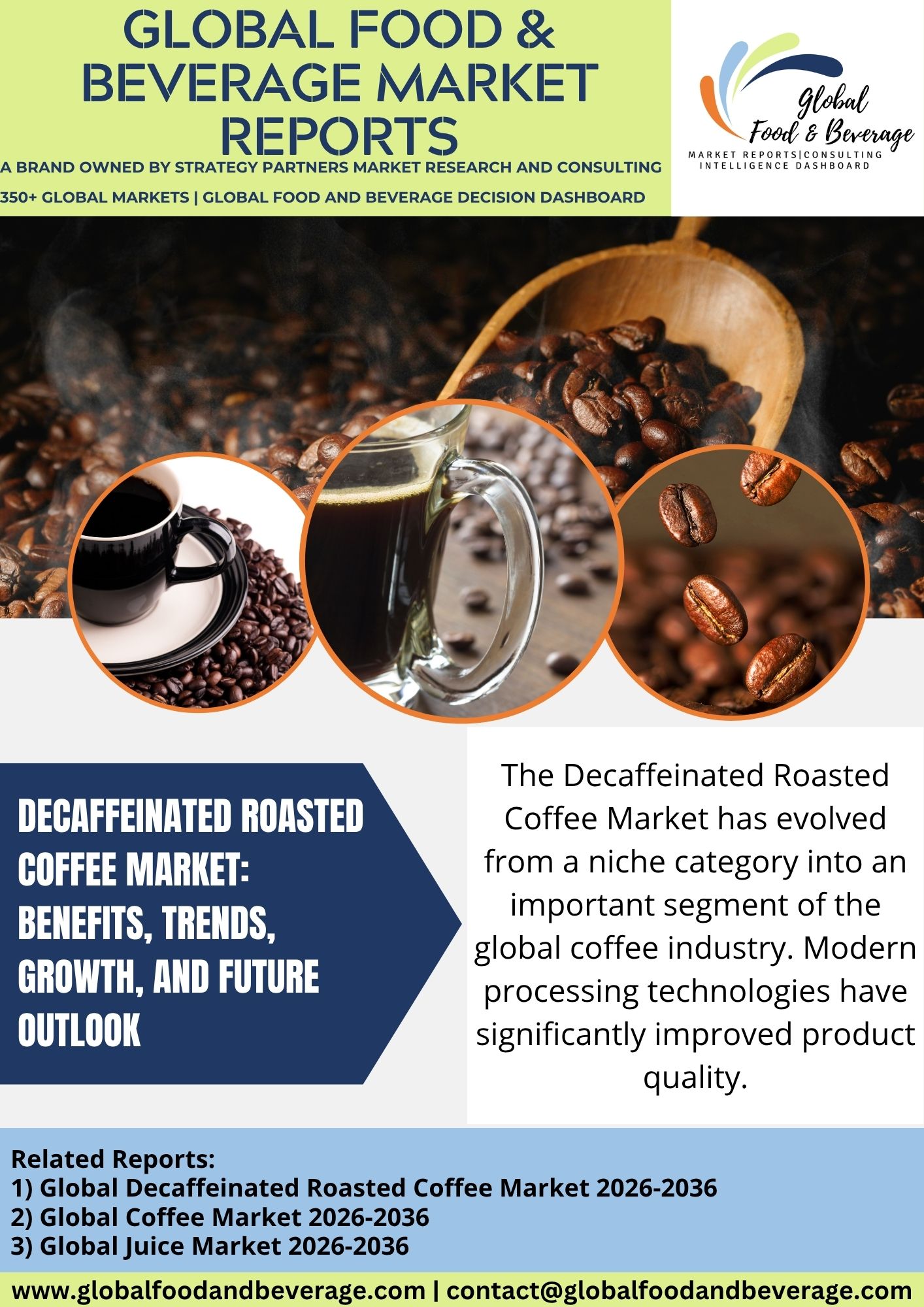
Decaffeinated Roasted Coffee Market: Benefits, Trends, Growth, and Future Outlook
Introduction
The Decaffeinated Roasted Coffee Market has witnessed remarkable growth over the past decade as consumers increasingly prioritize healthier beverage choices without sacrificing flavor. Coffee remains one of the world’s most consumed beverages, but growing awareness of caffeine sensitivity, sleep health, and overall wellness has encouraged many consumers to switch to decaffeinated alternatives.
Thanks to innovations in coffee processing and roasting technologies, modern decaffeinated roasted coffee delivers nearly the same aroma, body, and taste as conventional coffee while containing only a fraction of the caffeine. This transformation has made decaf coffee a preferred choice among health-conscious consumers, pregnant women, older adults, and individuals looking to reduce caffeine intake.
What Is Decaffeinated Roasted Coffee?
Decaffeinated roasted coffee is produced by removing approximately 97–99% of the caffeine from green coffee beans before roasting. Once decaffeinated, the beans undergo traditional roasting processes to preserve their rich flavor, aroma, and texture.
Unlike earlier generations of decaf coffee, today’s products retain much of the original coffee character, making them increasingly popular in homes, cafés, offices, and specialty coffee shops.
How Is Decaffeinated Coffee Produced?
Swiss Water Process
The Swiss Water Process is a completely chemical-free decaffeination method that relies on water, temperature, and activated carbon filtration. It preserves the coffee’s natural flavor while removing caffeine, making it one of the most sought-after methods for premium and organic coffee.
Carbon Dioxide (CO₂) Process
The CO₂ process uses compressed carbon dioxide to selectively remove caffeine while preserving valuable aromatic oils and flavor compounds. This method is widely used for premium specialty coffee.
Solvent-Based Decaffeination
Food-grade solvents such as ethyl acetate or methylene chloride are also used in commercial decaffeination. Modern food safety regulations ensure that solvent residues remain far below international safety limits.
Health Benefits of Decaffeinated Roasted Coffee
Lower Caffeine Consumption
Decaffeinated coffee allows consumers to enjoy coffee with minimal caffeine, making it ideal for those who experience caffeine sensitivity.
Improved Sleep Quality
Since decaf contains very little caffeine, it can often be enjoyed during the evening without significantly affecting sleep.
Rich Source of Antioxidants
Decaffeinated coffee still contains antioxidants and polyphenols that may help reduce oxidative stress and support overall health.
Better Digestive Comfort
Many consumers find decaffeinated coffee gentler on the stomach than regular coffee, particularly when paired with low-acid coffee beans.
Suitable During Pregnancy
Healthcare providers often recommend limiting caffeine intake during pregnancy, making decaf coffee a practical alternative.
Key Drivers of the Decaffeinated Roasted Coffee Market
Rising Health Awareness
Consumers worldwide are becoming more conscious of reducing caffeine consumption while maintaining their coffee-drinking habits.
Expansion of Specialty Coffee
Premium coffee brands are introducing organic, single-origin, and artisan decaffeinated coffee products that attract quality-focused consumers.
Growing Aging Population
Older adults frequently reduce caffeine intake for health reasons while continuing to enjoy coffee daily.
Increased Café Culture
Coffee shops now offer a wide range of decaffeinated espresso, cappuccino, latte, and cold brew beverages to meet changing consumer preferences.
E-commerce Growth
Online coffee retailers and subscription services have expanded consumer access to premium decaffeinated coffee products.
Major Applications
The market serves multiple product categories, including:
- Whole Bean Coffee
- Ground Coffee
- Instant Coffee
- Espresso Blends
- Coffee Pods and Capsules
- Cold Brew Coffee
- Ready-to-Drink Coffee
- Commercial Café Beverages
Sustainability Trends
Sustainability has become a major purchasing factor in the coffee industry. Leading producers are investing in:
- Organic cultivation
- Fair Trade certification
- Rainforest Alliance certification
- Eco-friendly processing
- Water conservation
- Recyclable packaging
Environmentally friendly decaffeination methods such as the Swiss Water Process continue to gain popularity.
Challenges Facing the Market
Despite strong growth, the industry faces several challenges:
- Higher production costs
- Premium pricing
- Climate-related coffee supply risks
- Consumer misconceptions about flavor
- Limited availability of high-quality decaffeinated beans
Future Outlook of the Decaffeinated Roasted Coffee Market
The future of the Decaffeinated Roasted Coffee Market appears highly promising. Improvements in decaffeination technology, growing demand for healthier beverages, and expansion of specialty coffee are expected to drive long-term market growth.
Manufacturers are investing in innovative roasting techniques that preserve flavor while reducing environmental impact. Emerging markets across Asia-Pacific, Latin America, and the Middle East are also creating new opportunities as coffee consumption continues to rise.
Consumers are increasingly seeking beverages that combine wellness, premium quality, and sustainability—positioning decaffeinated roasted coffee for continued expansion.
Conclusion
The Decaffeinated Roasted Coffee Market has evolved from a niche category into an important segment of the global coffee industry. Modern processing technologies have significantly improved product quality, making decaffeinated coffee an attractive choice for consumers seeking a healthier lifestyle without giving up the enjoyment of coffee.
With rising health awareness, continuous innovation, expanding specialty coffee offerings, and increasing sustainability initiatives, the market is expected to maintain steady growth in the years ahead. As consumer preferences shift toward balanced and wellness-focused beverages, decaffeinated roasted coffee is well positioned to become a staple in households and cafés worldwide.