Introduction
The dairy cream market has witnessed significant growth over the past decade, driven by rising consumer demand for premium dairy products, expanding foodservice industries, and increasing applications across bakery, confectionery, beverages, and ready-to-eat foods. Dairy cream, obtained from the high-fat portion of fresh milk, remains an essential ingredient in households and commercial food production due to its rich taste, smooth texture, and nutritional value.
As consumer lifestyles continue to evolve, dairy cream manufacturers are responding with innovative product offerings that cater to convenience, health-conscious preferences, and culinary versatility. Whether used in coffee, desserts, soups, sauces, or bakery products, dairy cream has become an indispensable ingredient in modern food preparation. Despite growing competition from plant-based alternatives, the global dairy cream market continues to maintain steady growth due to its superior flavor profile and wide-ranging applications.
Understanding Dairy Cream
Dairy cream is produced by separating the fat-rich layer from fresh milk through centrifugation or natural settling. Depending on fat content and intended applications, dairy cream is available in various forms, including fresh cream, whipping cream, heavy cream, light cream, sour cream, double cream, and sterilized cream.
Different cream varieties serve distinct purposes in food preparation. Heavy cream is widely used in desserts and sauces due to its high fat content, while whipping cream is preferred for cakes and confectionery products because of its ability to form stable whipped textures. Light cream finds applications in coffee and soups, whereas sour cream is commonly used in dips, dressings, and international cuisines.
The versatility of dairy cream has enabled its widespread adoption across residential, commercial, and industrial sectors.
Key Market Drivers
Growing Demand for Bakery and Confectionery Products
The expansion of the global bakery and confectionery industry remains one of the primary growth drivers for the dairy cream market. Cakes, pastries, chocolates, cookies, ice creams, and premium desserts extensively utilize dairy cream to enhance texture, flavor, and appearance.
Increasing consumer spending on indulgent food products and premium desserts has significantly boosted cream consumption worldwide.
Expansion of the Foodservice Industry
Restaurants, cafés, hotels, bakeries, and quick-service restaurants continue to fuel demand for dairy cream. The growing popularity of specialty coffee beverages, creamy pasta dishes, gourmet desserts, and international cuisines has increased cream usage across commercial kitchens.
The rapid expansion of café culture, particularly in emerging economies, has further strengthened market growth.
Rising Disposable Income
Higher disposable incomes have encouraged consumers to purchase premium dairy products and experiment with home cooking. Increasing interest in baking, gourmet recipes, and café-style beverages prepared at home has expanded retail demand for dairy cream.
Urban consumers, especially younger generations, are increasingly seeking high-quality ingredients that enhance culinary experiences.
Growth of Convenience Foods
The growing popularity of ready-to-cook and ready-to-eat meals has created new opportunities for dairy cream manufacturers. Cream-based sauces, soups, frozen meals, and packaged desserts rely heavily on dairy cream to maintain taste, consistency, and shelf appeal.
Food manufacturers continue incorporating cream into convenience products to satisfy consumer demand for restaurant-quality meals at home.
Emerging Consumer Trends
Premiumization
Consumers increasingly prefer premium dairy products that offer authentic taste and superior quality. This trend has encouraged manufacturers to introduce organic, grass-fed, preservative-free, and minimally processed cream products.
Premium dairy cream products command higher prices while appealing to consumers seeking natural ingredients and enhanced flavor.
Clean Label Products
Modern consumers are paying closer attention to ingredient transparency. Products containing fewer additives, artificial preservatives, and stabilizers are gaining popularity across developed and emerging markets.
Manufacturers are reformulating products with simple ingredient lists to align with clean-label purchasing preferences.
Functional Dairy Products
Health-conscious consumers are creating demand for fortified dairy products containing additional nutrients such as vitamins, minerals, and probiotics. Some dairy cream manufacturers are introducing products enriched with calcium, vitamin D, or protein to enhance nutritional value while maintaining traditional taste.
Sustainable Packaging
Environmental concerns have prompted manufacturers to adopt recyclable, biodegradable, and lightweight packaging solutions. Sustainable packaging not only reduces environmental impact but also strengthens brand reputation among environmentally conscious consumers.
Technological Innovations
Technological advancements have significantly improved dairy cream production, quality control, and shelf life.
Modern dairy processing facilities utilize advanced pasteurization and ultra-high-temperature (UHT) processing technologies to ensure food safety while extending product shelf life without compromising quality.
Automation has improved production efficiency by minimizing contamination risks and ensuring consistent fat content across batches. Smart manufacturing technologies also enable real-time quality monitoring throughout production.
Cold-chain logistics have further enhanced product distribution, allowing fresh dairy cream to reach wider geographic markets while maintaining freshness and safety.
Additionally, innovations in packaging technology, including aseptic cartons and resealable containers, have improved consumer convenience and reduced food waste.
Regional Market Analysis
North America
North America remains a mature dairy cream market supported by high dairy consumption, strong bakery industries, and well-established foodservice sectors. Consumer preference for premium coffee beverages, desserts, and convenience foods continues driving demand.
The region also experiences increasing interest in organic and clean-label dairy products.
Europe
Europe represents one of the largest dairy cream markets due to its long-standing dairy traditions and strong culinary culture. Countries such as France, Germany, Italy, and the United Kingdom consume substantial quantities of cream across household cooking, bakery products, and foodservice applications.
Growing demand for artisanal dairy products further supports market expansion.
Asia-Pacific
The Asia-Pacific region is expected to register the fastest market growth during the forecast period. Rising urbanization, increasing disposable incomes, expanding café chains, and westernization of food habits have significantly increased dairy cream consumption.
Countries such as China, India, Japan, South Korea, and Southeast Asian nations are witnessing growing demand for bakery products, desserts, and premium beverages that utilize dairy cream.
Latin America, Middle East, and Africa
Emerging economies in these regions are experiencing steady growth due to expanding retail infrastructure, increasing dairy consumption, and rising investments in food processing industries.
Growing hospitality sectors and international restaurant chains are also contributing to increased cream demand.
Competitive Landscape
The dairy cream market remains highly competitive, with both multinational dairy companies and regional producers competing through product innovation, pricing strategies, distribution expansion, and brand differentiation.
Manufacturers are investing in research and development to improve product quality, introduce organic and specialty cream varieties, and develop value-added dairy products that meet evolving consumer preferences.
Strategic partnerships with retailers, foodservice operators, and online grocery platforms have strengthened market penetration. Companies are also expanding production capacities to meet increasing domestic and international demand.
Digital marketing, direct-to-consumer sales channels, and e-commerce platforms have become important growth strategies, particularly among premium dairy brands.
Challenges Facing the Market
Despite favorable growth prospects, the dairy cream market faces several challenges.
Fluctuations in raw milk prices directly affect production costs and profit margins. Climate change, feed costs, and livestock health can influence milk supply and pricing.
The growing popularity of plant-based cream alternatives made from oats, almonds, soy, and coconut presents increasing competition, particularly among vegan and lactose-intolerant consumers.
Stringent food safety regulations, quality standards, and labeling requirements also require continuous investment in compliance and quality assurance systems.
Additionally, rising consumer awareness regarding saturated fat consumption has encouraged manufacturers to develop lower-fat cream options without compromising taste and functionality.
Future Outlook
The future of the dairy cream market remains promising as demand continues expanding across retail, foodservice, and industrial applications. Product innovation, premiumization, sustainable packaging, and technological advancements will remain central to market development.
Manufacturers are expected to introduce more organic, lactose-free, fortified, and specialty cream products to address evolving consumer preferences. Digital transformation, automation, and supply chain optimization will further improve production efficiency and market competitiveness.
Emerging markets will continue driving volume growth as urbanization, changing dietary habits, and expanding middle-class populations increase dairy consumption. Meanwhile, established markets will focus on premium offerings, clean-label products, and environmentally sustainable production practices.
Conclusion
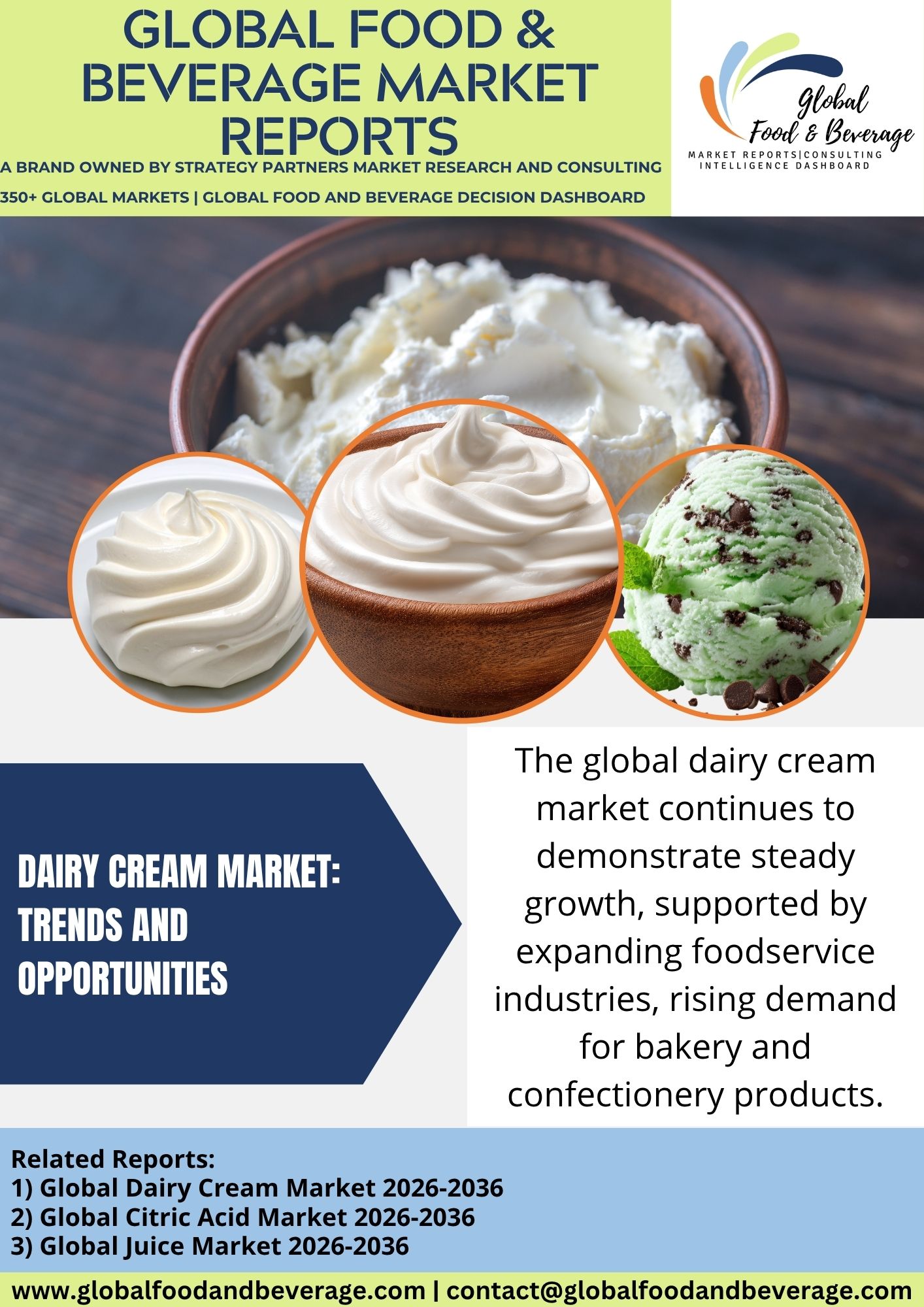
The global dairy cream market continues to demonstrate steady growth, supported by expanding foodservice industries, rising demand for bakery and confectionery products, increasing consumer interest in premium dairy ingredients, and continuous product innovation. While challenges such as fluctuating milk prices and competition from plant-based alternatives remain, dairy cream continues to maintain a strong position due to its unmatched taste, versatility, and culinary performance.
As manufacturers embrace sustainable practices, advanced processing technologies, and evolving consumer preferences, the dairy cream market is well positioned for long-term expansion. With increasing applications across households, restaurants, cafés, and food manufacturing industries, dairy cream will remain a vital component of the global dairy sector in the years ahead.