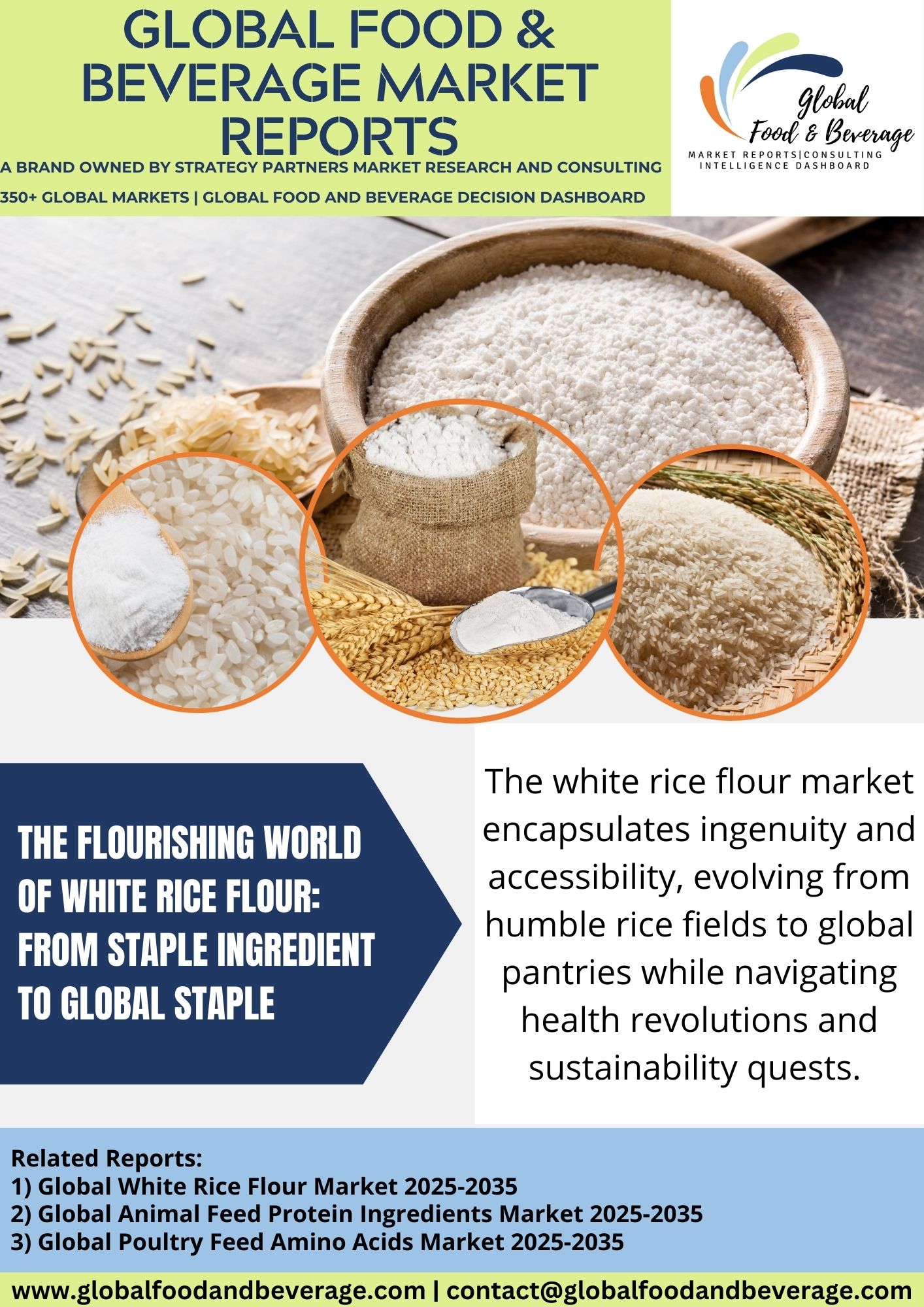
White rice flour has quietly become a cornerstone of modern baking and food production, transforming sticky rice grains into a versatile, gluten-free powder that powers everything from delicate pastries to hearty noodles. Derived from finely milled white rice—polished to remove the bran and germ—this flour offers a neutral flavor, smooth texture, and easy digestibility, making it a favorite among home bakers, commercial manufacturers, and those with dietary restrictions. As global diets evolve toward gluten-free and convenience foods, the white rice flour market is experiencing robust growth, driven by health trends, culinary innovation, and expanding applications in both traditional and fusion cuisines. This blog uncovers the layers of this market, exploring its segments, drivers, challenges, and future prospects, with a side topic spotlighting the exciting rise of gluten-free baking innovations that are broadening its appeal.
Decoding the White Rice Flour Market
At its essence, white rice flour serves as a wheat alternative, prized for its ability to create light, tender baked goods without the chewiness of gluten. The market segments by form, including fine, medium, and coarse grinds, each suited to specific uses: fine flour for silky batters in cakes and sauces, while coarser versions excel in thickening gravies or coating fried foods. Purity levels vary too, with organic and conventional options catering to clean-label enthusiasts versus budget-conscious buyers. Packaging comes in bulk sacks for industrial use, retail bags for consumers, and even vacuum-sealed pouches for extended freshness.
By application, the market spans bakery items like breads and muffins, where it blends seamlessly with other flours for structure; confectionery for chewy candies and icings; and snacks such as rice crackers and extruded products. In the food service sector, it thickens soups and binds fillings in dumplings, while the gluten-free segment—encompassing pasta, pancakes, and tortillas—has exploded in popularity. Sourcing focuses on long-grain and short-grain varieties, with long-grain dominating for its fluffier texture in Western recipes and short-grain shining in Asian staples like mochi.
Distribution channels reflect a blend of tradition and technology: wholesale to mills and processors, retail through supermarkets and health stores, and e-commerce platforms that deliver specialty flours to doorsteps. Overall, the market embodies adaptability, bridging cultural divides from Southeast Asian rice noodles to European gluten-free loaves.
Forces Driving Market Momentum
A confluence of trends is propelling the white rice flour market upward. The gluten-free movement, fueled by rising diagnoses of celiac disease and wheat sensitivities, positions this flour as a natural hero, with consumers seeking alternatives that mimic wheat’s functionality without health drawbacks. Urbanization and busy lifestyles amplify demand for ready-to-use mixes in quick breads and baking kits, while the global shift toward plant-based and allergen-free diets broadens its reach. In emerging economies, rice’s status as a dietary staple translates to steady flour consumption, enhanced by growing middle classes experimenting with home baking.
Innovations in processing, such as enzymatic treatments for better hydration, improve its baking performance, making it more competitive with traditional flours. The snack food boom, particularly in Asia-Pacific where rice-based crisps reign, and the craft beer industry’s use in adjuncts further diversify applications. Export dynamics play a role too, with major producers supplying to health-focused markets in North America and Europe. These drivers highlight a market attuned to wellness and convenience, ensuring sustained relevance.
Regional Tapestry and Global Flows
The white rice flour market weaves a rich regional narrative. Asia-Pacific commands the lion’s share, anchored by rice powerhouse nations like Thailand, India, and Vietnam, where abundant harvests fuel local and export production for traditional uses in pho, idli, and tempura. These countries leverage fertile deltas and efficient milling to dominate supply, exporting to fuel global gluten-free trends. North America emerges as a voracious consumer, with a thriving wellness culture driving imports for specialty baking and packaged goods, supported by domestic milling from California rice fields.
Europe follows, emphasizing organic variants amid strict labeling laws, with demand in countries like the UK and Germany for artisan breads and pastries. Latin America, particularly Brazil, blends indigenous rice cultivation with growing urban baking scenes, while the Middle East and Africa tap into it for flatbreads and porridges amid rising health awareness. Trade flows underscore interconnectedness, though tariffs and logistics costs influence pricing. This geographic mosaic reveals a market balancing local traditions with international aspirations.
Hurdles on the Horizon
No market flourishes without friction, and white rice flour faces its share. Volatility in rice prices, swayed by monsoons, droughts, or policy shifts in key producers, ripples through supply chains, challenging affordability. Sustainability concerns arise from water-intensive rice farming, prompting scrutiny over environmental impacts like methane emissions from paddies. Competition from alternative flours—such as almond, coconut, or cassava—intensifies, especially in premium gluten-free niches where taste and nutrition vary.
Regulatory hurdles, including varying standards for fortification and labeling, complicate cross-border trade, while consumer education on its benefits lags in some regions. Milling inefficiencies can lead to quality inconsistencies, affecting trust. Addressing these requires resilient sourcing and tech upgrades, but they test the market’s adaptability in a crowded ingredient arena.
Side Topic: The Gluten-Free Baking Revolution Powered by White Rice Flour
Amid these dynamics, a captivating side story unfolds: the gluten-free baking revolution, where white rice flour takes center stage as the unsung architect of inclusive cuisine. This trend transcends mere substitution, evolving into a creative renaissance that democratizes baking for millions with gluten intolerances. Blended with xanthan gum or psyllium for binding, rice flour crafts lofty loaves, flaky pie crusts, and moist cakes that rival wheat counterparts, dispelling myths of dense, crumbly results.
Innovators are experimenting with pre-gelatinized versions for instant hydration, enabling foolproof mixes that appeal to novice bakers via subscription boxes and apps. In commercial realms, it’s fueling allergen-free lines from brands like Bob’s Red Mill, expanding into savory items like pizza dough and tortillas. Health perks shine through fortification with iron and B-vitamins, combating nutritional gaps in gluten-free diets. Social media amplifies this, with viral recipes for rice flour macarons and sourdough starters inspiring global communities.
Challenges persist, like achieving perfect rise without gluten’s elasticity, but breakthroughs in hydrocolloid tech are closing gaps. This revolution not only boosts market volumes but fosters inclusivity, turning dietary restrictions into opportunities for flavor exploration and cultural fusion.
Players Shaping the Field
The competitive arena buzzes with activity from multinational giants and nimble specialists. Leaders like Archer Daniels Midland and Ingredion dominate through vast milling networks and R&D, offering customized flours for industrial clients. Regional powerhouses such as Thai Wah and Burcon NutraScience focus on Asian exports and protein-enriched variants, while smaller outfits like Anthony’s Goods thrive in e-commerce with organic certifications. Strategies include sustainable sourcing partnerships and flavor-infused launches to differentiate. This blend of scale and agility keeps innovation flowing.
Visions of Tomorrow
Peering ahead, the white rice flour market gleams with promise. Opportunities abound in fortified, functional flours targeting wellness niches like low-glycemic options for diabetics. Tech like AI-optimized milling promises consistency, while vertical farming could stabilize supply amid climate woes. Emerging markets in Africa offer growth via affordable baking education, and e-commerce will deepen penetration. Sustainability will be pivotal, with low-water rice strains and carbon-neutral processing gaining traction. As demand for versatile, health-forward ingredients swells, this market is set to rise like a well-leavened loaf.
Wrapping It Up
The white rice flour market encapsulates ingenuity and accessibility, evolving from humble rice fields to global pantries while navigating health revolutions and sustainability quests. Our side dive into gluten-free baking underscores its transformative power, inviting all to savor without sacrifice. For bakers, producers, and food lovers, this flour’s journey promises more than texture—it’s a testament to resilient, flavorful futures.